
Quiet Water Fountains for a Small Apartment
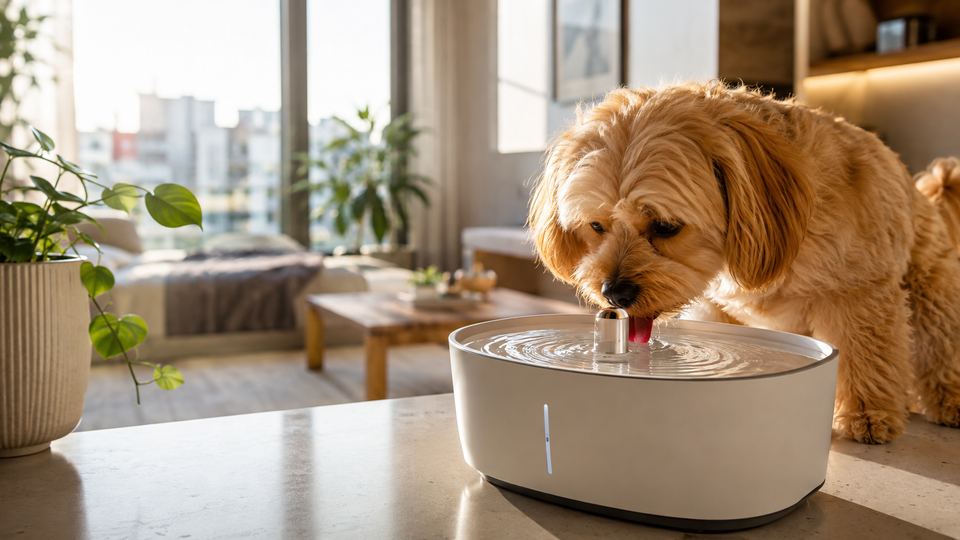
A running water fountain encourages a cat or dog to drink more, which is genuinely good for them, especially cats prone to urinary issues. The problem in an apartment isn't whether a fountain works; it's that a pump humming quietly in a house with separate rooms is a very different experience in a studio where the "kitchen" and the "bedroom" are the same twelve feet of floor.
The decibel numbers on a fountain's packaging matter more here than in almost any other pet-device category, because the distance between the device and your ear at 2 a.m. is often a few feet, not a few rooms.
What the decibel numbers actually mean
Sound is measured on a logarithmic scale, which means the numbers don't behave the way most people expect. A fountain rated at roughly 30 decibels isn't a little louder than one rated at 20 decibels; it can be perceived as roughly twice as loud, because each 10-decibel increase represents a tenfold increase in sound intensity. For context, independent testers using a decibel meter have measured some of the quietest fountains on the market at under 20 decibels, described as quieter than the sound of a person breathing nearby, while other units on the same shelf register closer to 35 to 40 decibels, closer to the sound of a quiet conversation.
For an apartment, the practical takeaway is that "quiet" printed on a box is a marketing adjective, not a number, and the difference between the low and high end of that range is the difference between a fountain that disappears into the background and one that's audible from the next room every night.
Placement matters more than the model in a small apartment
In a house, a fountain in the kitchen and a bedroom down the hall are separated by walls, doors, and distance. In a studio or a one-bedroom where the living area doubles as the sleeping area, that separation doesn't exist. A fountain placed on a kitchen counter that's twelve feet from the bed is effectively a bedroom-adjacent device, whether it was bought with that in mind or not.
That reframes the buying question. It's not just "how quiet is this model," it's "how quiet does it need to be at the specific distance it will actually sit from where I sleep." A unit in the 30-decibel range might be perfectly fine tucked into a separate kitchen in a two-bedroom apartment, and genuinely disruptive sitting three feet from a studio's sleeping area.
The "gets louder with age" caveat nobody puts on the box
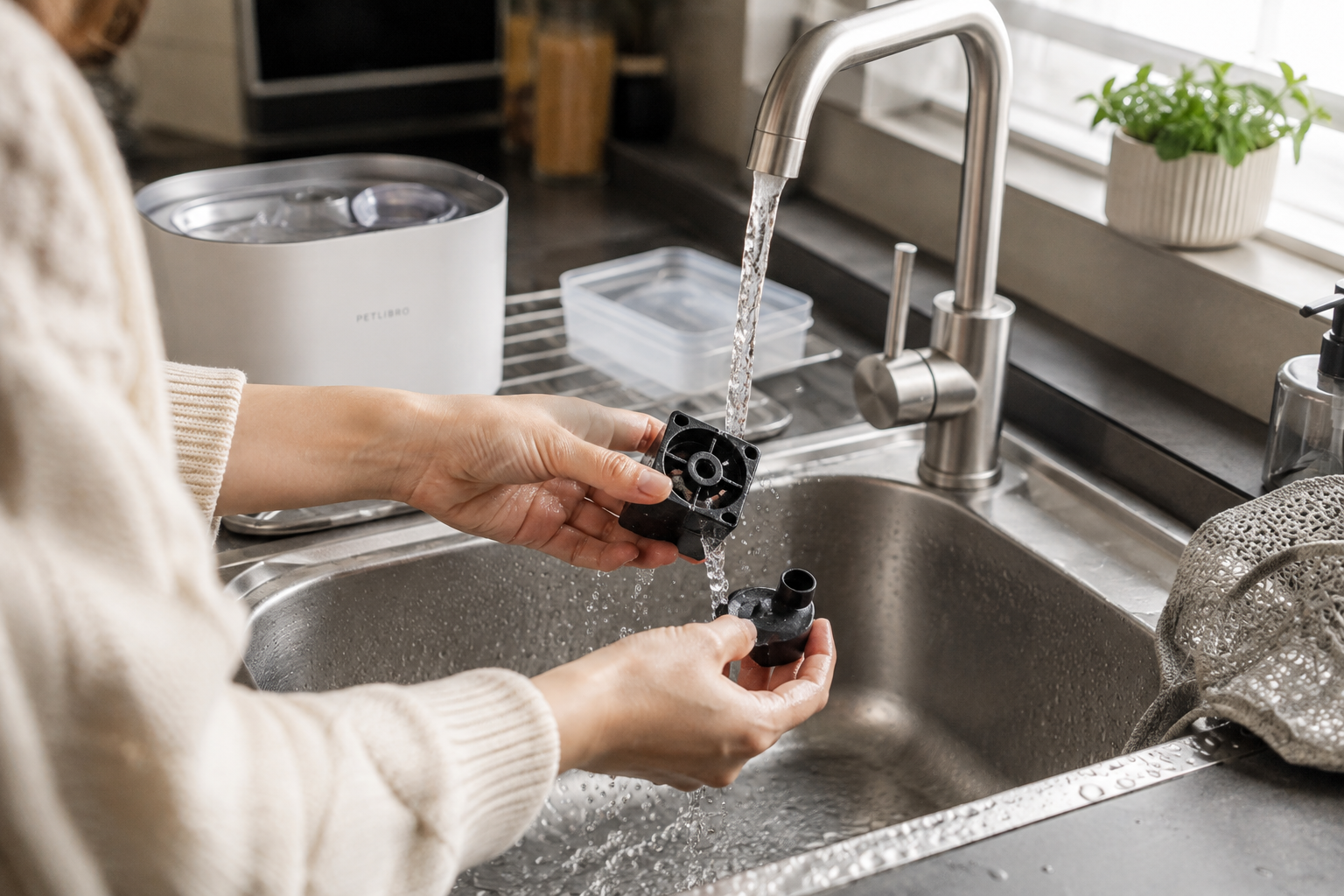
A detail that shows up repeatedly in longer-term reviews and rarely in initial marketing: fountain pumps can get noisier over months of use, as mineral buildup accumulates inside the pump housing or the motor wears. A fountain that measured quiet on day one is not guaranteed to stay that way at month six, which is a real factor in a small apartment where a few extra decibels are the difference between background noise and a genuine sleep disruption. Regular cleaning of the pump and reservoir, on the schedule the manufacturer specifies, is the main lever available to slow that drift, not a guarantee against it.
Material affects noise more than most buyers expect
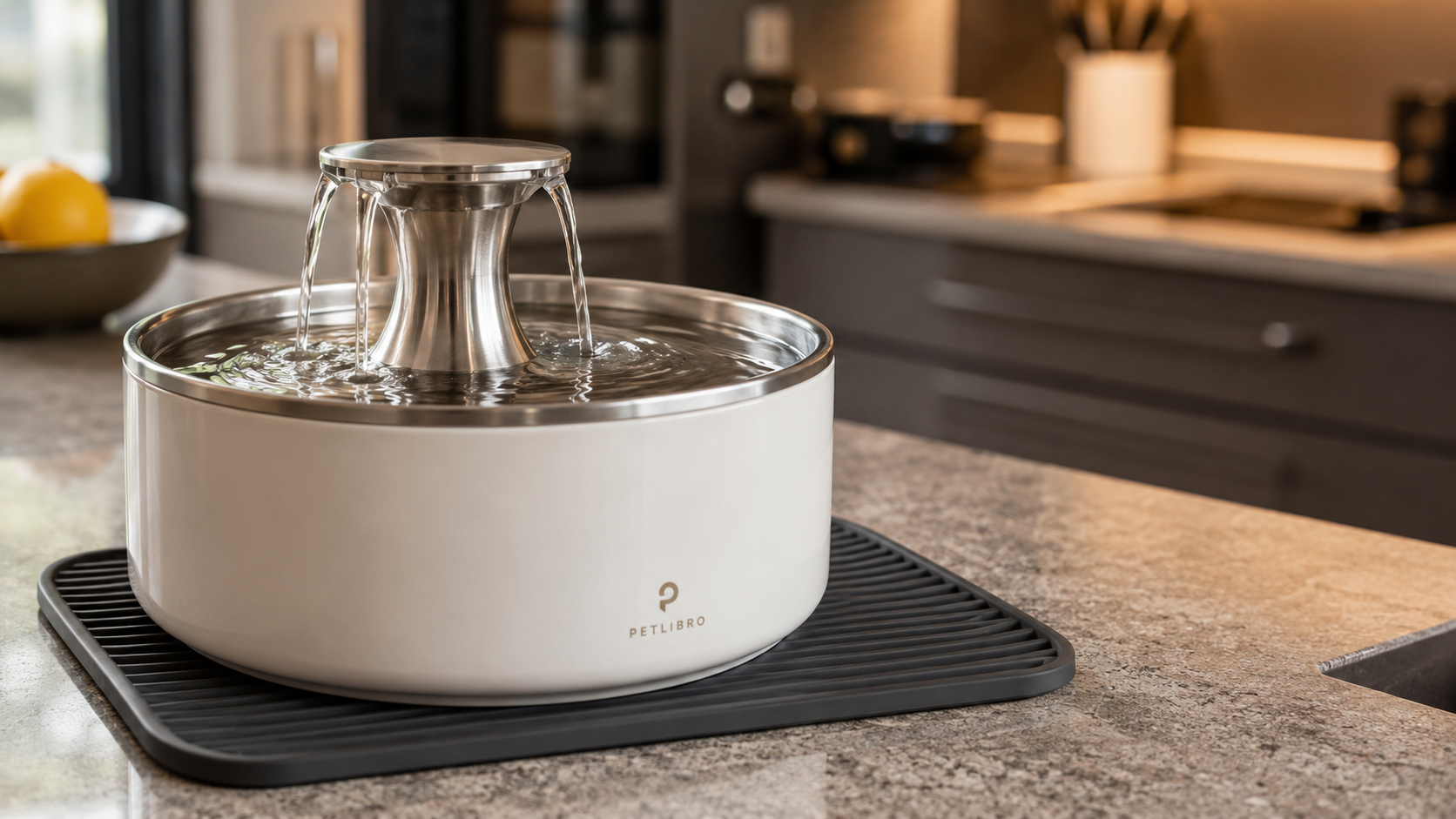
Lightweight plastic fountains tend to carry more of the pump's vibration into an audible hum, because the material itself can act like a speaker cone, amplifying rather than absorbing the motor's vibration. Denser materials, like ceramic or stainless steel, add mass that tends to dampen that vibration instead of carrying it. A rubber or silicone mat placed underneath a fountain is a simple, renter-safe way to reduce vibration transfer to a hard counter or floor regardless of the fountain's material, and it costs far less than replacing the unit.
Portability: the criterion general reviews skip
Most fountain reviews are written for homeowners who aren't planning to move the device again once it's placed. For a renter, portability is a real buying criterion in its own right: a fountain that requires no plumbing connection and runs entirely on a refillable reservoir can move with you at the end of a lease without any installation to undo, which matters more in a rental than most general "best fountains" roundups ever mention.
Matching capacity to how many pets you actually have
A fountain's reservoir size determines how often it needs refilling, and in a small kitchen, refilling is a chore that happens on the counter you're also trying to keep clear. A single-cat household can typically go longer between refills than a two-cat or cat-and-dog household drawing from the same reservoir, so matching capacity to your actual pet count, not just the largest model available, keeps the maintenance routine realistic for a small space.
Cleaning in a kitchen that doesn't have room for it
Most fountains need a weekly cleaning cycle involving the pump, the filter, and the reservoir, and a unit designed with a house-sized kitchen sink in mind can be awkward to disassemble and rinse in a small apartment sink. Checking whether a fountain's parts fit your actual sink, not just whether they're described as "easy to clean," is worth doing before committing to a model.
Where this fits with the rest of the apartment
A fountain's hum is, physically, the same kind of airborne noise a bark or a whine is, just steadier and lower in volume, which means the same principles about what travels through a shared wall apply to it. That broader picture is covered in how noise actually travels through an apartment.
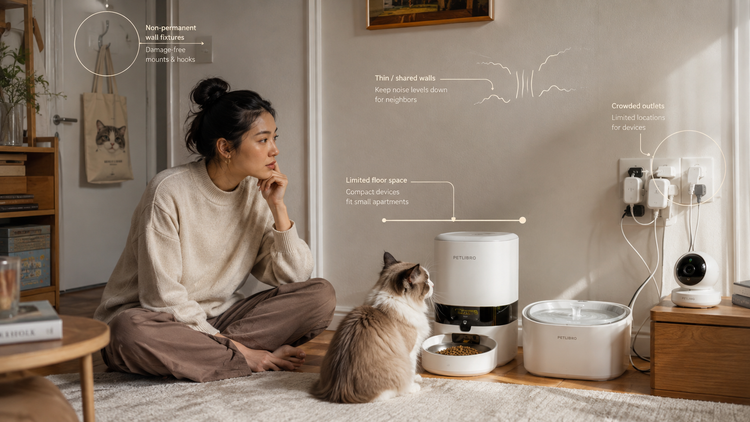
For the bigger-picture framework this fountain decision fits inside, including outlet availability, footprint, and what happens if a device fails while you're out, see which pet devices actually earn apartment space and power.
FAQ
What decibel level counts as quiet enough for a bedroom-adjacent fountain? Independent testing has found some fountains operating under 20 decibels, described as quieter than a person's breathing at close range, while others sit closer to 35 to 40 decibels. For a fountain that will sit within a few feet of where you sleep, the lower end of that range matters far more than it would in a separate kitchen.
Do plastic fountains really make more noise than ceramic or steel ones? Material affects how much of the pump's vibration becomes audible hum. Lightweight plastic can amplify vibration the way a speaker cone does, while denser materials like ceramic or stainless steel tend to dampen it. A rubber or silicone mat underneath any fountain also helps regardless of material.
Why does my fountain seem louder now than when I bought it? Pump noise commonly increases over months of use as mineral buildup accumulates inside the pump housing or the motor wears. Regular cleaning on the schedule the manufacturer recommends slows this, though it isn't a guarantee the fountain will stay as quiet as it was on day one.
Is a water fountain worth it if I'm renting and might move? A fountain that needs no plumbing hookup and runs on a refillable reservoir travels with you at the end of a lease with nothing to disconnect or repair, which is a genuine advantage over any fixed water solution and worth weighing alongside the noise question.
How do I know what fountain size I actually need? Match the reservoir capacity to your actual number of pets rather than defaulting to the largest available model. A single cat needs far less capacity between refills than two cats or a cat-and-dog household sharing one reservoir, and a mismatch means either frequent refilling in a small kitchen or an oversized unit taking up counter space you don't have.
Comments ()