
Pet Tech for Apartments: A Real Buying Framework
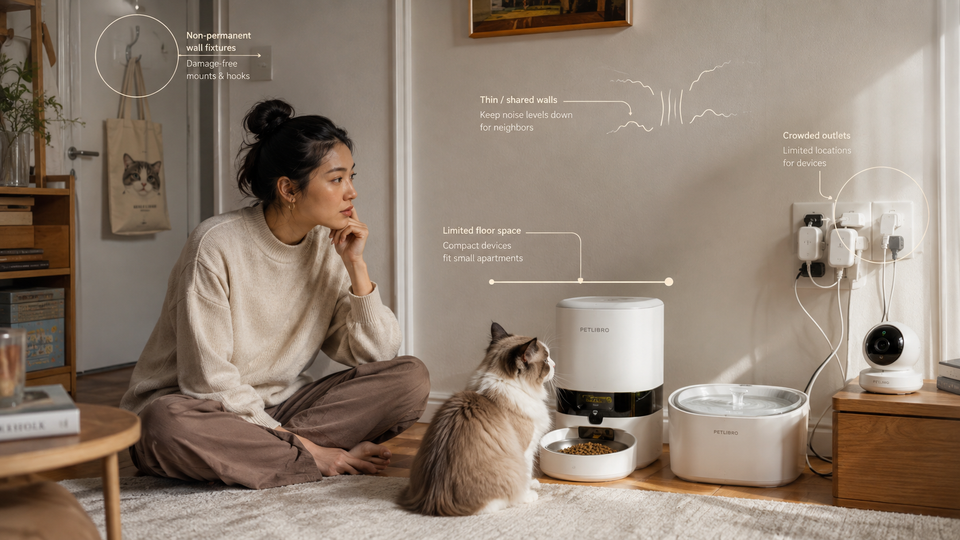
Most pet tech buying guides are organized by product category: here are the best feeders, here are the best cameras, here are the best trackers. That's a reasonable way to shop for a house with a mudroom, a garage outlet, and a yard. It's the wrong question for an apartment, where the real constraint isn't which model has the most features, it's whether the device fits the apartment at all: one spare outlet, one room, a chewing animal, a shared wall, and a landlord whose permission you may or may not need.
This is a framework for evaluating any pet device against apartment-specific constraints before comparing brands or models, not a list of specific products to buy.
The four questions worth asking before any purchase
Does it need power, and is there an outlet to spare? A one-bedroom apartment typically has a handful of outlets already claimed by essentials: a lamp, a router, a phone charger. Adding a feeder, a fountain, and a camera to the same power strip is how apartments end up with an overloaded outlet, which is a fire risk worth taking seriously rather than an inconvenience to work around with an extension cord.
Does it need floor or counter space you don't have to spare? A feeder, a fountain, and a litter box all want a footprint, and in a studio or one-bedroom kitchen, that footprint competes directly with counter space you use every day. A device that looks reasonably sized in a product photo can be a genuine obstacle in a kitchen that's six feet wide.
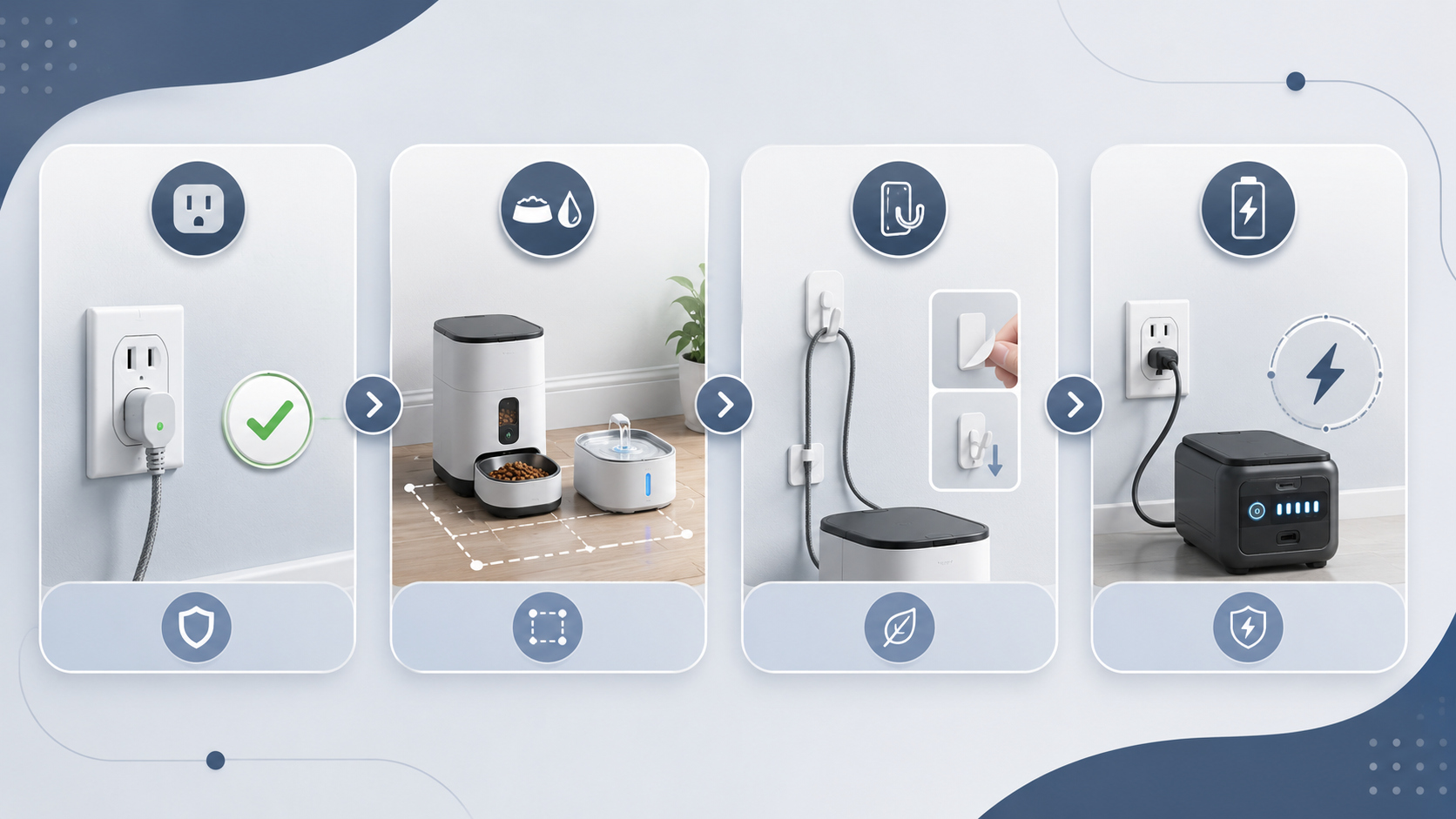
Is it reversible, or does it cost you your deposit? Anything that requires drilling, adhesive strong enough to pull paint off a wall, or a permanent modification to fit is a liability in a rental. The mounting and installation side of this question, what actually holds without leaving a mark, is its own subject and worth checking before buying anything that needs to attach to a wall, door, or window.
What happens when it fails? Every automated device eventually loses power, loses its Wi-Fi connection, or jams. A feeder that doesn't dispense, a camera that stops recording, or a lock that doesn't release are not hypothetical edge cases in an apartment with an aging electrical panel or spotty building Wi-Fi. Before buying anything that runs unattended, the honest question is what the backup plan is if it simply doesn't do its job while you're out, not whether the device is impressive when it works.
A quick check before checkout
Running a specific device through all four questions before buying tends to surface the same handful of failure points, apartment after apartment:
- The outlet is already spoken for. Check what's currently plugged into the outlet you're picturing before assuming it's free.
- The footprint looks smaller in the photo than it will on your counter. Measure the actual space, not the impression the product listing gives.
- "No tools required" isn't the same as "no damage." Adhesive strong enough to hold a mount securely is often also strong enough to pull paint off a wall on removal; check what the manufacturer says about removal, not just installation.
- The manual doesn't mention what happens on a power cut or a dropped Wi-Fi connection. If a product page is silent on failure behavior, that's information you'll only get after something goes wrong, not before.
None of these are reasons to avoid pet tech altogether. They're the specific, apartment-shaped questions a general buying guide, written for a house, never has to ask.
What this framework deliberately does not do
This is not a comparison of specific feeder or litter box models, their reliability, their jam rates, or which brand handles a multi-pet household best. That level of device-specific evaluation is a deep, ongoing subject of its own, and doing it properly means real hands-on comparison across many units and situations rather than a summary paragraph. What belongs here is the layer above that: whether a device category makes sense for an apartment at all, before you get to comparing individual products within it.
The same logic applies to affiliate-style product picks. Until a clear, compliant disclosure is in place on this site, nothing here names a specific model as "the" recommendation. The framework works the same way regardless of brand, and it's more useful applied consistently than attached to a product recommendation that can go stale the moment a manufacturer changes a model.
Applying the framework to a noise problem
Noise is a good example of where this framework earns its keep, because it's the constraint most apartment buying guides skip entirely. A device that hums quietly in a house with separate rooms can be loud enough to disturb a light sleeper through a shared apartment wall, and a device marketed as a fix for barking, like an ultrasonic deterrent, is only worth its cost once you understand what it can and can't realistically do. The honest evidence on that specific device category, including where it works and where the marketing outruns the research, is covered in do ultrasonic bark control devices actually work in an apartment.
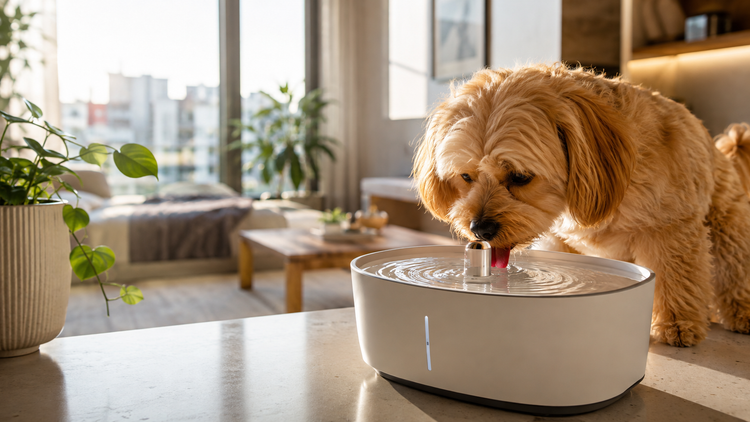
Water fountains are a cleaner example of the framework working well: a genuinely useful device category with real, published noise data, where the apartment-specific question isn't whether it works, it's where the noise lands and how it fits a small kitchen. See quiet water fountains for a small apartment for how that plays out.
The broader picture: noise, neighbors, and the lease
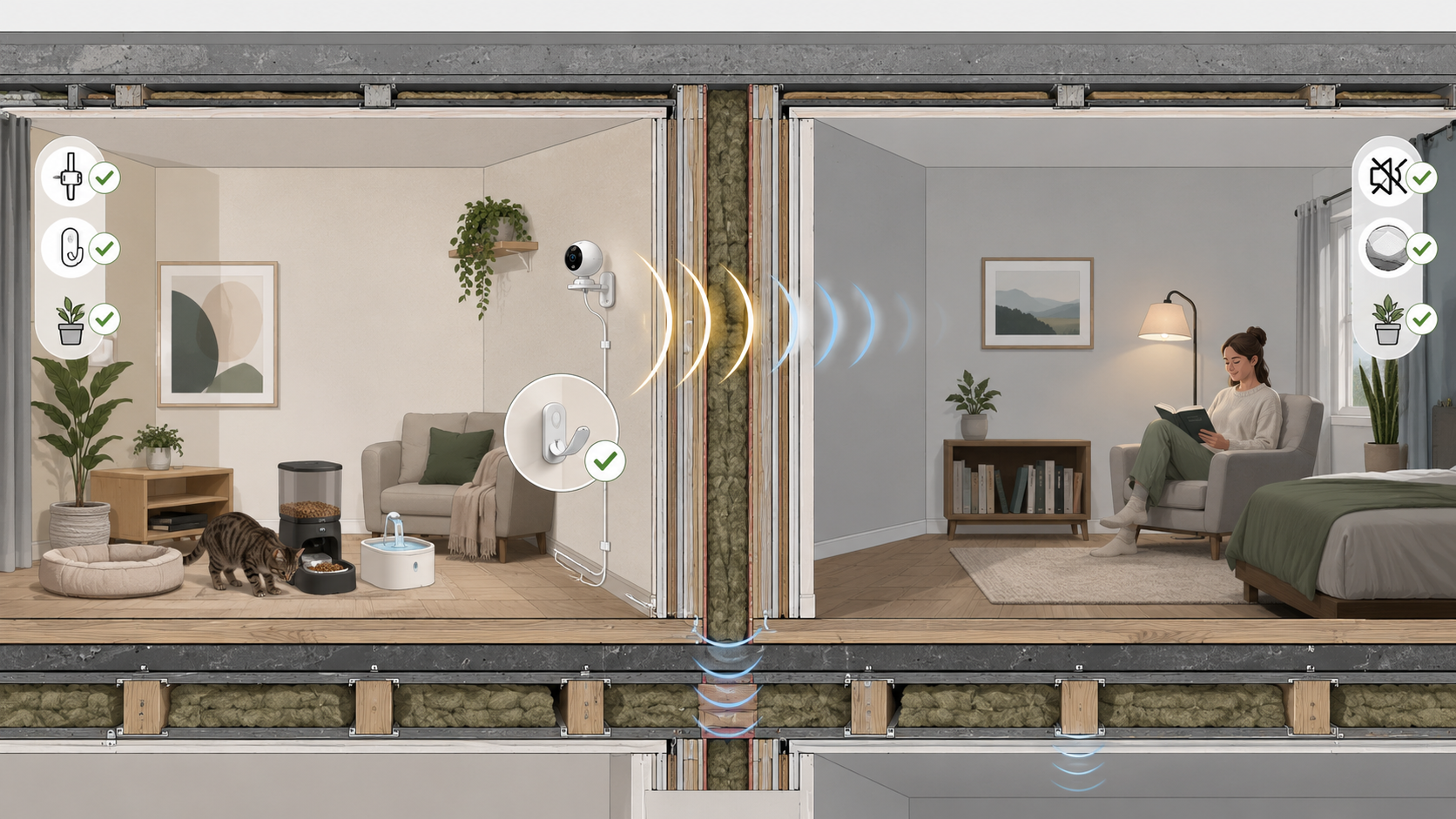
This buying framework sits alongside the site's other core piece, on what a neighbor actually hears when a pet or a device makes noise in a shared-wall building, and why the fix depends on the type of sound involved. That full picture is at pet noise in an apartment: what neighbors actually hear.
FAQ
What's the single most important question before buying any pet device? Whether it needs power and floor space you actually have to spare. Most apartment buying mistakes come from treating a device as if it exists in isolation, rather than checking it against the specific outlet, counter space, and wall you'd need to give up for it.
Why doesn't this guide just recommend the best feeder or camera? Because a genuine product recommendation requires hands-on comparison across models and real usage conditions, which is a different and more specific piece of work than a buying framework. This guide is the layer that comes before that: whether the device category fits an apartment at all.
Is it safe to run a feeder, a fountain, and a camera off the same power strip? Running multiple always-on devices off a single extension lead or power strip is a real fire-safety concern, not just an inconvenience. If a kitchen or living room only has one spare outlet, that's a signal to prioritize which devices actually earn that space rather than daisy-chaining all of them onto it.
What should I do before buying anything that mounts to a wall or door? Check what actually holds without damage before you buy the device itself, since a mount that requires drilling or aggressive adhesive can cost more at move-out than the device did to purchase. Reversible mounting options exist for most common device types, but they need to be chosen deliberately, not as an afterthought.
What happens if an automated device fails while I'm not home? That's a question worth answering before you buy, not after something goes wrong. A feeder that jams, a camera that loses connection, or a lock that doesn't release are realistic failure modes in any apartment with an older electrical setup or inconsistent Wi-Fi, and knowing your backup plan in advance is part of what makes a device worth trusting with your pet's routine.
Comments ()