
Apartment Pet Noise: What Neighbors Actually Hear

A dog that barks at the door, a cat that runs laps at 4 a.m., a feeder that clicks on a counter at 6 a.m.: in a house these are non-events. In an apartment, each one is a sound that leaves your unit and becomes someone else's problem. What actually gets through a shared wall or floor depends on the type of noise, not how loud it feels standing next to it, and that distinction is the difference between a fix that works and one that does nothing.
This guide is the starting point for a pet owner trying to figure out what a neighbor is really hearing, and what is worth doing about it before a knock on the door turns into a letter from the building manager.
The wall doesn't carry every sound the same way
Apartment walls and floors treat sound in two different ways, and knowing which one applies to a given noise changes what actually fixes it.
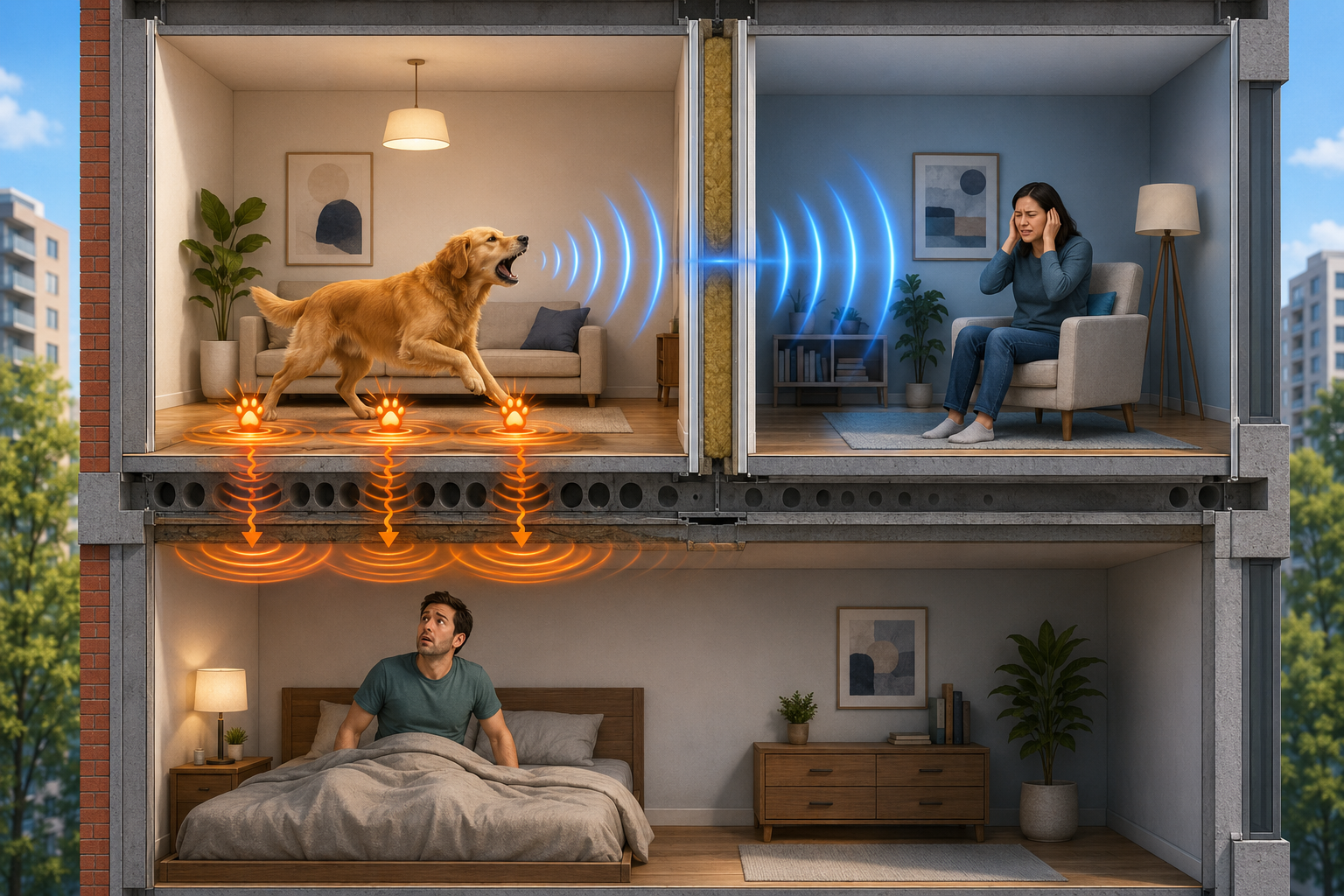
Airborne sound is anything that starts as a sound wave in the air: barking, a cat's yowl, the whir of a motor. It moves through drywall, gaps around a door, and thin windows relatively easily, which is why a bark that sounds contained inside your apartment can be clearly audible next door.
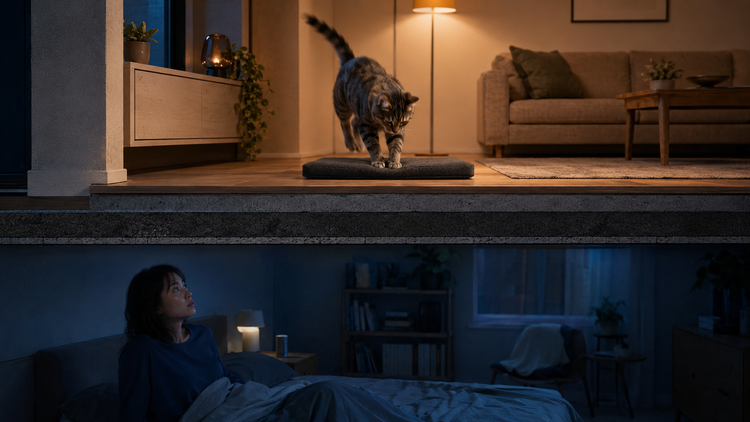
Structure-borne (impact) sound is different. It starts as a physical vibration: paws hitting a hardwood floor, a cat launching off a windowsill, a heavy water bowl set down on tile. That vibration travels through the building's frame itself, which is why the unit directly below often hears far more of it than the unit beside you, even though both are the same distance away.
A dog's bark and a cat's 4 a.m. sprint are not the same engineering problem, and treating them the same way is why so many apartment noise fixes fail. The full breakdown of which pet sounds fall into each category, and why the floor below hears things the wall beside you never will, is covered in how noise actually travels through an apartment.
Where the noise is actually coming from
Before buying anything, it helps to separate the noise into its real source, because each one has a different ceiling on how much it can be reduced.
- Vocalizing. Barking, meowing, and howling are airborne, loud, and often the first complaint a neighbor raises, because they're impossible to mistake for anything else.
- Movement. Running, jumping off furniture, and nails on a hard floor are structure-borne. These are the ones that travel down more than sideways, and they're the hardest to fully eliminate without addressing the floor itself.
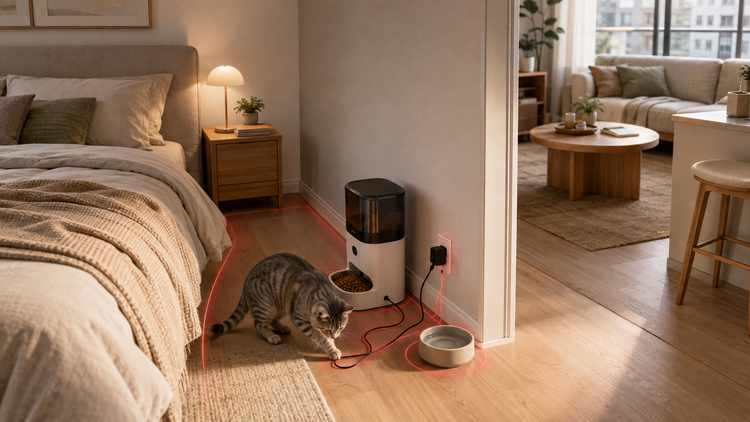
- Devices. Automatic feeders, litter boxes, and fountains all have a motor, a pump, or a dispensing mechanism, and a device that sounds barely noticeable to you at arm's length can still be enough to wake a light sleeper on the other side of a shared wall. This is a genuinely separate problem from a pet's own noise, because it's a machine you chose running on a schedule you set, and it deserves the same scrutiny before purchase that the pet's own sounds get after the fact. What actually carries is usually not the motor: see the device is the noise: feeders, fountains and boxes through a shared wall, and where not to put a pet device in a one-bedroom for the placement decision that follows from it.
What actually helps, roughly in the order it's worth trying
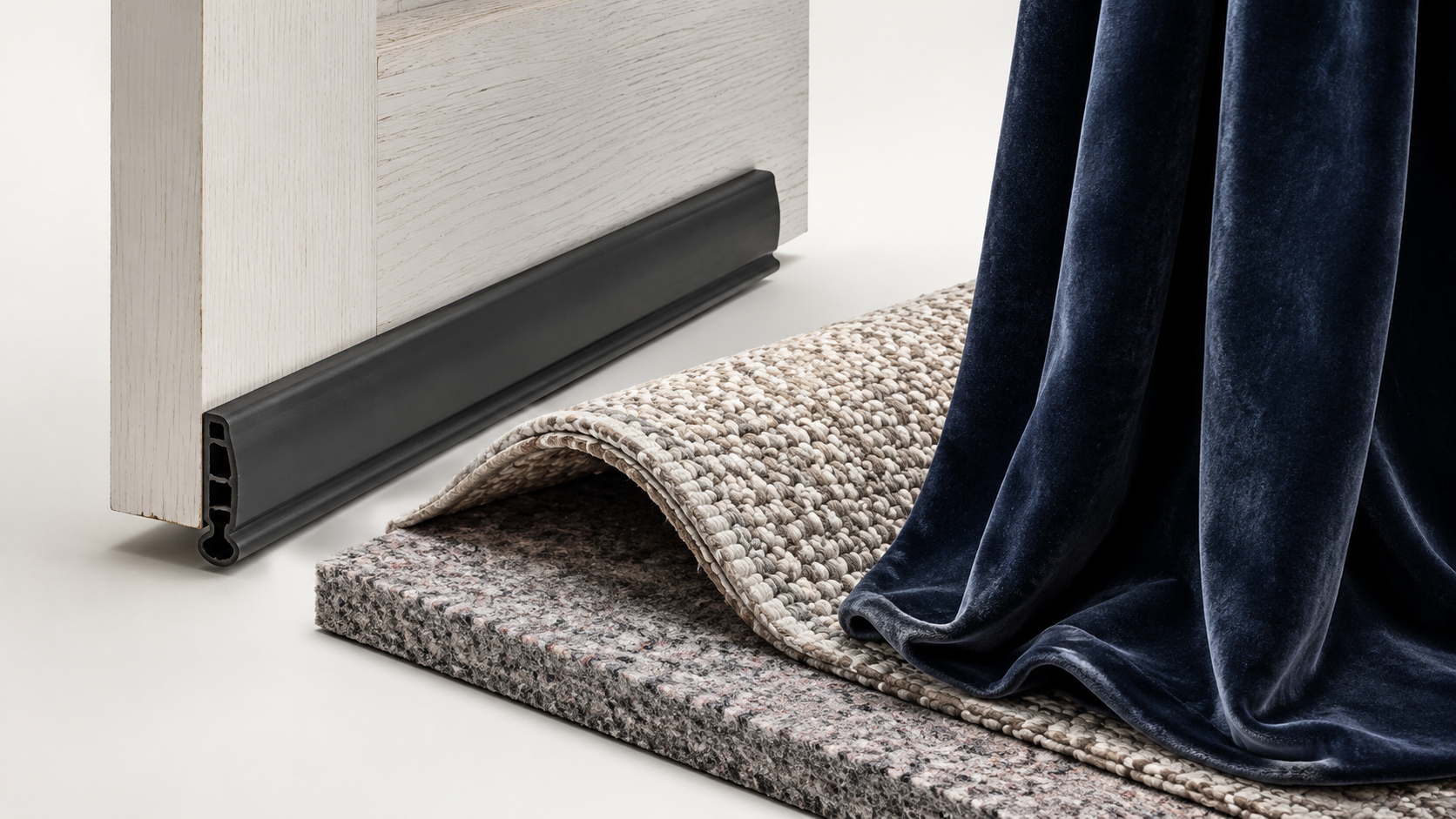
Cheap and reversible options come first, because they cost little to test and nothing to undo at move-out: door sweeps and weatherstripping close the gap most sound escapes through at the door, rugs and thick underlay reduce the impact noise a running dog or cat sends downstairs, and heavy curtains or a window insert cut down on barking that's aimed at the street rather than the hallway. None of these require permission from a landlord, and none of them leave a mark when you leave.
Which of those is worth your money depends on which neighbor is complaining and on how each fix attaches, since attachment method is what decides the deposit risk. That whole decision, across every renter-reversible option, is set out in renter-safe soundproofing that comes off at move-out. One popular category deserves a warning before you buy it: wall-mounted foam and fabric panels absorb sound inside your own room and do not stop it reaching the neighbor, explained in acoustic panels for pet noise.
A white noise machine sits in a different category. It doesn't reduce the noise your pet makes; it raises the background noise level enough that the bark or the running becomes harder to isolate. That can genuinely help a neighbor's perception of the problem, but it is a masking tool, not a fix, and it's worth knowing the difference before relying on one. It actually does three separate jobs and only one of them helps the neighbor, sorted out in white noise machines: masking the trigger vs masking the bark. The visual equivalent, removing what the dog can see rather than what it can hear, is in frosted window film and the visual triggers you can remove.
Devices that claim to reduce barking: the honest version
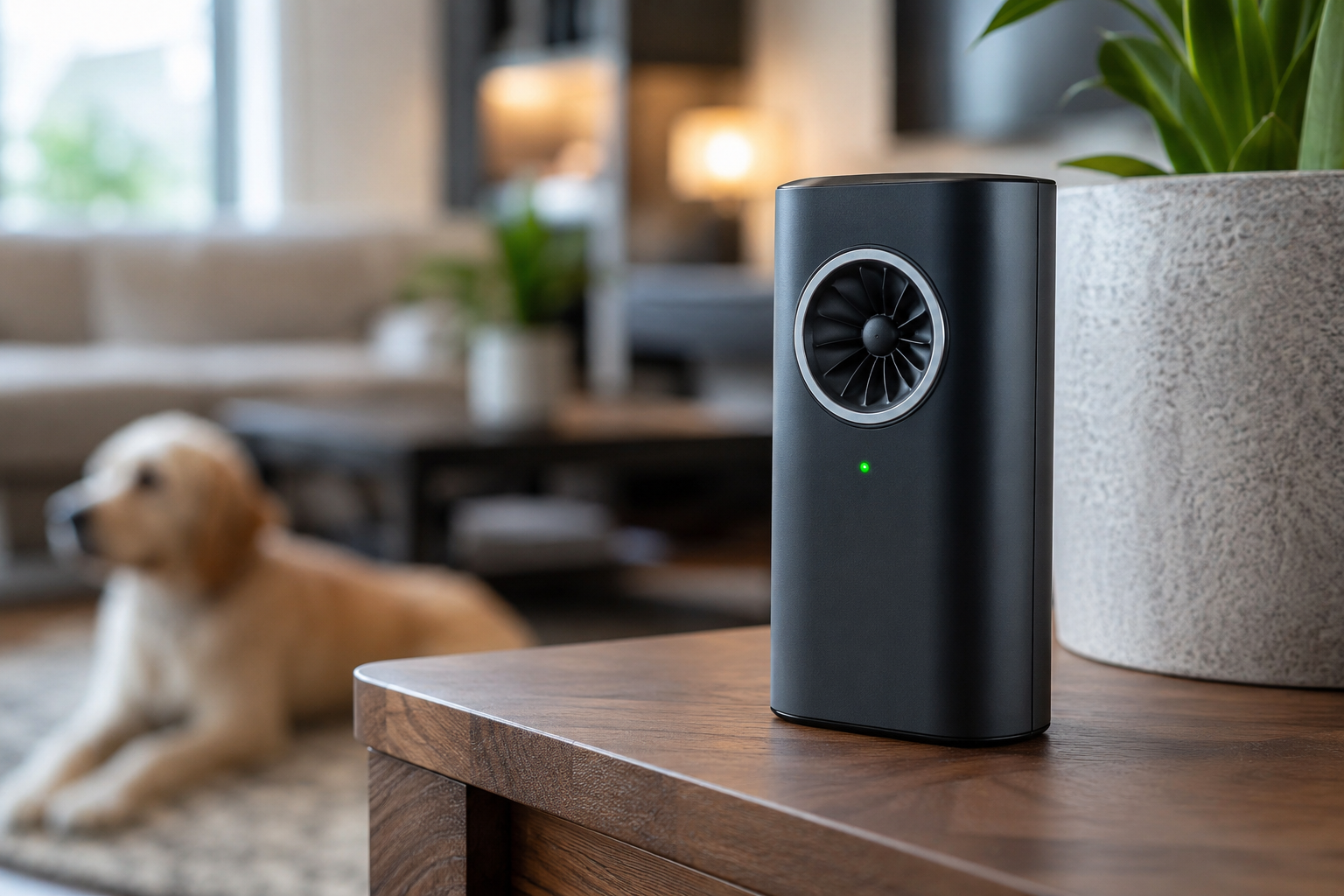
A category of gadget markets itself directly at apartment dwellers: ultrasonic emitters that are supposed to interrupt barking with a high-frequency tone. The evidence here is genuinely mixed. Manufacturers and some independent reviewers report that these devices can work better indoors than outdoors, because the sound bounces off walls in an enclosed room instead of dissipating. At the same time, consumer investigations and veterinary sources have found real limits: results vary by dog, some dogs habituate to the sound over time, and the device addresses the barking itself rather than whatever is prompting it. The full evidence, including where these devices are and aren't a reasonable purchase for an apartment, is in do ultrasonic bark control devices actually work in an apartment.
What this guide does not cover, on purpose
A dog's reasons for barking, and how to change the underlying behavior, are a separate subject with its own body of evidence, and this site does not attempt to re-teach it. What this guide and the rest of this cluster cover is what happens after the sound leaves the room: the wall or floor it travels through, the neighbor who hears it, the hardware that can reduce it, and the lease that governs what you're allowed to install. If the barking itself, not the building, is the problem you're trying to solve, that's a different starting point than this one, and knowing when you have crossed from one to the other matters: when the answer isn't a device: getting a trainer or a vet involved sets out the signs and who to call.
One category deserves a direct answer rather than a neutral one. Bark collars are the purchase apartment dwellers reach for when a complaint letter arrives, and the veterinary behavior field has taken a clear published position against aversive equipment. Why that matters, and what to do with the pressure instead, is in bark collars in an apartment: the welfare question before the noise question.
Choosing tech without wasting money on it
Every device mentioned above, and every one still to come on this site, gets evaluated the same way: does it fit a one-outlet apartment, is it reversible enough not to cost a security deposit, and does it actually solve a problem specific to shared-wall living rather than just being "smart" for its own sake. That framework, and how it applies across feeding, monitoring, and noise devices generally, is laid out in which pet devices actually earn apartment space and power.
FAQ
Does a thicker rug actually reduce noise for the neighbor below, or just for me? It genuinely helps the neighbor below more than it helps you. Impact noise, like paws hitting a hard floor, travels through the building's structure rather than the air in your own room, so a rug and a dense underlay reduce what transmits downward even if the room doesn't sound noticeably quieter to you standing in it.
Will a white noise machine stop my neighbor from hearing my dog bark? Not directly. It raises the ambient sound level in the neighbor's space enough that an intermittent bark is harder to pick out from the background, but it does not reduce the volume or frequency of the barking itself. It's a masking tool, useful alongside other steps, not a replacement for them.
Is it worth buying an ultrasonic device before trying anything else? Not as a first step. Cheap, reversible fixes like door sweeps and rugs address the acoustic path the sound travels through, which helps regardless of the cause. An ultrasonic device is a narrower tool aimed specifically at interrupting barking, with genuinely mixed evidence on how well it works, so it's worth trying after the basics, not instead of them.
My cat is the noisy one at night, not a dog. Does any of this still apply? Yes. A cat's nighttime activity is almost entirely structure-borne (running, jumping, landing) rather than vocal, so the floor and underlay steps matter more for a cat household than the door and window steps do. The device section applies if an automatic feeder or fountain is also part of the nighttime noise. The cat-specific version, including why treating four landing spots beats one large rug, is in cat zoomies at 4 a.m. and the downstairs neighbor.
Should I talk to my neighbor before doing any of this? That's a reasonable order of operations for many renters, and it costs nothing to try. This guide focuses on the physical and hardware side of the problem; the conversation, documentation, and lease side of a noise complaint is governed by rules that differ by building and location, so treat that part as a separate track. Which rulebook actually applies to a barking dog is covered in quiet hours and noise ordinances, and what to record if you need to show a landlord anything is in phone decibel apps and what they're actually worth.
That track has three stages and each has its own page. Before anything formal, there is the doorstep conversation, which is worth having as an information-gathering exercise rather than an apology: talking to the neighbor before it becomes a complaint. If a letter has already arrived, the response that stops it escalating is in documenting a noise complaint when it's your pet. And if you want to know what the building can actually do next, what a landlord can actually do about a pet noise complaint walks through the notice-and-cure sequence from the tenant's side. Finding out what is genuinely happening while you are out underpins all three: knowing your dog barks while you're out.
Comments ()