
You Got a Noise Complaint About Your Dog. Now What?
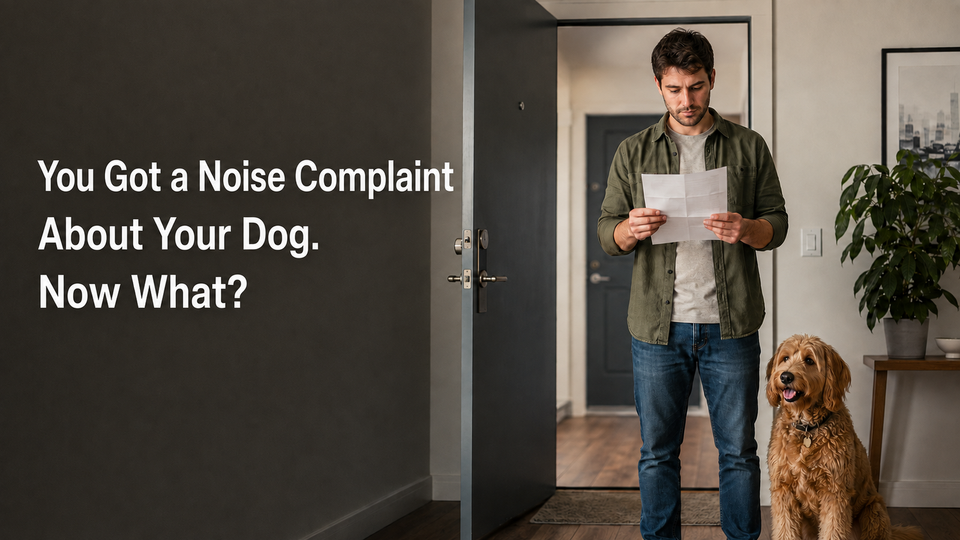
Do three things, and do them within days rather than weeks. Reply in writing, acknowledging the complaint and stating what you are doing about it. Start a dated log of what actually happens. And make one physical change you can name and date, such as sealing the gap under your front door. Guidance across landlord-tenant sources agrees that an early, documented response is what prevents escalation and what supports your position if this goes further. Almost nobody who receives one of these letters does any of it.
This is general information about a common process, not legal advice. If you are holding a formal notice with a deadline on it, a local tenant advice service or attorney is the right call.
First, find out what the clause actually says
Before writing anything, get the specific provision you are alleged to have breached. It is usually a nuisance or disturbance clause in the lease, or a line in the building's house rules, and it is often not the same thing as the municipal noise ordinance.
That distinction matters more than it sounds, because the two have different standards and different consequences. Which rulebook is which is set out in quiet hours and noise ordinances: what applies to a barking dog.
If the complaint did not name a clause, ask for it in writing. That request is reasonable, it is documented, and the answer tells you what you are actually responding to.
What to put in the written reply
Keep it short, factual and unemotional. Five parts:
- Acknowledge receipt and the date. One line.
- Acknowledge the experience, not the violation. "I understand the barking has been disturbing" is different from "my dog barks excessively." The first is human, the second can be quoted back at you.
- State what you have verified and what you have not. Most owners are out when the barking happens and genuinely do not know its extent. Saying "I am setting up monitoring this week to establish exactly when and for how long" is stronger than a guess in either direction.
- State what you have already changed, with the date. One concrete, dated action.
- Ask a question and invite follow-up. Which times are worst, and please tell me directly if it continues. This turns the exchange into a process rather than a verdict.
Send it in a way that leaves a record, keep a copy, and note when it was sent.
What not to write
Do not admit to something you have not verified. It feels cooperative and it can become the evidence of a pattern.
Do not dispute their experience. You were not there. Arguing about whether it happened puts you in a corner the moment they produce a recording.
Do not promise an outcome. "It will not happen again" is a commitment about an animal's behavior that you cannot enforce. "I am taking these steps and I will keep you updated" is a commitment you can keep.
Do not mention buying a deterrent device as your plan. Beyond the welfare issues covered in bark collars in an apartment: the welfare question before the noise question, it reads as a quick fix rather than as a considered response, and it commits you to something you may not want to do.
The log: what to record, and why this format
| Field | Example | Why it matters |
|---|---|---|
| Date | 15 Aug | Establishes a timeline |
| Start and end time | 09:12 to 09:23 | Duration is how animal-noise rules are usually written |
| Duration | 11 minutes | The number that actually counts |
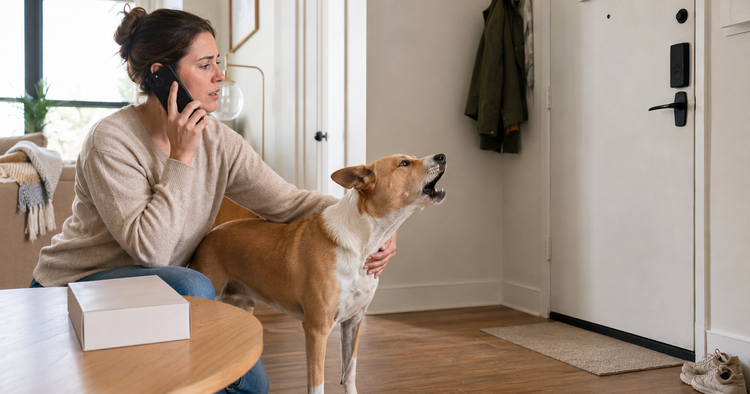
| Trigger, if known | Delivery at the door | Points at which fix will work |
| What changed | Door sweep fitted 14 Aug | Shows action, with a date |
Keep it in one file, plain text is fine. If you are away when it happens, the record has to come from a monitor rather than memory, which is covered in knowing your dog barks while you're out. And resist the temptation to lead with decibel readings, for the reasons in phone decibel apps and what they're actually worth.
Choosing the one fix you can point to
The value here is not only acoustic, it is evidential. A dated, physical, verifiable change is the thing that makes your reply credible.
Pick by the direction the complaint came from. A hallway or side-neighbor complaint points at the front door gap. A complaint from below points at the floor. A complaint from outside points at the window. Each is cheap, reversible and installable the same week, and the full set is in renter-safe soundproofing that comes off at move-out.
Then write the date down. "Fitted a door sweep and weatherstripping on 14 August" is a sentence that does real work in a file.
If the complaint came from the neighbor rather than the building
Different situation, and a better one. Nothing formal has started, which means you have the chance to keep it that way.
Go to them rather than replying in writing, ask when it is worst, and come back a week later to check. That conversation is worth more than any document at this stage, and how to have it is in talking to the neighbor before it becomes a complaint.
Still keep the log. If it does become formal later, the record that starts today is the one that matters.
What happens if it escalates anyway
Knowing the next step removes most of the panic. A landlord generally has to give notice of a breach and an opportunity to cure it before anything further, and would then have to show a pattern that continued after that notice. What that process looks like from the other side is in what a landlord can actually do about a pet noise complaint.
Your log and your dated fixes are precisely the counterweight to that. That is why they are worth starting now, when nothing has happened yet.
FAQ
Should I respond to a noise complaint in writing? Yes, and promptly. Landlord-tenant guidance consistently treats an early, documented response as what prevents escalation and what supports your position later. A verbal reply leaves no record that you engaged at all.
Should I apologize? Acknowledge their experience without admitting a lease breach. Something like "I understand this has been disturbing and I am taking it seriously" is human and does not concede anything you have not verified.
What if I do not think my dog is the problem? Say that you are investigating rather than that they are wrong, and then actually investigate. Sound travels along corridors and through structure in ways that make the source genuinely hard to place, so it is worth establishing before either of you is certain.
How long do I have to respond? Check the notice, because cure periods vary by jurisdiction and appear in reported examples as short as three to seven days. If a deadline is stated, treat it as the real one and get advice locally if you cannot meet it.
Does a log actually help me? It is the only document you can produce that is contemporaneous, dated and specific. Paired with dated fixes, it shows a resident who investigated and acted, which is what a cure period is asking for.

Comments ()