
Renter-Safe Soundproofing for Pet Noise (No Deposit Risk)
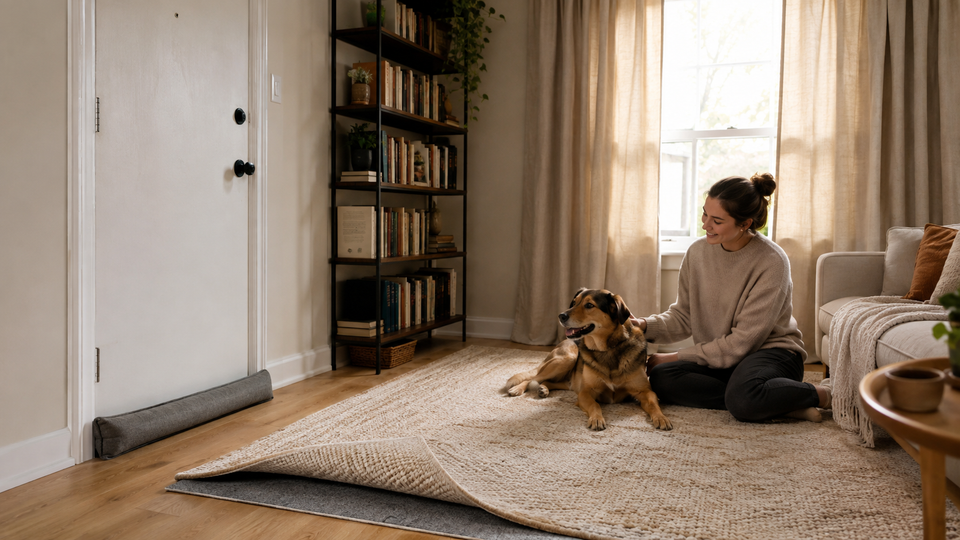
Renter-safe soundproofing for pet noise works by three mechanisms only: absorbing sound inside your own rooms, sealing the air gaps sound escapes through, and cushioning the impacts your pet makes on the floor. Sealing and floor cushioning are the two that a neighbor will notice. Nothing you can install and remove without tools adds mass to a shared wall, and mass is what actually stops a bark from reaching the unit next door. Knowing that before you spend anything is the difference between a fix and a pile of returns.
That is not a reason to skip the work. It is a reason to spend the money on the two mechanisms that carry, in the order that matches whichever neighbor is actually complaining.
The reversibility test: three ways a fix attaches
Every renter-safe product on the market attaches in one of three ways, and the attachment method, not the product category, is what decides your deposit risk.
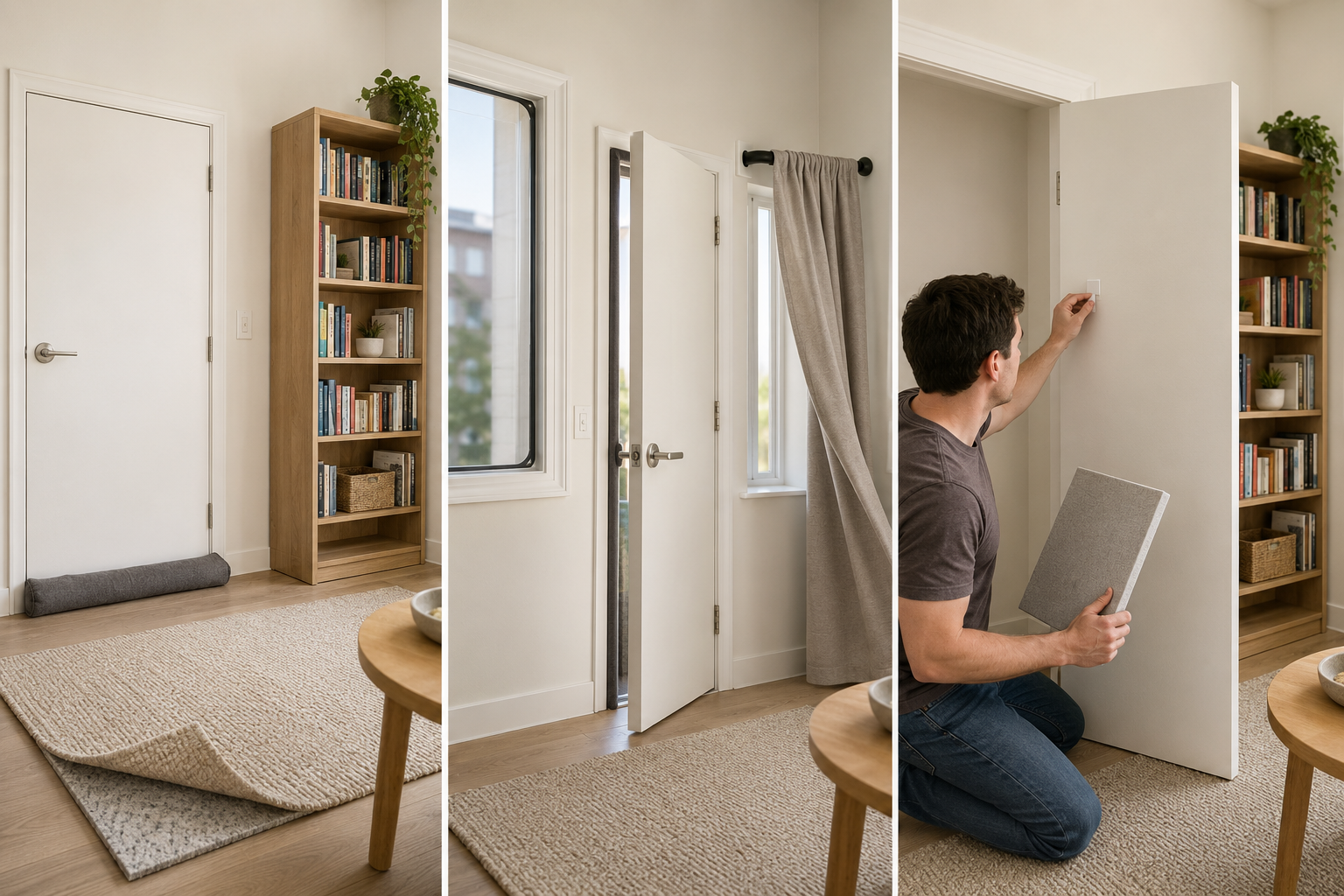
Gravity and freestanding. Rugs, rug pads, freestanding acoustic panels, a full bookshelf against a shared wall, a weighted draft stopper laid at the base of a door. Nothing touches the paint. This class carries essentially zero deposit risk, and it is where a renter should start by default.
Compression and friction. Window inserts held by compression tubing around the frame, door gaskets that wedge into the jamb, tension rods. These stay in place by pressing against the opening rather than sticking to it. Also very low risk, with one caveat: check that the frame or trim is sound before you load it, because compression against soft or already-damaged trim can mark it.
Adhesive and tension mounts. Peel-and-stick weatherstripping, adhesive-strip or Velcro-mounted acoustic panels, removable hooks. This is the class that ends deposit disputes badly, and it is also the class with real weight limits: what each method actually holds, and how to take it off without losing the deposit, is in the deposit-safe mounting toolkit. Rental-grade flat paint is the usual casualty, and "removable" adhesive is rated against drywall in good condition, not against a wall that was painted over three tenancies without primer. Test any adhesive in a spot behind a door before you commit to a wall.
What each renter-safe fix actually does
| Fix | Attaches by | Which pet noise it addresses | Deposit risk |
|---|---|---|---|
| Rug plus dense pad | Gravity | Impact: running, jumping, nails on hard floor | None |
| Door sweep or draft stopper | Gravity or adhesive | Airborne: barking escaping into a corridor | None to moderate |
| Weatherstripping on the door frame | Adhesive | Airborne: the side and top gaps around a door | Moderate |
| Compression window inserts | Compression | Airborne: barking escaping outward through glass | Very low |
| Heavy or blackout curtains | Curtain rod, often already installed | Partly airborne, mostly removing the visual trigger | Very low |
| Acoustic panels | Adhesive, or freestanding | Reverberation inside your own room. Not transmission | Low if freestanding, moderate if stuck |
| Full bookshelf on the shared wall | Gravity | Adds real mass, the only renter option that does | None, though it needs floor space you may not have |
| Foam gaskets behind outlet covers | Screwed in behind the existing plate | Small airborne leaks through wall penetrations | Low, fully reversible |
The bookshelf row is the one people skip because it does not look like a soundproofing product. It is the only item on this list that adds meaningful mass to a shared wall, and in a one-bedroom where wall space is scarce it is often the highest-value move available.
The one thing renter-safe soundproofing cannot do
A wall stops airborne sound mainly by being heavy, and secondarily by being sealed and decoupled. Renters can improve the seal. Renters cannot add meaningful weight to the wall, and no adhesive panel, foam tile or acoustic curtain changes that.
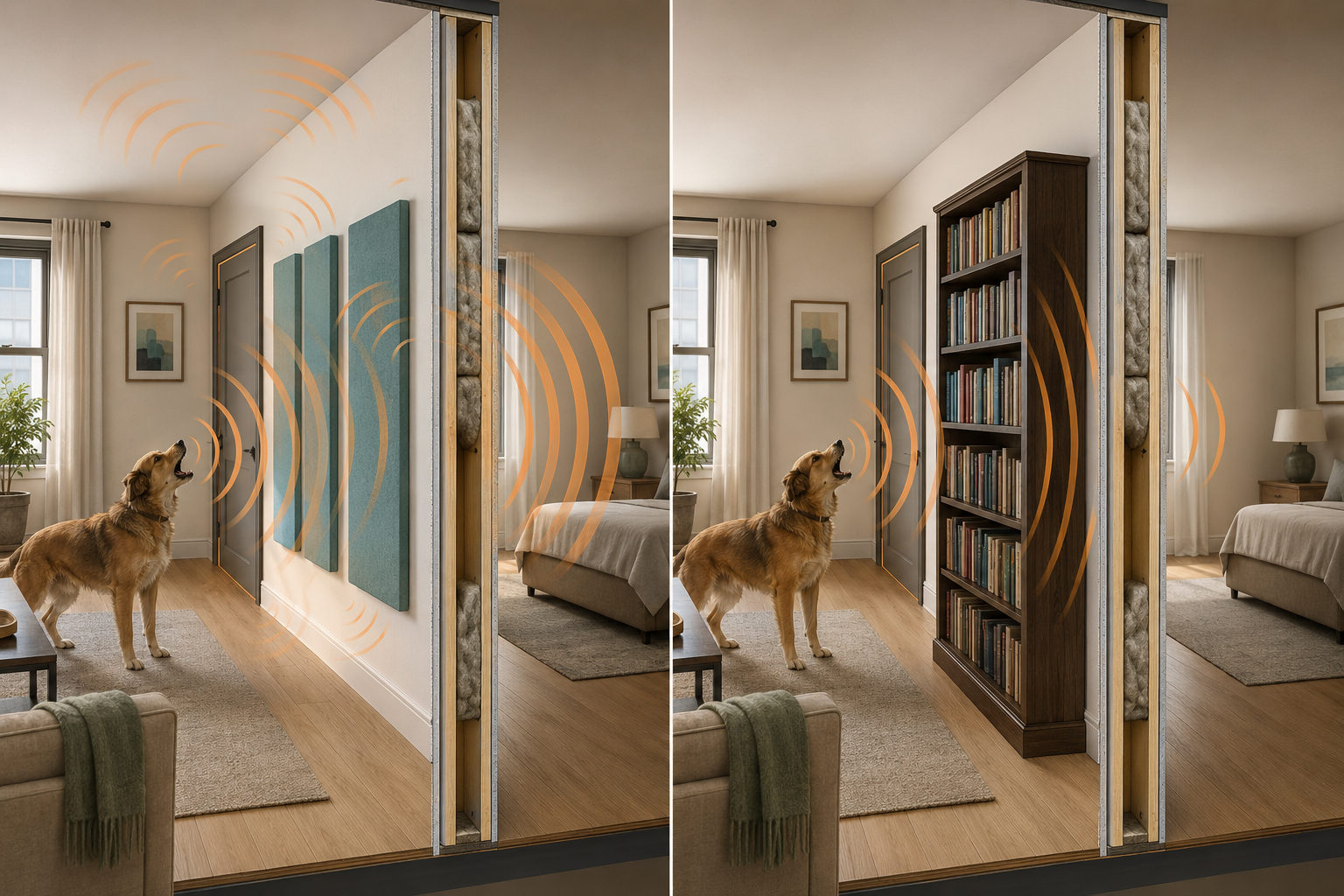
So the honest expectation is: a bark that is currently clearly audible next door will usually still be audible after a renter-safe treatment, but quieter, and more importantly the sharp edges of it are reduced. If the neighbor's complaint is that they can hear the dog at all, no removable product on the market will fully deliver that. If the complaint is that it is loud enough to wake them, sealing the door and treating the floor can move the needle in a way they notice.
Setting that expectation before you buy also protects the neighbor conversation. Promising someone the noise will stop and then delivering a small reduction damages more goodwill than promising a small reduction and delivering exactly that.
Where to start, by which neighbor is complaining
The direction the complaint comes from tells you which category of noise you are dealing with, which is worked through in detail in airborne vs impact noise for apartment pets. The short version, applied to spending:
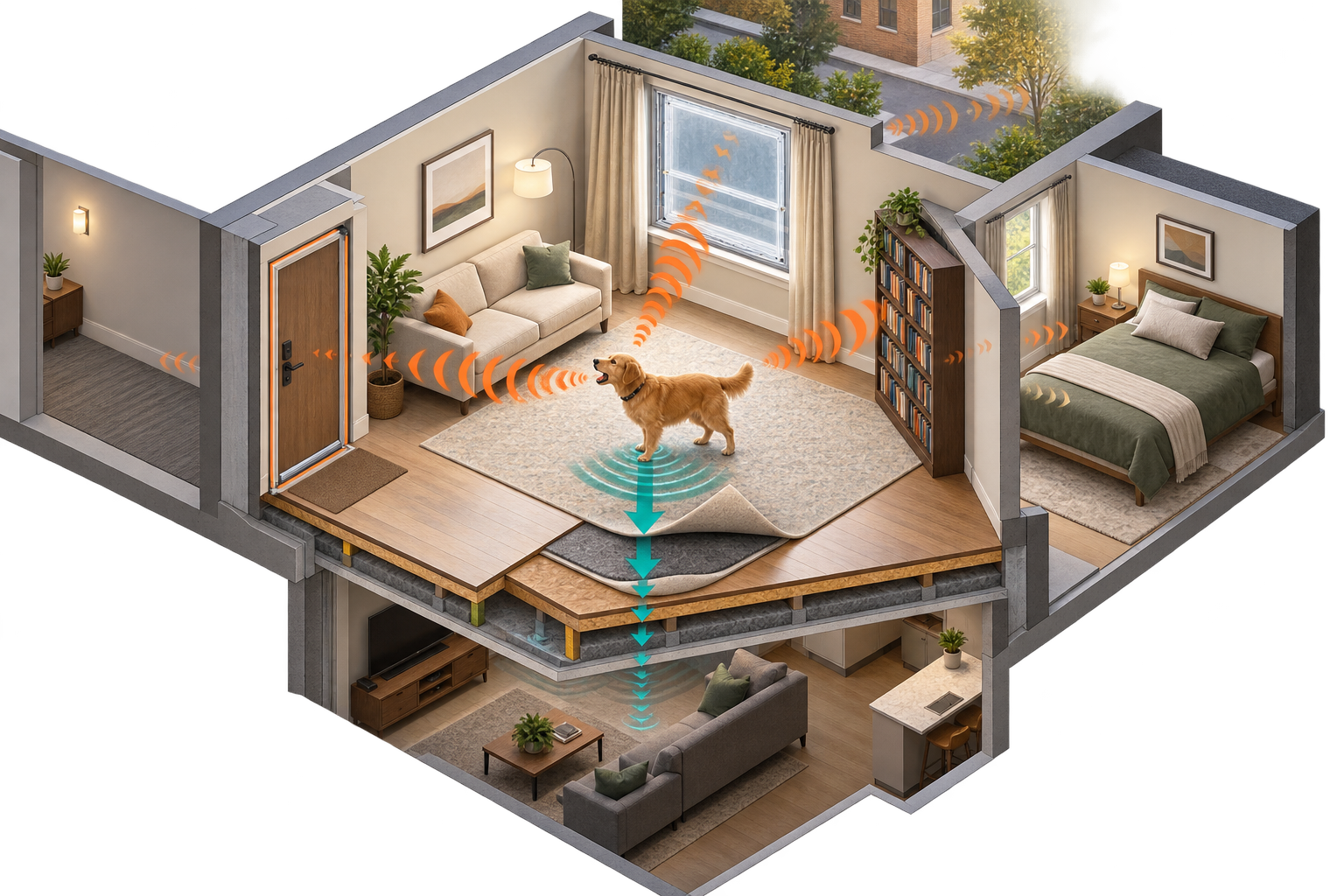
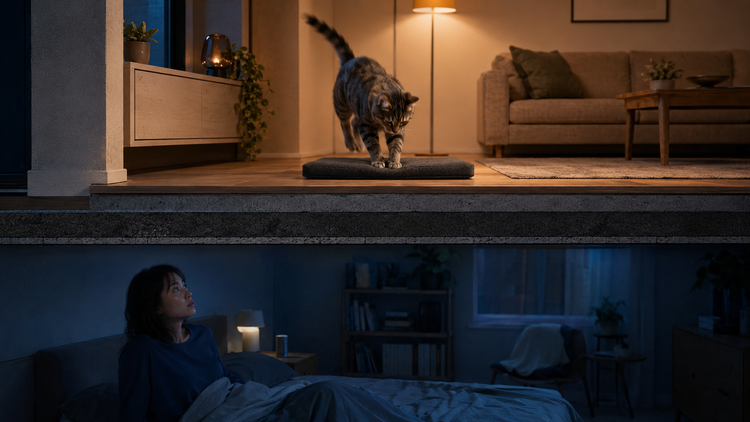
- Complaint from below. Impact noise. Spend on a dense rug pad first and worry about nothing else until that is done. See rugs and underlay for pet impact noise.
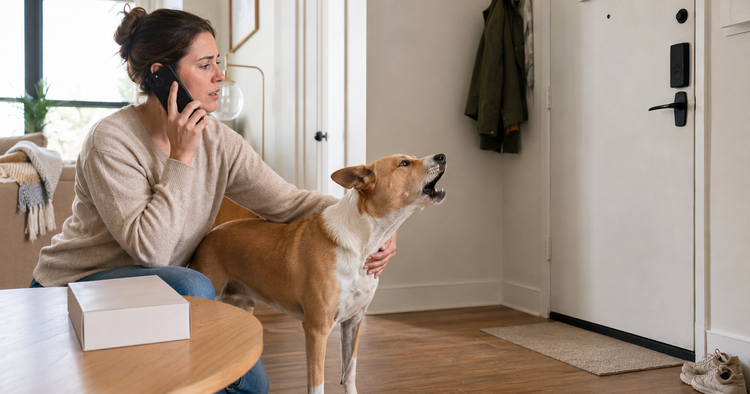
- Complaint from the hallway or the unit across the corridor. Airborne noise leaving through your front door. Seal the door gap first. See door sweeps, weatherstripping and the gap under your front door.
- Complaint from outside, or a dog that barks at the window. Airborne noise leaving through the glass, usually triggered by what the dog can see. See heavy curtains and window inserts for barking that escapes outward.
- Complaint from directly beside you, through a bedroom wall. The hardest case, and the one where expectations need managing. Mass is the answer and you have limited access to it. A loaded bookshelf, a sealed door and reduced reverberation in the room are the available moves. Panels alone will not do it, for reasons covered in acoustic panels for pet noise.
What to check in the lease before you attach anything
Two clauses matter, and both are worth reading before an order arrives rather than after.
The first is any alteration or fixtures clause, which typically covers what may be attached to walls, doors and window frames. Adhesive mounting is where tenants and landlords most often disagree about whether something counted as an alteration.
The second is a floor-covering requirement. Many leases and building house rules in dense US metro markets require a set percentage of hard flooring to be covered, and if yours does, the floor treatment that fixes a downstairs complaint may be something you already agreed to do. That clause and how to use it in a conversation with a landlord is covered in the rugs and underlay guide linked above.
This is general information about common lease terms, not legal advice, and lease language varies. Read your own lease, and where the wording is ambiguous, ask the property manager in writing and keep the reply.
FAQ
Will soundproofing my apartment stop my neighbor hearing my dog completely? Almost certainly not, if the treatment has to be removable. Renter-safe products seal gaps, absorb sound within a room and cushion impacts, but they do not add mass to the wall between you, which is what blocks airborne sound. Expect a meaningful reduction in how loud and how sharp the noise is, not silence.
What is the single most effective renter-safe fix for pet noise? It depends entirely on the direction the noise is traveling. For a downstairs neighbor, a dense rug pad. For a hallway or corridor complaint, sealing the gap under and around the front door. Those two are also the cheapest items on the list, which is unusual and worth taking advantage of.
Are adhesive acoustic panels safe for rental walls? Safer than screws, but not risk free. Removable adhesive is rated against sound drywall in good condition, and rental walls often carry several layers of flat paint that lift with the strip. If you use them, test one in a concealed spot first, and consider freestanding panels instead where floor space allows.
Does a bookshelf really help, or is that an internet myth? It genuinely helps, because it does the one thing no removable product does: it adds mass against the shared wall. A shelf loaded with books and pushed flat against the wall is more useful acoustically than the same wall covered in foam tiles. The limitation is floor space, not physics.
Can my landlord object to renter-safe soundproofing? They can object to anything that alters the unit, which is why the attachment method matters. Freestanding and compression-fit items rarely raise an issue because nothing is modified. Adhesive mounting on painted walls is the common friction point. When in doubt, ask in writing before installing, and keep the answer with your lease documents.
Comments ()