
Do Acoustic Panels Block Dog Barking? Not the Way You Think
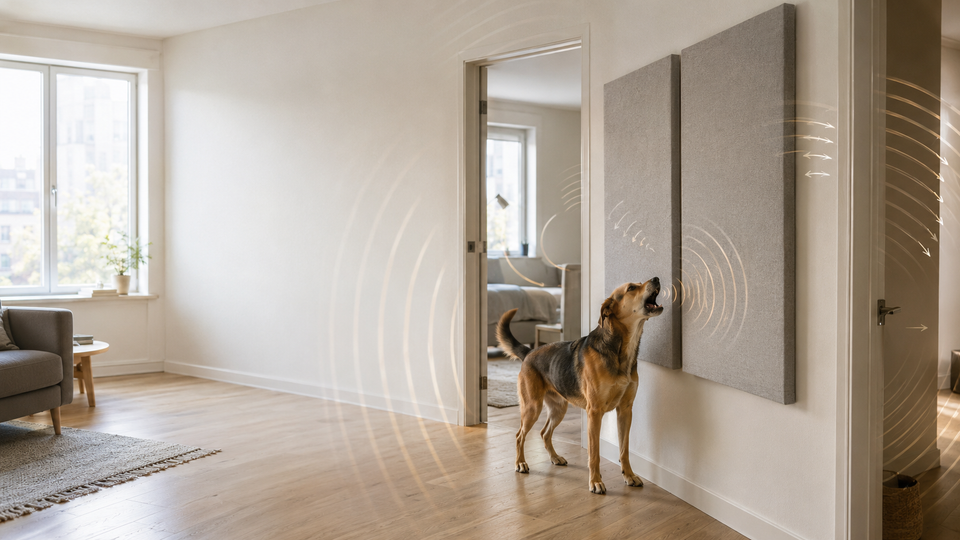
Acoustic panels do not block a dog's barking from reaching your neighbor. They absorb sound inside the room they are mounted in, which reduces echo and makes the bark less harsh for anyone in that room, including you and the dog. Stopping sound from passing through a wall is a different job done by mass and sealing, not by absorption. Panels are sold with an absorption rating and no meaningful blocking rating, and that detail alone tells you what they were designed to do.
This is the single most expensive misunderstanding in apartment pet noise, because the panels are not cheap and the disappointment arrives only after they are on the wall.
Absorption and blocking are two different jobs
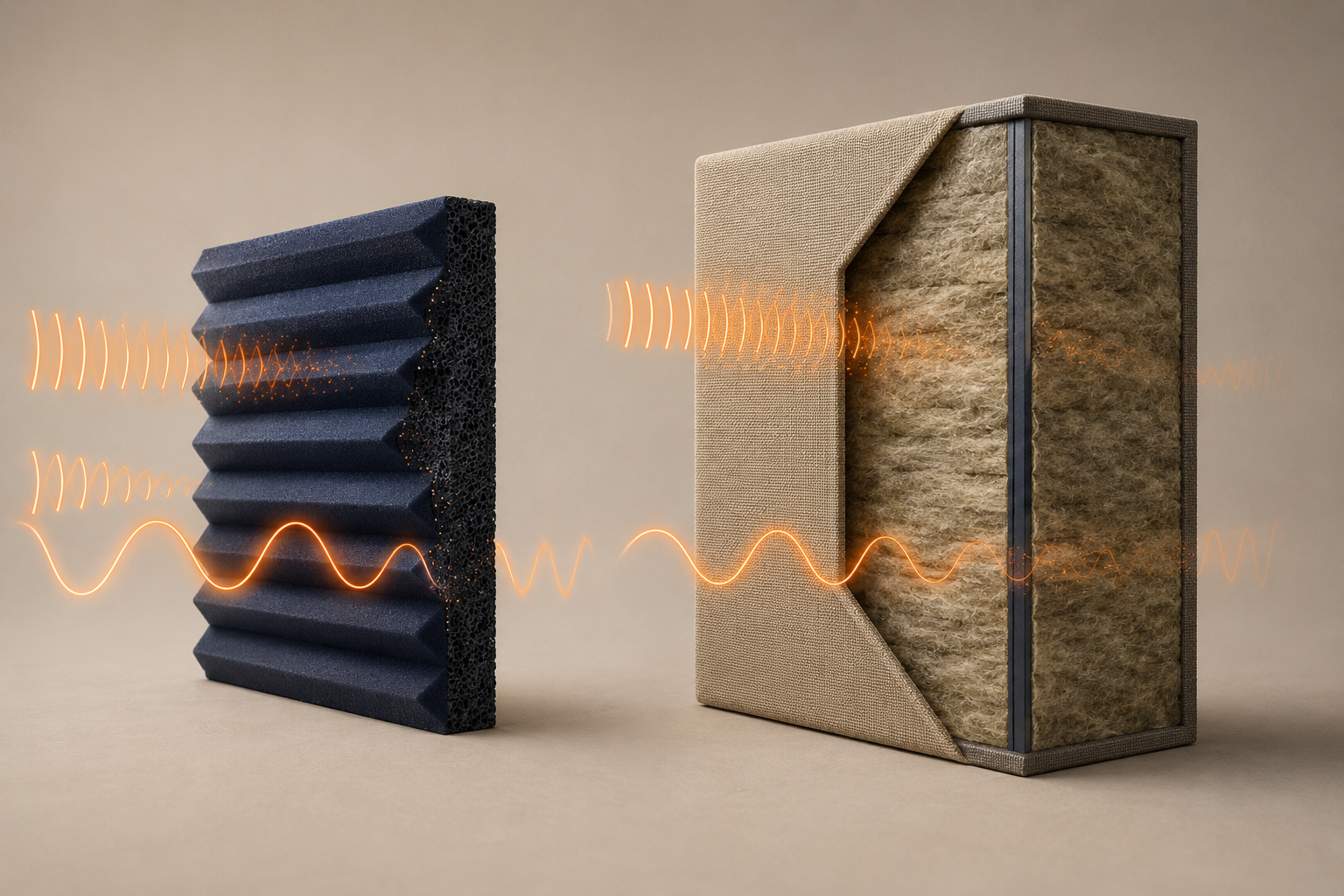
Absorption means sound energy hits a soft, porous surface and is converted to a tiny amount of heat instead of bouncing back into the room. Foam, mineral wool and fabric-wrapped panels do this. The effect is on the sound field inside the room: less echo, less reverberation, a shorter tail on every sharp noise.
Blocking, or transmission loss, means sound energy tries to pass through a barrier and is stopped by it. That is a function of the barrier's mass, its stiffness, whether it is sealed, and whether the two sides are physically decoupled. A heavy, sealed, well-built wall blocks well. A lightweight panel stuck to the face of that wall changes its total mass by a negligible amount.
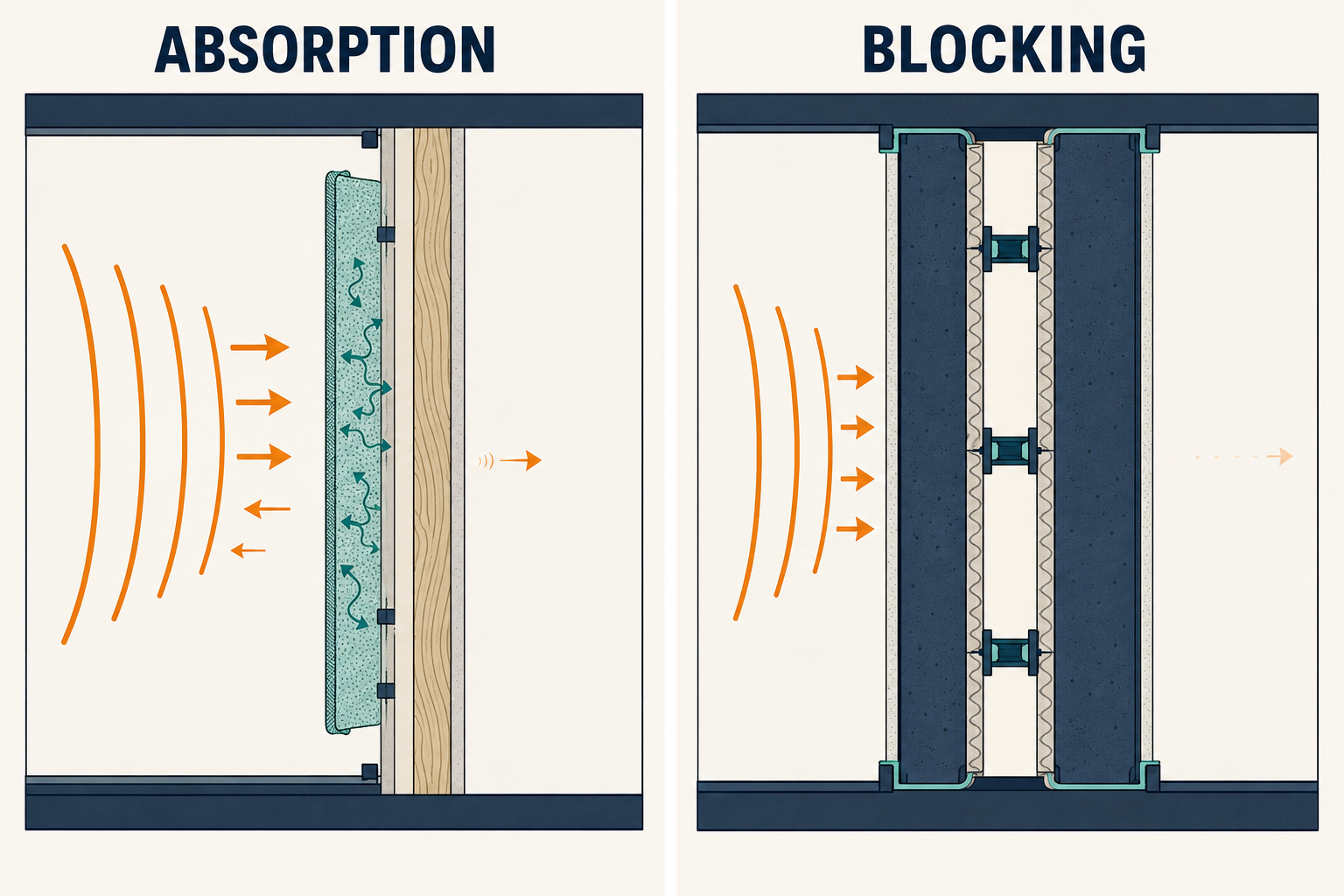
Panel vendors generally state this distinction accurately somewhere on the page. They then sell panels for a barking problem anyway, because the reader searched for barking and the page has to answer.
NRC and STC: read the number the box does not print
Two ratings dominate acoustic product listings, and knowing which one a product advertises tells you what it is for.
| NRC | STC | |
|---|---|---|
| Full name | Noise Reduction Coefficient | Sound Transmission Class |
| What it measures | How much sound a surface absorbs within a room | How much airborne sound a construction element stops passing through it |
| Scale | 0.0 to 1.0, rounded to the nearest 0.05 | An integer, higher is better |
| How it is derived | Average of absorption coefficients at 250, 500, 1000 and 2000 Hz, measured in a reverberation room | Laboratory measurement of transmission loss through walls, doors, windows and floors |
| What carries it | Acoustic panels, foam, ceiling tiles, curtains | Walls, doors, windows, floor-ceiling assemblies |
| Relevant to your neighbor | No | Yes |
Definitions per the standard industry usage of the two ratings, as summarized by acoustic manufacturers and the published definition of the Noise Reduction Coefficient.
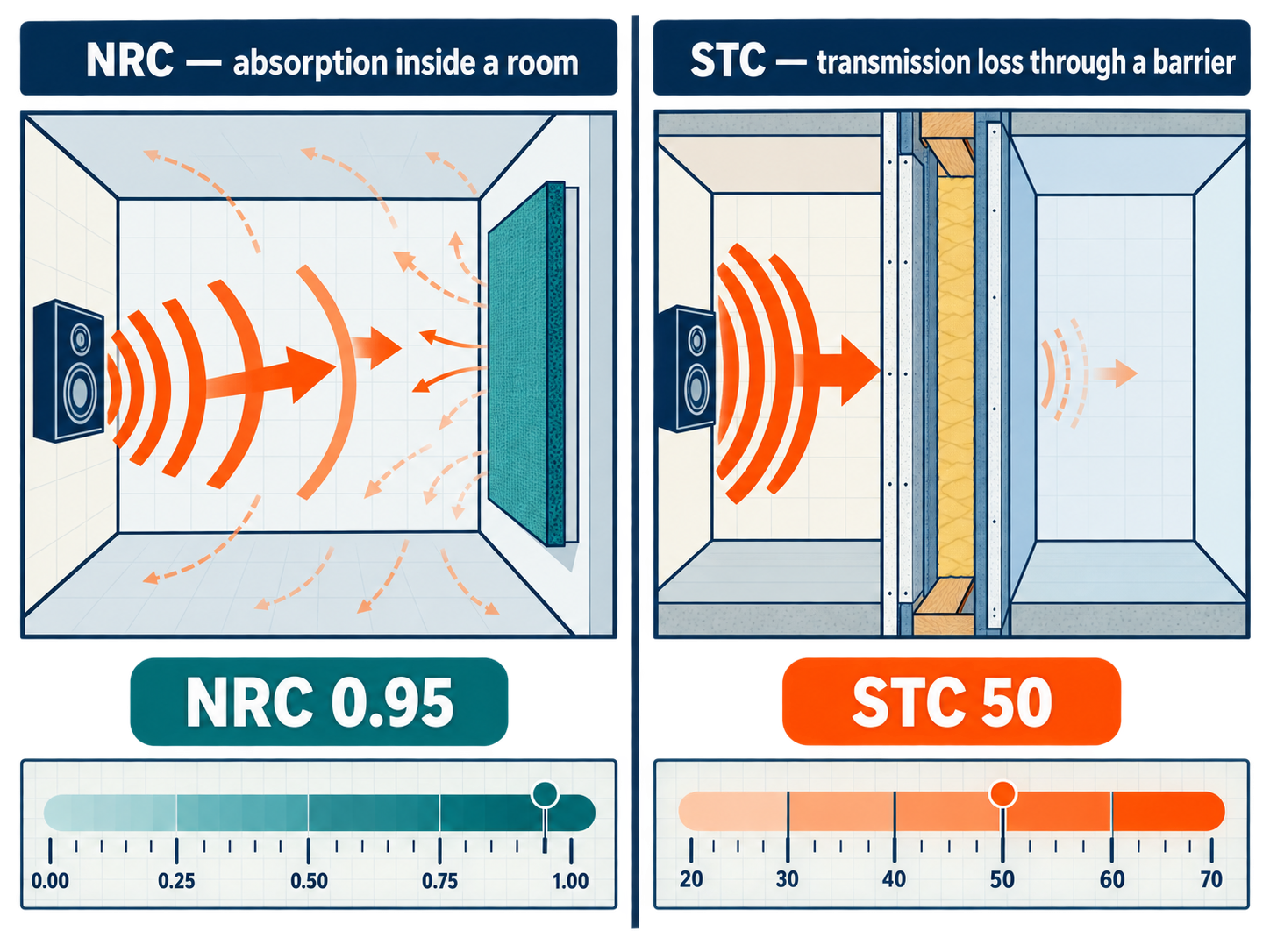
The practical habit worth keeping for life: a product advertises the rating it scores well on. A panel listing that leads with an NRC of 0.95 and never mentions STC is not hiding anything. It is telling you it is an absorber. If a page selling you a barking solution never quotes an STC number, the product does not have a useful one.
For context on what a wall is expected to achieve, the International Building Code sets a minimum of STC 50 for separating walls in multifamily buildings. A panel does not add to that figure in any way a measurement would detect.
What panels genuinely do in an apartment with a pet
There is a real use case here, and it is worth stating clearly because the honest answer is not "these are useless."
A modern apartment with hard floors, bare walls and large windows is acoustically live. Sound bounces repeatedly before it decays. In that room a bark does not just happen once, it rings. Absorption shortens that ring, and the result is a room where the same bark is less punishing to be in. If you work from home with a vocal dog, that is a genuine quality-of-life change for you, and it is the same reason the panels are used in kennels, which is the context most of the search results are actually written about.
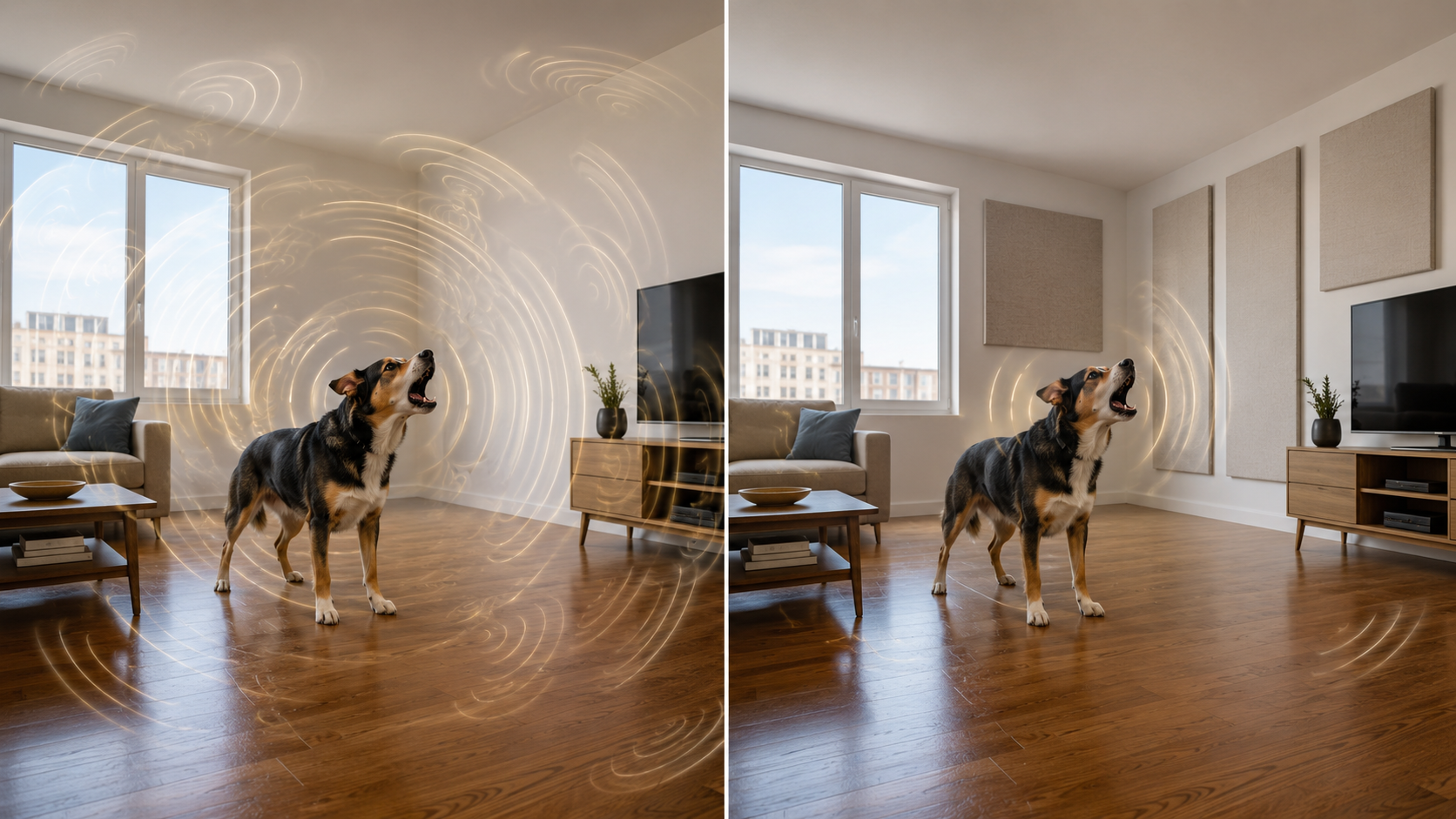
What it is not is a change your neighbor experiences. The sound reaching them passes through the wall, the door and the structure, and absorption on your side of the wall has only a marginal effect on how much energy makes that trip.
Why foam is the weakest version of this
The open-cell foam wedges and pyramid tiles sold cheaply online absorb high frequencies reasonably and low frequencies poorly. A dog's bark carries substantial energy at lower frequencies than the foam handles well, and low frequency is also the part that passes most easily through building structure. So the cheapest product on the shelf is the one least matched to the specific noise you have.
Denser mineral wool or fiberglass panels with a fabric wrap perform better across a wider range, and freestanding versions avoid the adhesive question on rental walls entirely. If you do mount them, denser panels are also heavier, and adhesive ratings are lower than most people assume: see the deposit-safe mounting toolkit. Attachment method matters as much as material for a renter, which is covered across the whole family of fixes in renter-safe soundproofing that comes off at move-out.
What the "calms your dog" marketing is actually claiming
Some panel vendors market directly to pet owners on the basis that a less echoey room reduces a dog's anxiety or barking. The physical part of that claim is straightforward: the room genuinely is less reverberant.
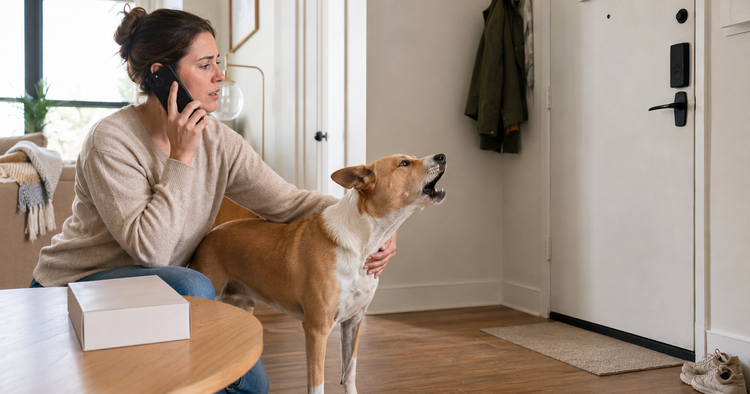
The behavioral part is a different kind of claim, and it belongs to a veterinarian or a qualified trainer or veterinary behaviorist, not to a wall panel. If a dog is barking or vocalizing in a way that suggests distress, especially when left alone, that is a welfare question that gets answered by a professional who can assess the animal. Buying acoustic treatment because a product page implied it would settle an anxious dog risks delaying an assessment the animal actually needs. Treat panels as room acoustics, and treat the animal's behavior as its own separate question with its own separate expert.
If the neighbor is the problem, this is not the fix
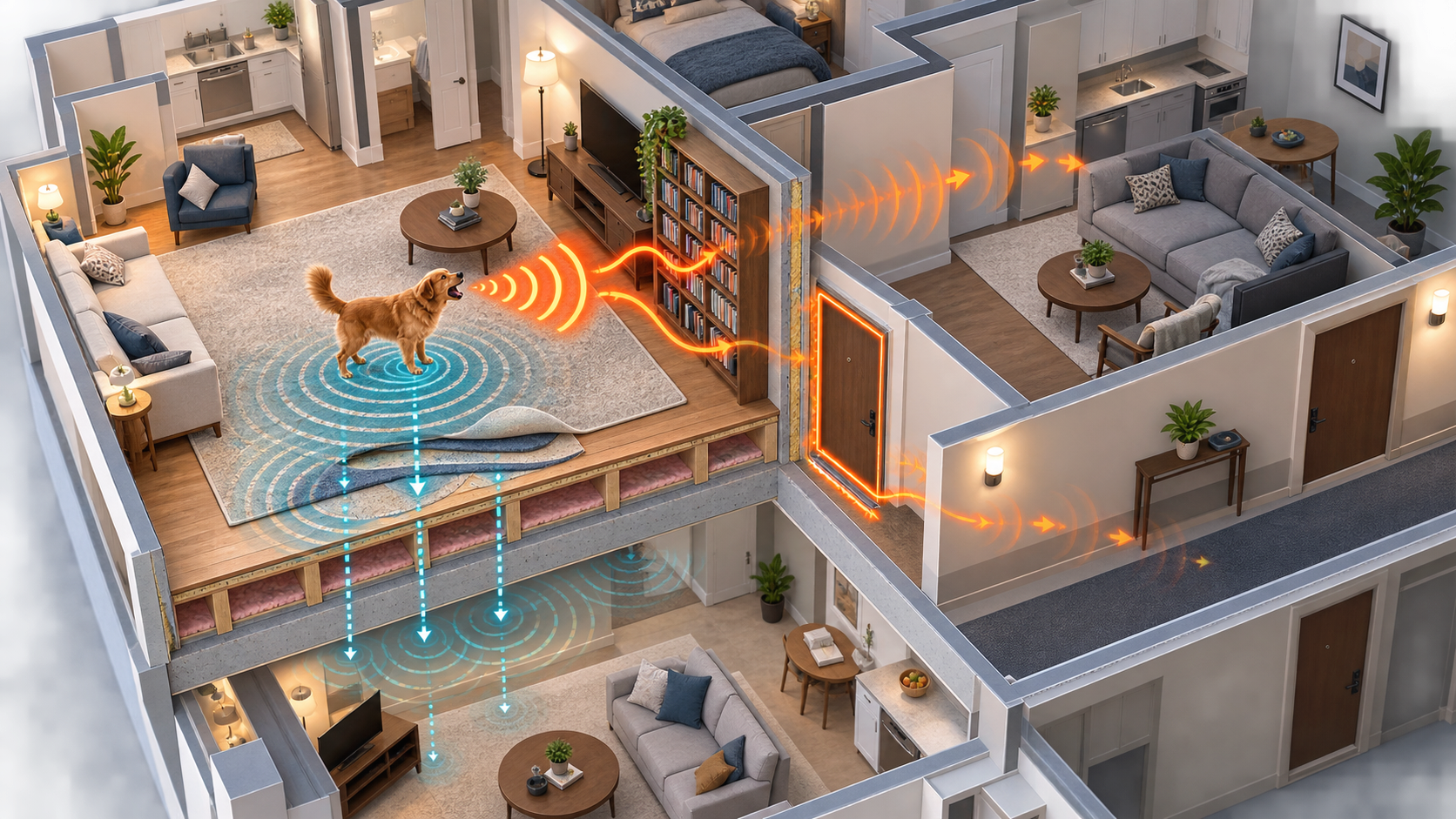
For a complaint coming through a shared wall, the available renter moves are mass, sealing and reduced impact, in that order of effect. Sealing is the accessible one, and for most apartments the largest airborne leak is not the wall at all: it is the gap around the front door, which is worked through in door sweeps, weatherstripping and the gap under your front door.
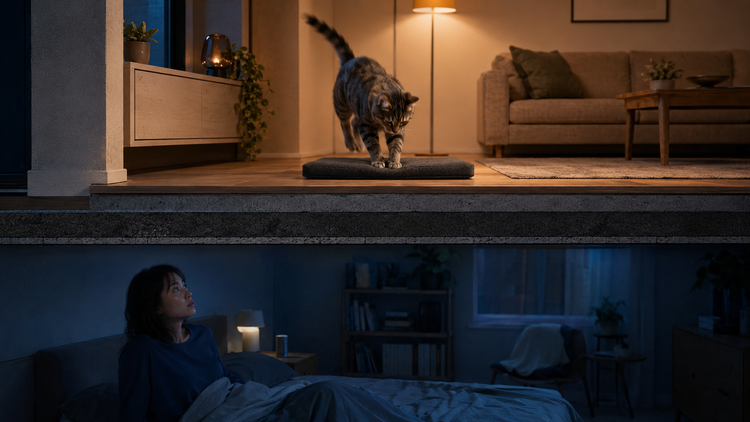
If the complaint is coming from below rather than beside, absorption is even further from the point, because impact noise never travels through the air in your room to begin with. The difference between the two paths is explained in airborne vs impact noise for apartment pets, and the wider picture of what a neighbor is hearing is in pet noise in an apartment: what neighbors actually hear.
FAQ
Do acoustic panels block dog barking from reaching my neighbor? No. Panels absorb sound within the room they are installed in. Blocking sound between rooms depends on the mass and sealing of the wall, door and floor, which a lightweight panel does not meaningfully change. Panels reduce echo on your side of the wall, not transmission through it.
Is acoustic foam or a fabric-wrapped panel better for a barking dog? Denser fabric-wrapped panels generally perform better across the frequency range a bark occupies, while cheap open-cell foam is weakest exactly where a bark carries the most energy. Neither one blocks transmission, so the choice only affects how the room sounds to whoever is inside it.
What does NRC 0.9 actually mean? It means the material absorbs roughly 90 percent of the sound energy that reaches it, averaged across four test frequencies, in a laboratory reverberation room. It says nothing about how much sound passes through the wall behind it, which is the STC question.
Will panels help my dog feel calmer at home? They will make the room less echoey, which is a real change in the space. Whether that changes how a specific animal feels or behaves is a question for a veterinarian or a qualified behavior professional, and if a dog is showing signs of distress when alone, that assessment should come before any purchase.
Is there any renter-safe way to actually block barking through a wall? Not fully. The closest available move is adding mass against the shared wall, and the most practical renter version of that is a loaded bookshelf rather than an acoustic product. Combining that with a sealed door and a treated floor is the realistic ceiling for a removable setup.
Comments ()