
The Gap Under Your Door: Real Numbers for Pet Noise
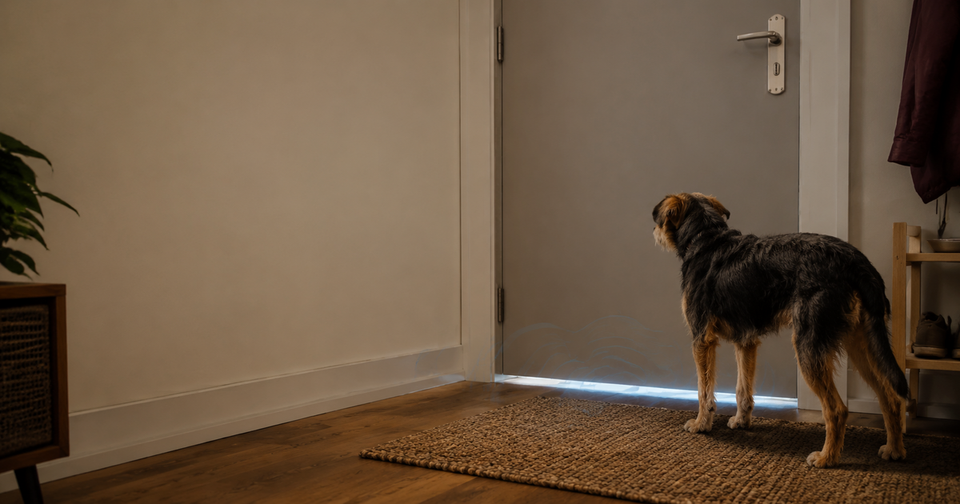
The gap under an apartment front door is an open air path, and airborne sound travels through open air far more easily than through a solid door panel. Sealing that gap with a sweep, plus the side and top gaps with weatherstripping, is the cheapest meaningful reduction available to a renter with a barking dog. It is also the fix most often bought for the wrong complaint: a sealed door helps the hallway and the units across the corridor, and does nothing at all for the neighbor through your bedroom wall.
Getting the direction right before buying is most of the value of this page.
Why the gap beats the door panel
A door slab already blocks some sound, roughly in proportion to its mass. A hollow-core interior door blocks little; a solid-core front door blocks considerably more. But whatever the slab does is bypassed entirely by the gaps around it, because sound moving through air does not need to pass through anything.
Acousticians call this flanking: sound taking a route around the barrier instead of through it. In an apartment front door the flanking paths are the undercut at the threshold, the vertical gaps at the hinge and latch sides, and the gap along the top. The undercut is usually the largest of them, and it is usually the one you can see light through.
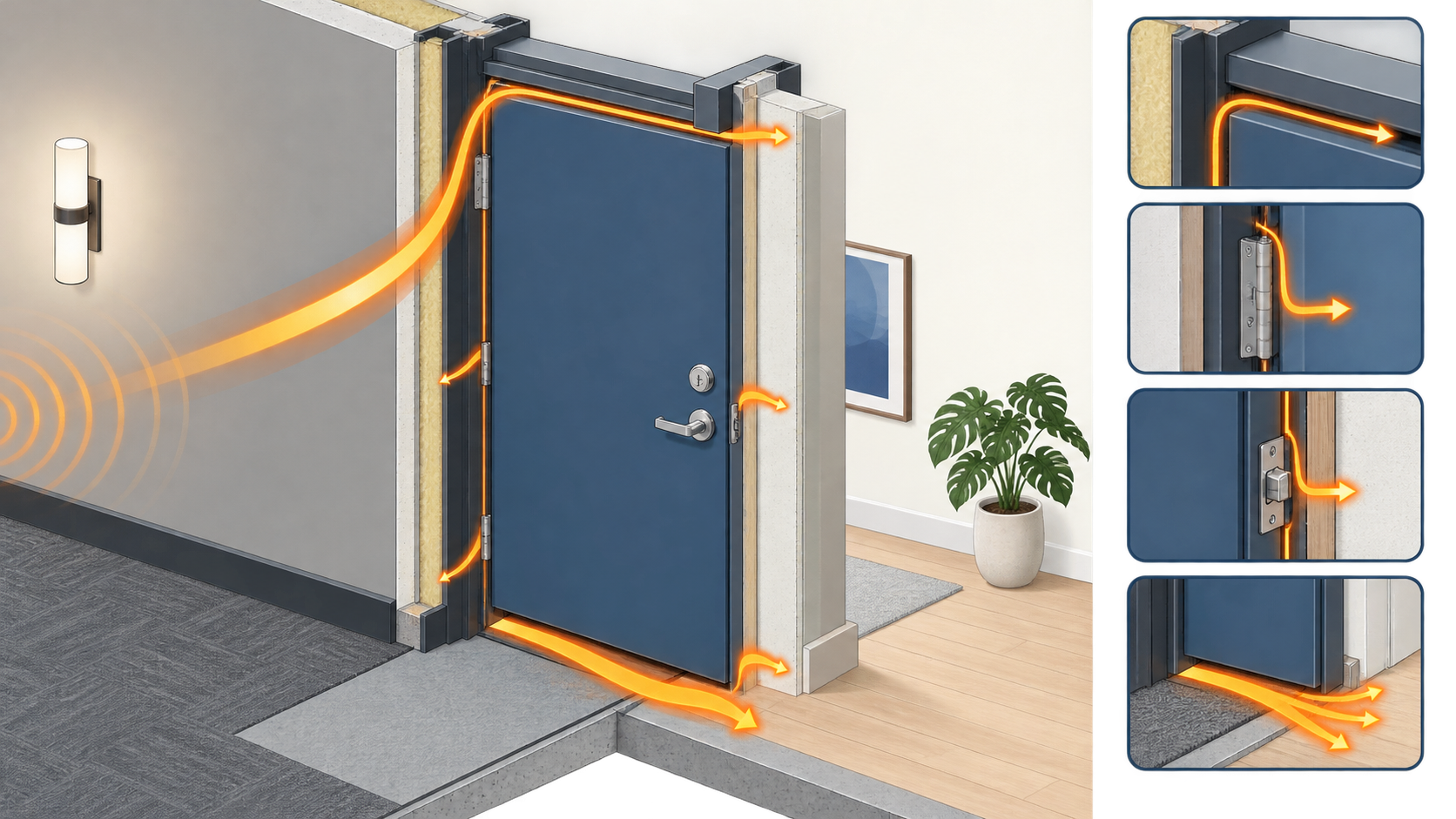
This is why sealing is disproportionately effective compared to its cost. You are not improving the barrier. You are closing the routes that were making the barrier irrelevant.
The number the internet cannot agree on
Here the search results openly contradict each other, and neither side acknowledges the other exists.
| Source | Claim | What it appears to describe |
|---|---|---|
| soundproofingsimplified.com | A quality door sweep with weatherstripping reduces hallway noise by 20 to 30 dB, leaving conversations barely audible | A fully sealed door assembly, treated as a whole |
| secondskinaudio.com | A door sweep alone blocks sound to a minimal level, with best-case reduction of about 4 dB | The sweep component on its own |
Both are soundproofing vendors, so neither figure is an independent laboratory result and neither should be treated as one.
Which is credible. The lower figure is the one to plan around for a single product. A strip of rubber or brush at the threshold is one component, and a few decibels is a realistic order of magnitude for what one component contributes. The 20 to 30 dB figure describes something much closer to a complete, sealed, solid-core door, which is a different thing from a purchase you make for the price of a sandwich.
Why the higher figure is not simply wrong, either. Sealing every gap in a door genuinely does produce a large change in what a listener hears, because closing the last open air path in an otherwise decent barrier can matter more than any single earlier improvement. The honest reading is that the assembly can achieve a large reduction and the sweep alone contributes a small part of it.
For a renter, the practical translation: buy the sweep and the weatherstripping together, expect a noticeable difference in the corridor rather than silence, and do not spend on the basis of the largest number you found.
Which neighbor a sealed door actually helps
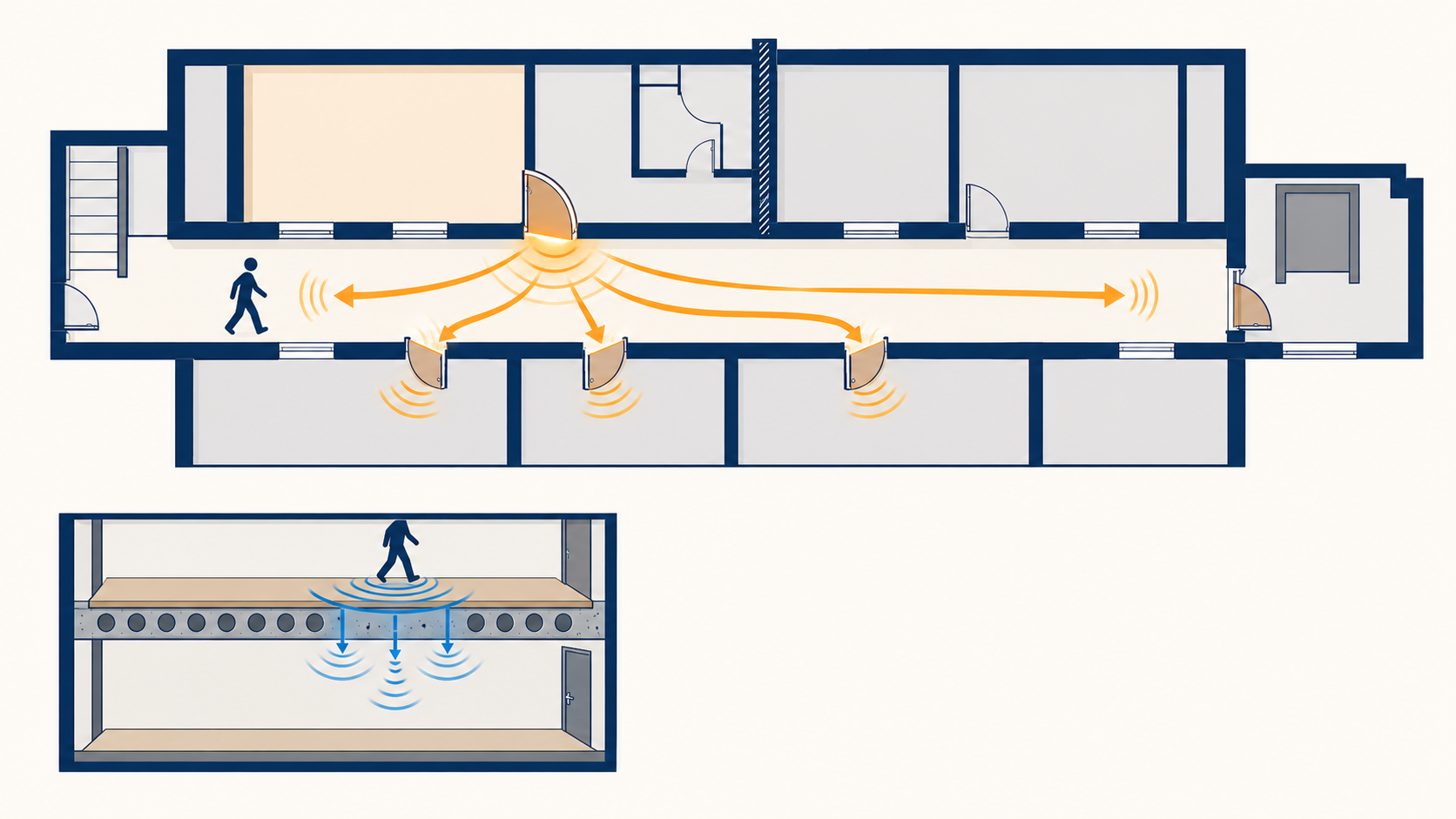
An apartment front door opens onto shared circulation space: a corridor, a lobby, a stairwell, an external walkway. Sound leaving through that door enters the shared space and reaches whoever is in it, plus the units whose own doors open onto it.
So sealing the front door addresses:
- Neighbors who hear the dog when passing your door
- Units across or along the corridor, whose own door gaps let that corridor sound back in
- The general perception in a building that your unit is the loud one, which is often driven by hallway audibility rather than by wall transmission
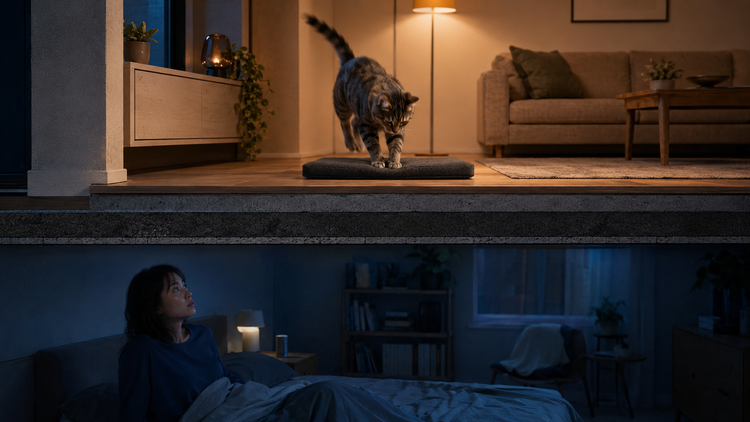
It does not address a neighbor who shares a wall with you and hears the dog through that wall, and it does not address a downstairs neighbor at all, because their complaint is usually impact noise traveling through the structure. The distinction between those two paths is worked through in airborne vs impact noise for apartment pets.
Renter-reversible options, ranked by deposit risk
| Option | How it attaches | Deposit risk | Notes |
|---|---|---|---|
| Weighted draft stopper laid at the threshold | Gravity, nothing installed | None | Has to be repositioned after every use of the door, which is its real weakness |
| Slip-on fabric door insulator that sits under the door | Friction, slides with the door | None | Convenient, less effective seal than a fitted sweep |
| Peel-and-stick door sweep | Adhesive to the door bottom | Low to moderate | The door bottom is a less visible surface than the frame, so adhesive there is a smaller risk |
| Adhesive foam weatherstripping around the frame | Adhesive to the frame or stop | Moderate | Closes the side and top gaps, which are the second-largest path. Test on a hidden section first |
| Screw-on door sweep | Screws into the door | High for a renter | Effective, but it modifies the door. Needs written landlord permission |
The wider logic of choosing fixes by attachment method rather than by product category is set out in renter-safe soundproofing that comes off at move-out, and the adhesive question specifically, including how to remove a strip without taking the paint with it, is in the deposit-safe mounting toolkit.
Why this matters more for a barking dog than for anything else
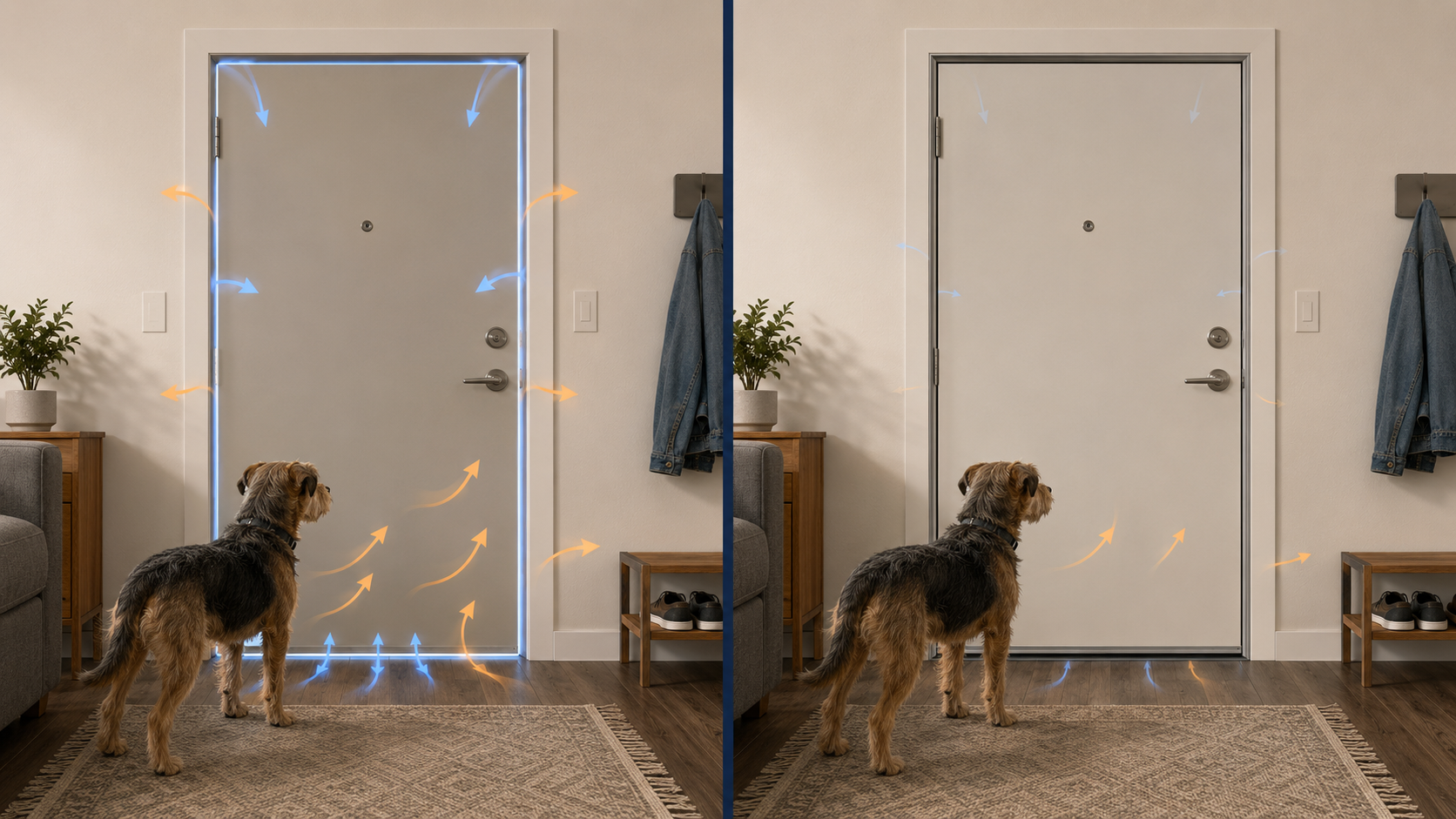
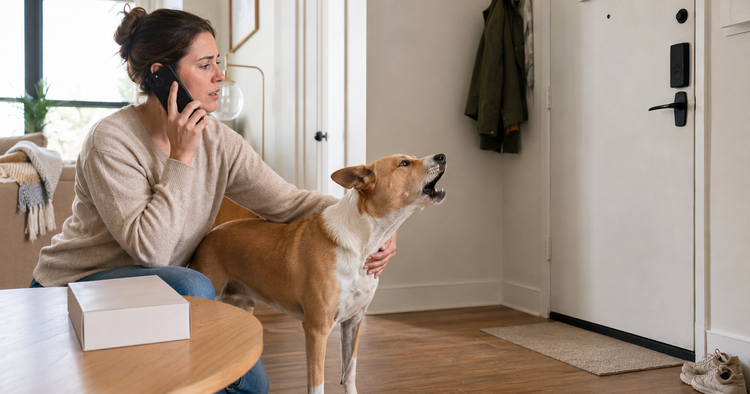
A dog that barks at the sound of the corridor is standing at the door when it barks. That places the source of the noise directly at the leakiest surface in the apartment, at close range, aimed at the gap.
Two consequences follow. First, door sealing punches well above its weight for barking specifically, more than it would for a television or a conversation happening in the middle of the room. Second, the barking that neighbors report most often is exactly this kind: triggered by footsteps, an elevator, a delivery, a neighbor's door, all of it arriving through the same gap the sound leaves by.
Sealing the gap therefore does two jobs at once. It reduces what escapes, and it slightly reduces what arrives to trigger the dog in the first place. That is not a training solution and it does not address why the dog reacts, which is a question for a trainer or veterinarian rather than for hardware. But of all the hardware available to a renter, this is the one item that acts on both ends of the problem.
For barking triggered by what the dog can see rather than hear, the equivalent move is at the window, covered in heavy curtains and window inserts for barking that escapes outward. And if you are still working out what your neighbors are actually experiencing, start at pet noise in an apartment: what neighbors actually hear.
FAQ
How much difference does a door sweep really make for barking? Plan for a few decibels from the sweep itself, and a larger combined effect once the side and top gaps are sealed too. Vendor claims range from about 4 dB for a sweep alone to 20 to 30 dB for a fully sealed door, and the honest reading is that the higher figure describes the whole sealed assembly rather than the one product.
Should I seal the door or the wall first? The door, unless the complaint is specifically coming through a shared wall or from the unit below. The door is the largest airborne leak in most apartments and the cheapest to address, so it is the highest return per dollar for corridor-side noise.
Will a draft stopper work as well as a fitted sweep? Not quite, because it seals less completely and it moves out of position every time the door opens. It is the right choice when adhesive is not an option or when you want to test whether sealing helps at all before committing to something stuck on.
Does sealing the door make the apartment stuffy? It can reduce airflow under the door, which matters in units that rely on that gap for ventilation between rooms or for a bathroom fan to draw properly. If air movement is already poor, check that before sealing, and consider treating the front door only rather than every interior door.
My downstairs neighbor complains. Will a door sweep help them? No. A complaint from below is almost always impact noise traveling through the floor structure, and no amount of air sealing affects it. Floor treatment is the fix for that, covered in rugs and underlay for pet impact noise.
Comments ()