
Soundproof Curtains vs Window Inserts for Dog Barking
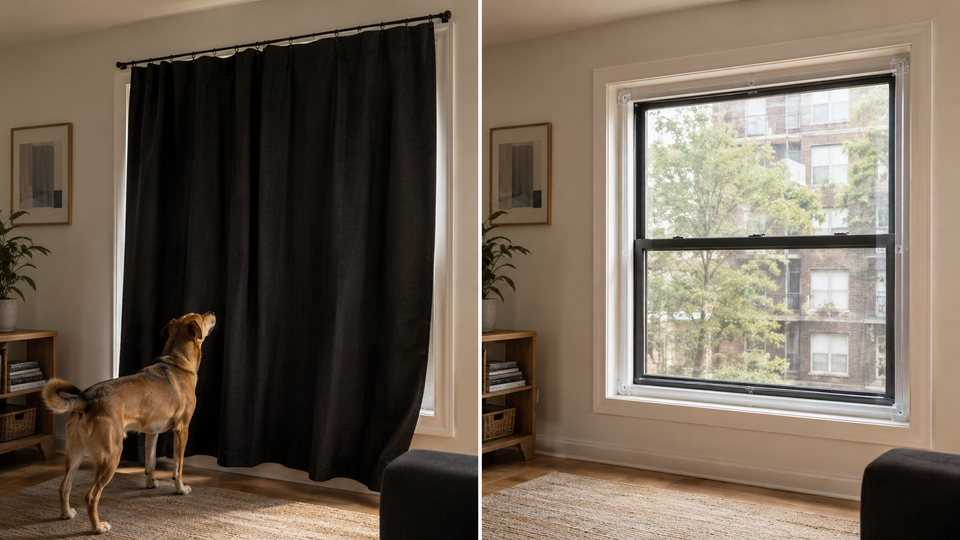
For a dog that barks at the window, curtains and window inserts solve two different problems. A compression-fit window insert adds mass and a sealed air gap at the glass, which reduces how much barking leaves the apartment. A heavy or blackout curtain does relatively little to the sound but a great deal to the view, which is often what the dog is reacting to in the first place. Buying the wrong one for your situation is the most common mistake here, and the product marketing does not help you tell them apart.
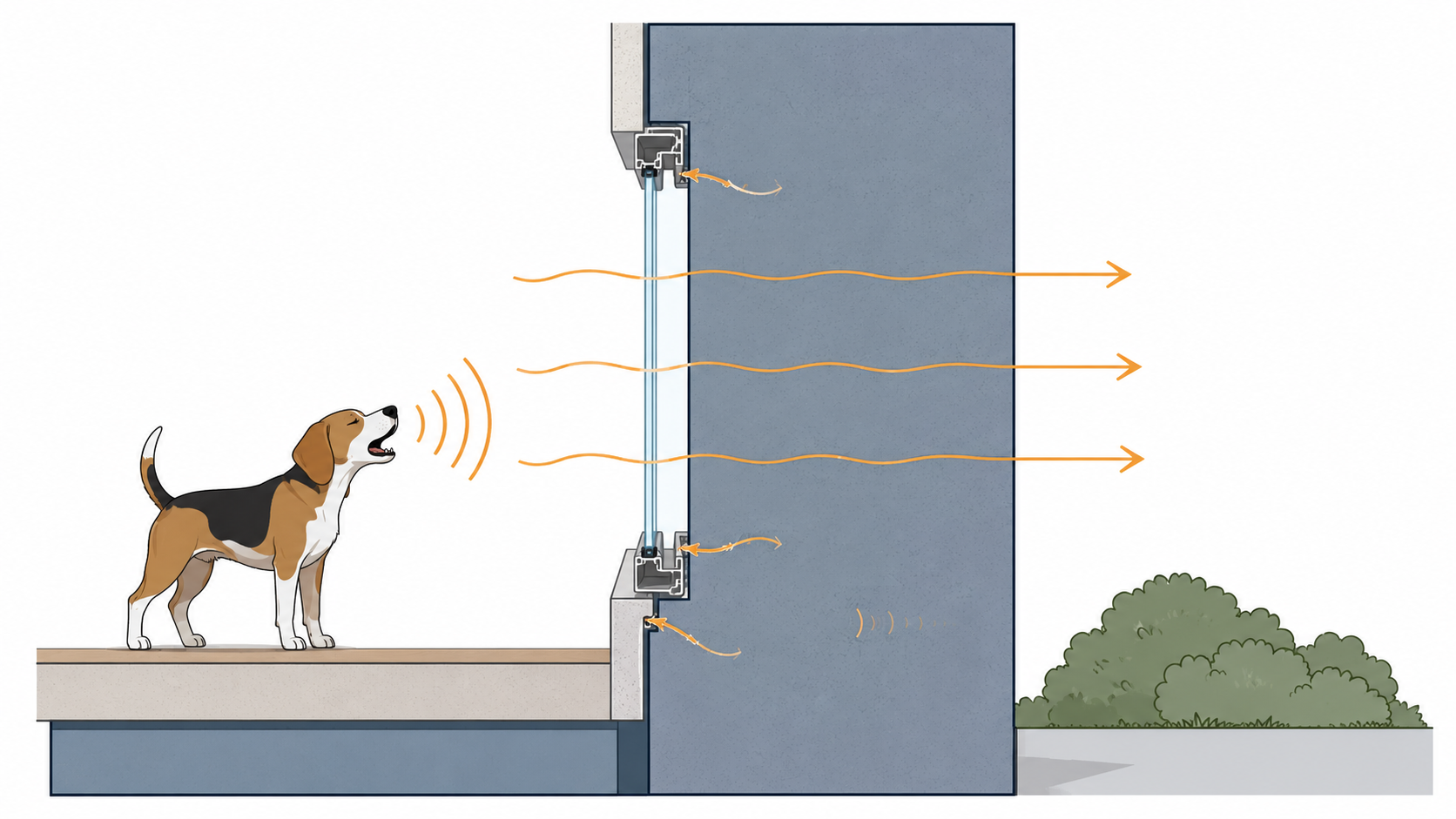
Why the window is a weak point for outward noise
A window is the lightest part of an exterior wall. A single pane of glass has far less mass than the wall around it, and mass is the main thing stopping airborne sound from passing through a barrier. Add the perimeter seal, which on an older rental unit is often imperfect, and the window becomes both a thin spot and a leak.
That is why a bark aimed at the window carries into the street and the courtyard in a way the same bark aimed at an interior wall does not, and why a dog stationed on a windowsill generates complaints from people who do not even live in the building. The mechanism is the same one covered in airborne vs impact noise for apartment pets: this is airborne sound taking the path of least resistance.
Mass versus view-blocking: what each option actually does
| Option | Adds mass at the glass | Seals the perimeter | Blocks the view | Renter-reversible |
|---|---|---|---|---|
| Compression-fit acrylic or glass window insert | Yes, meaningfully | Yes, by design | No | Yes, held by compression tubing, nothing bolted |
| DIY window plug, a rigid panel cut to the frame | Yes | Yes, if fitted tightly | Yes, completely | Yes, lift out |
| Heavy acoustic or blackout curtain | Marginally | No, it hangs in front of the opening | Yes | Yes, uses the existing rod |
| Standard curtain | No | No | Partly | Yes |
| Window film | No | No | Partly, obscures rather than darkens | Usually, though adhesive films vary |
The row that surprises people is the curtain. Fabric absorbs some sound in the room and can slightly soften what reaches the glass, but it hangs loose in front of an opening rather than sealing it, and it does not come close to the mass of an insert. Its real contribution to a barking problem is usually that the dog cannot see out.
Compression-fit inserts and why they suit renters
Window inserts sit inside the existing frame and are held by compression tubing around their edges. Nothing is bolted, screwed or glued, so the window is not modified and the insert comes out at move-out. That combination, real acoustic mass with no alteration to the unit, is rare among renter-friendly options and is the main reason inserts are worth knowing about even though they cost far more than curtains.
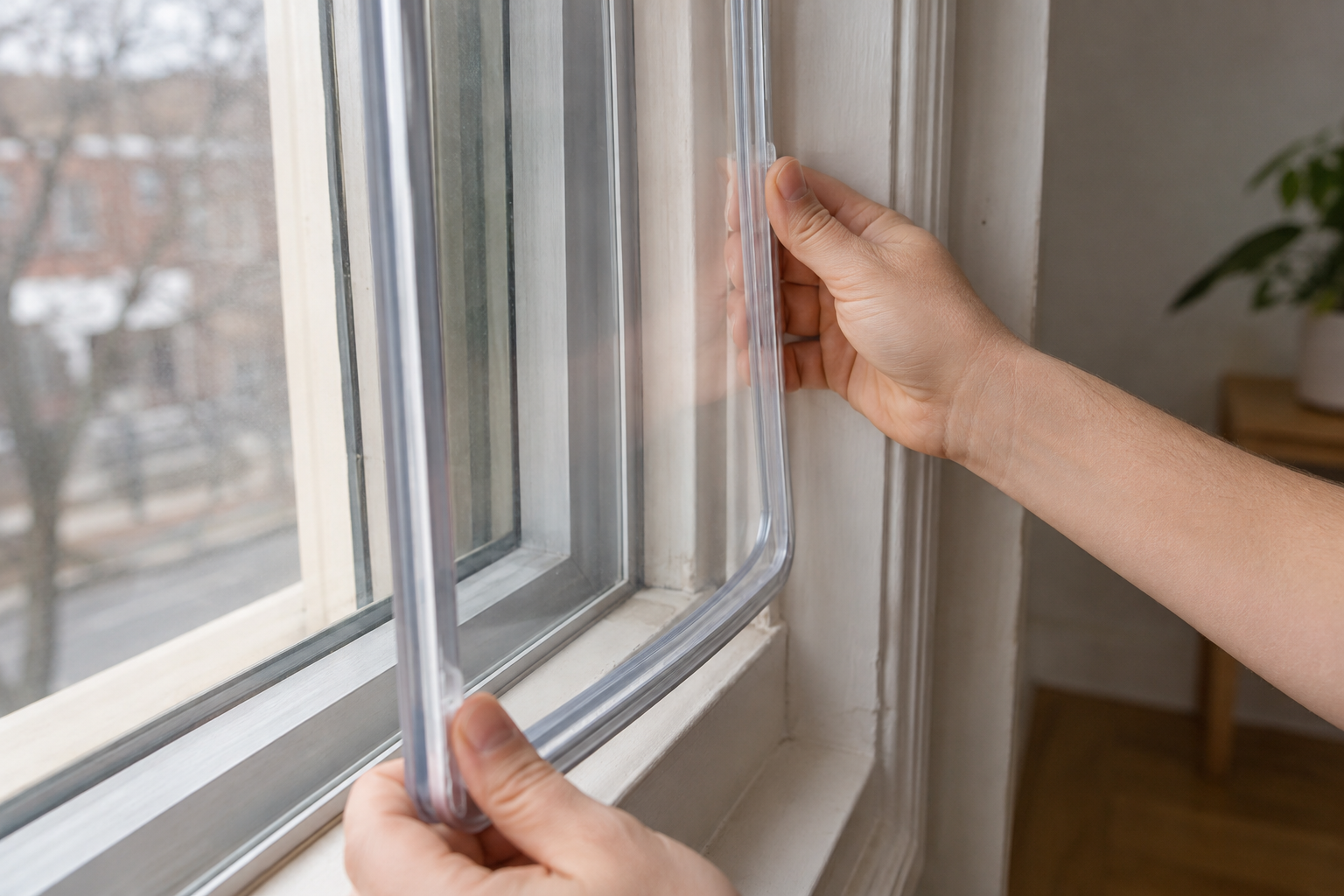
Two practical caveats. They need an accurate measurement of the opening to seal properly, and a poor fit removes most of the benefit. If you are hanging heavy curtains instead, the rod is doing real work and tension-fitted hardware has a modest weight limit, covered in the deposit-safe mounting toolkit. And they cover the window, so any unit relying on that window for ventilation needs a plan for how the insert comes in and out.
The percentage claim you should not accept
Acoustic curtain listings commonly state something like a 20 to 40 percent reduction in window sound transmission. That number appears across the search results for this topic and it is worth being blunt about: a percentage with no stated reference quantity and no test standard is a marketing claim, not a specification.

Forty percent of what? Sound energy, sound pressure, perceived loudness and decibel level are four different quantities, and a percentage reduction in one is not the same as in another. No test method is cited, no frequency range is given, and the same figure appears on products with different constructions.
What to ask for instead: an STC number, which is the standard laboratory rating for how much airborne sound a construction element stops. Window inserts are often sold with STC figures for the combined assembly. Curtains generally are not, and the absence is informative. This is the same read-the-rating habit that applies to wall treatments, worked through in acoustic panels for pet noise.
Removing the visual trigger is not the same as training
A dog that barks at people, dogs or vehicles passing outside is responding to something it can see. Blocking the view removes that specific stimulus, and blackout curtains, a lower window film or simply moving furniture away from the sill are the hardware versions of that.
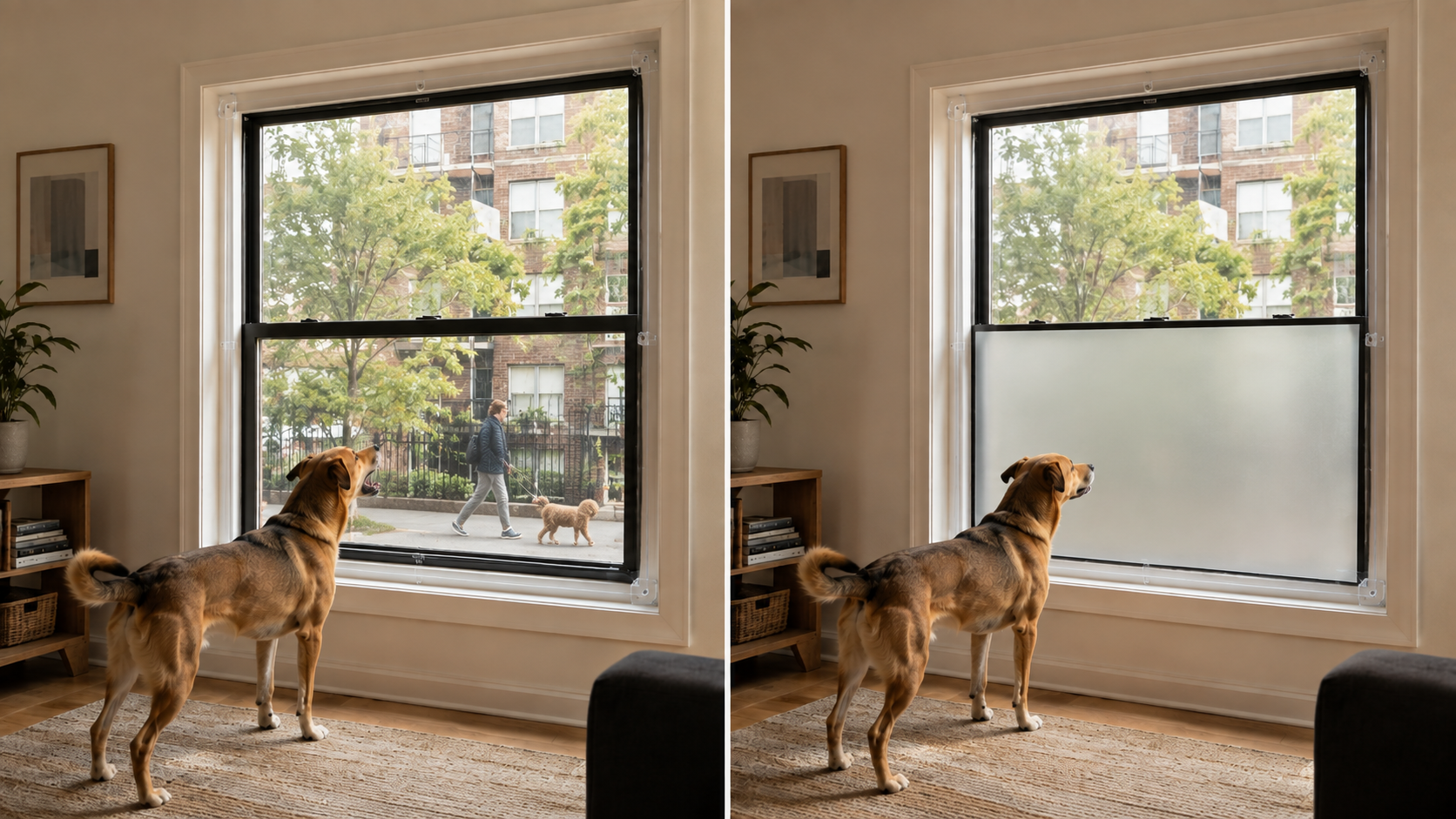
It is worth being precise about what this achieves. It changes what the dog is exposed to. It does not change how the dog responds to that category of stimulus, and it may not transfer to other triggers, particularly sound-based ones arriving through the front door. Why a dog reacts the way it does, and how to change that response, is behavior work belonging to a qualified trainer or a veterinarian or veterinary behaviorist, and a dog that appears distressed rather than simply alert deserves that assessment rather than another purchase.
The hardware side of this site stops at the window covering. If a dog barks at everything regardless of what it can see, the covering is not the answer and no further product is either.
Where this fits with the rest of the apartment
Window treatment addresses noise leaving outward and triggers arriving visually. It does not address the corridor, which is a separate leak with its own fix in door sweeps, weatherstripping and the gap under your front door. It does not address impact noise reaching the unit below.
For choosing between all of these by attachment method and deposit risk, start at renter-safe soundproofing that comes off at move-out, and for the overall picture of what a neighbor is hearing, see pet noise in an apartment: what neighbors actually hear.
FAQ
Do soundproof curtains actually stop dog barking from being heard outside? Only slightly. A heavy curtain adds some absorption but hangs loosely in front of the opening rather than sealing it, so it does not do much to sound leaving through the glass. Its main benefit for a barking dog is usually that it blocks the view that triggers the barking.
Are window inserts worth the cost for a renter? They are the only renter-reversible option that adds real mass and a sealed air gap at the window, and they leave the window unmodified. Whether that justifies the cost depends on whether outward-traveling barking is genuinely your problem, which the direction of the complaints will tell you.
What does a 20 to 40 percent noise reduction claim mean? Not enough to act on. The figure appears widely on acoustic curtain listings without a reference quantity, a frequency range or a test standard. Ask for an STC rating instead, which is a defined laboratory measurement of airborne sound transmission through an element.
If I block the window, will my dog stop barking? It may reduce barking triggered by what the dog can see, and it will not affect barking triggered by sound or by being alone. Blocking a trigger is not the same as changing the underlying response, which is work for a trainer or veterinarian rather than for a curtain.
Can I use a DIY window plug instead of buying an insert? Yes, and a tightly fitted rigid panel can perform well, since the principle is the same: mass plus a sealed perimeter. The trade-offs are that it removes the view and the daylight completely, and that fit quality is entirely down to how accurately it is cut.



Comments ()