
Airborne vs Impact Noise: Which Pet Sounds Travel Where
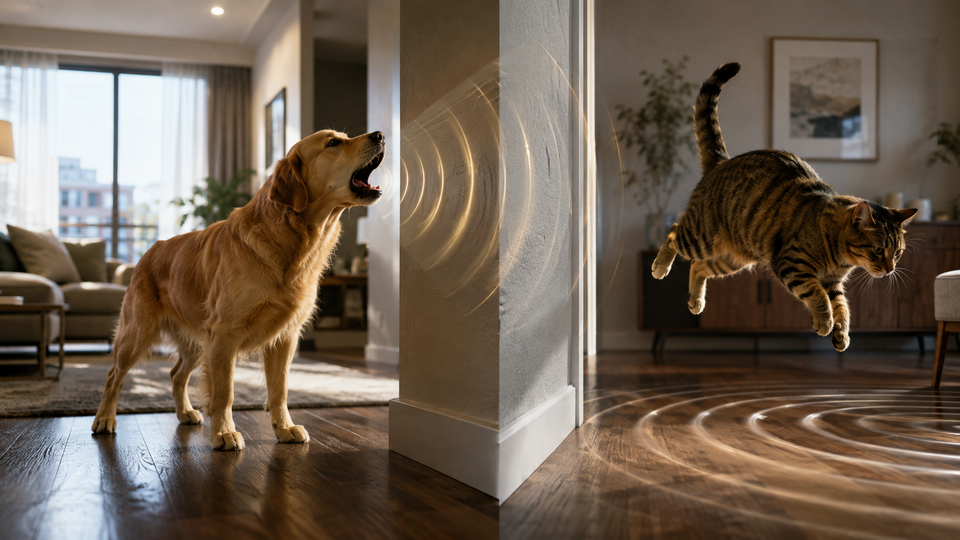
The neighbor beside you never mentions the barking, but the one below you has left two notes about it. That split isn't random and it isn't about how sensitive one neighbor is compared to the other: it's because barking and a cat's nighttime sprint travel through a building by two physically different routes, and each route reaches a different apartment.
Understanding which category a given pet noise falls into is the single most useful piece of information for deciding what will actually reduce it, because a fix aimed at the wrong kind of sound does close to nothing.
Two routes, not one noise problem
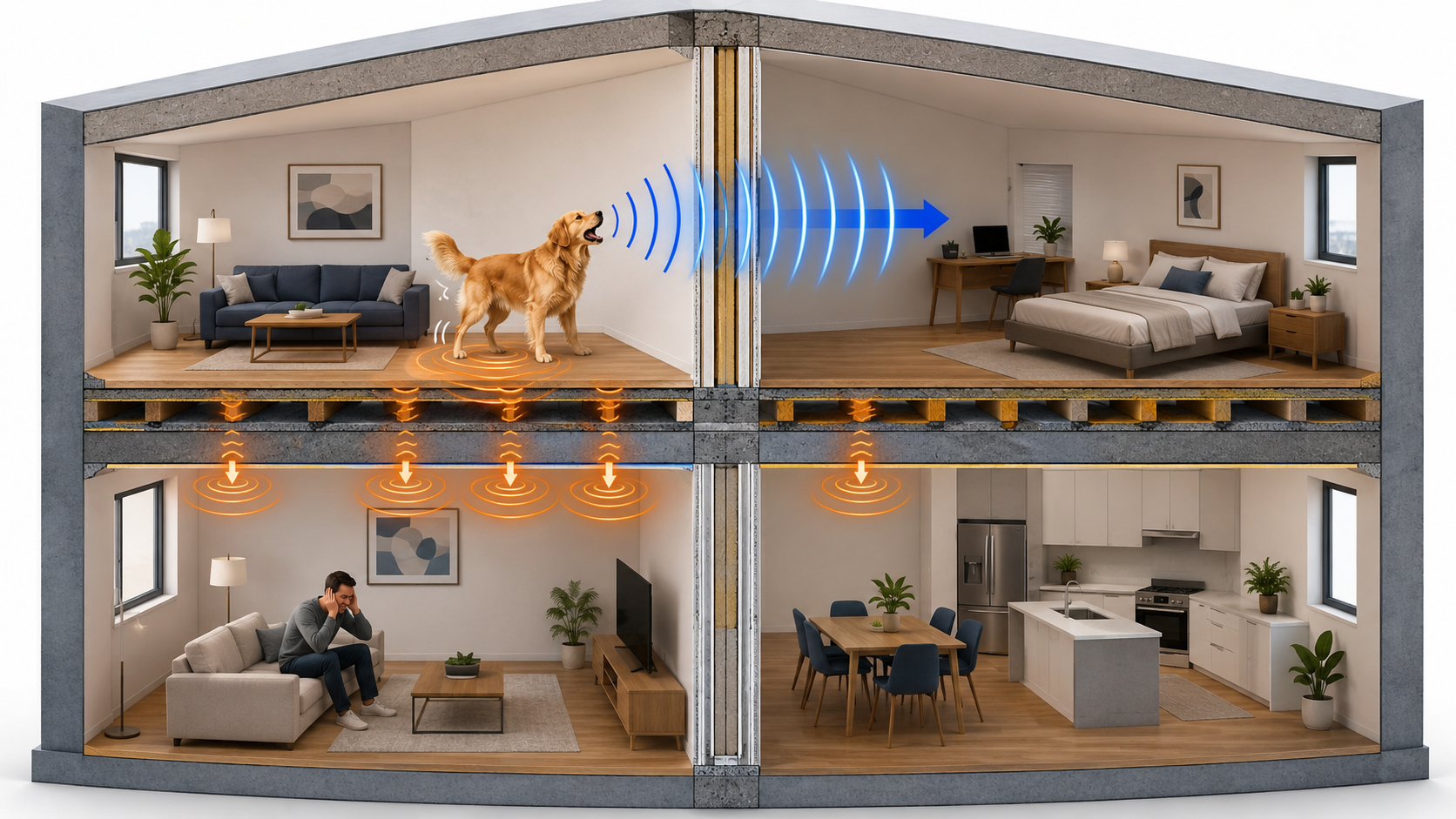
Airborne sound starts as a sound wave moving through the air of the room: a bark, a yowl, a whining motor. It reaches a neighboring space mainly by passing through or around a shared wall, a door, or a window, which is why it tends to be loudest for whoever is directly beside you.
Impact sound, sometimes called structure-borne noise, starts as a physical vibration in the building itself: a paw striking a hardwood or tile floor, a cat landing after a jump, a heavy object set down hard. That vibration doesn't need a gap to travel through. It moves through the joists, the subfloor, and the frame of the building, which is why it tends to be loudest for the unit directly below, and often barely noticeable to the unit beside you.
This is the reason a barking complaint and a "something's running around up there" complaint usually come from two different directions in the same building, and why the standard advice for one does very little for the other.
Sorting common pet sounds into the right category
| Sound | Category | Who hears it most |
|---|---|---|
| Barking, howling, meowing | Airborne | The unit beside you, through the shared wall or door |
| A dog running or a cat's nighttime zoomies | Impact | The unit directly below |
| Nails clicking on a hard floor | Impact | The unit directly below |
| A feeder or fountain motor running | Airborne (usually low-level) | Whoever shares the wall the device sits against |
| A litter box's automated cleaning cycle | Both, in different amounts | Below for the mechanical clunk, beside for the motor hum |
| A cat jumping off a windowsill or counter | Impact | The unit directly below |
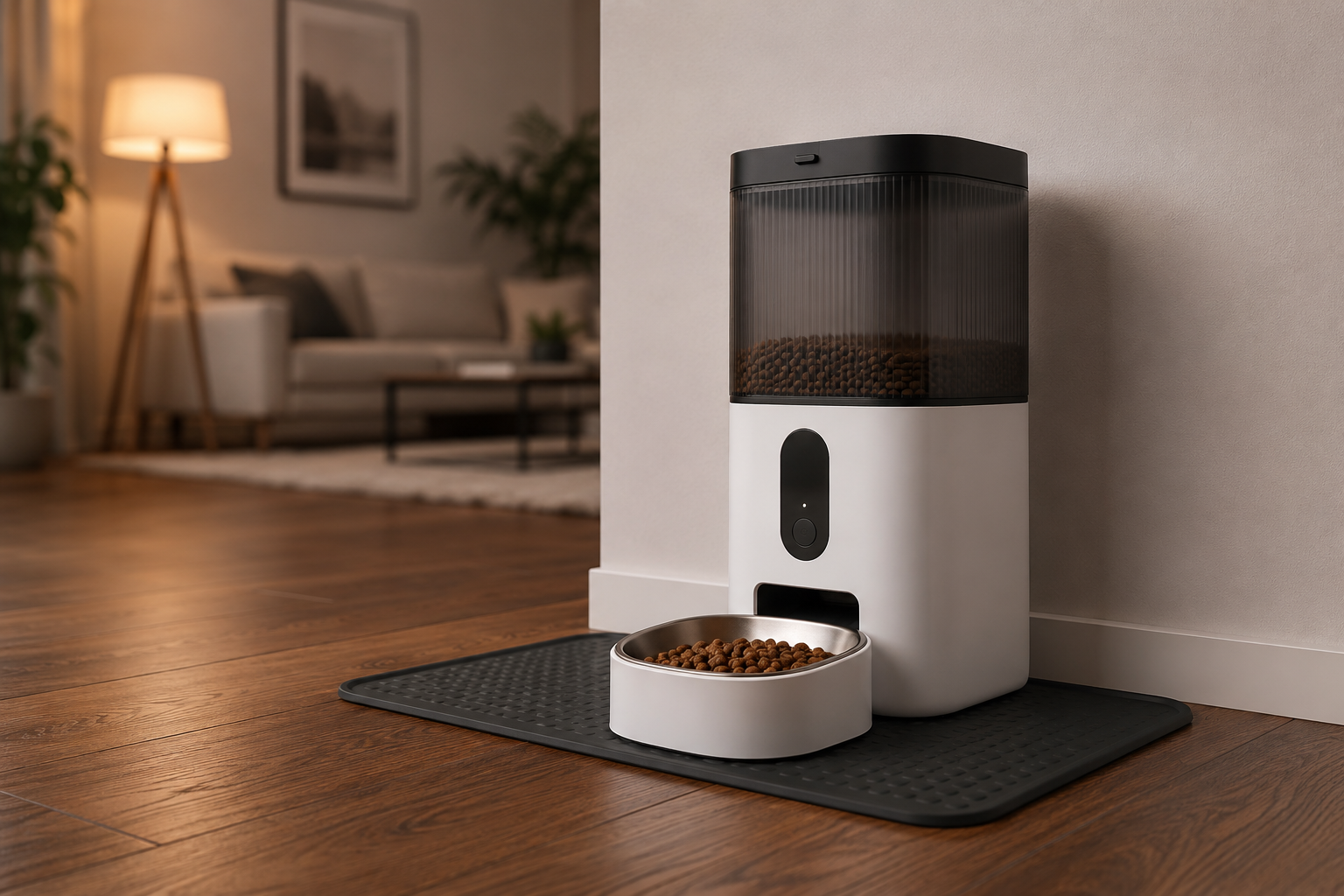
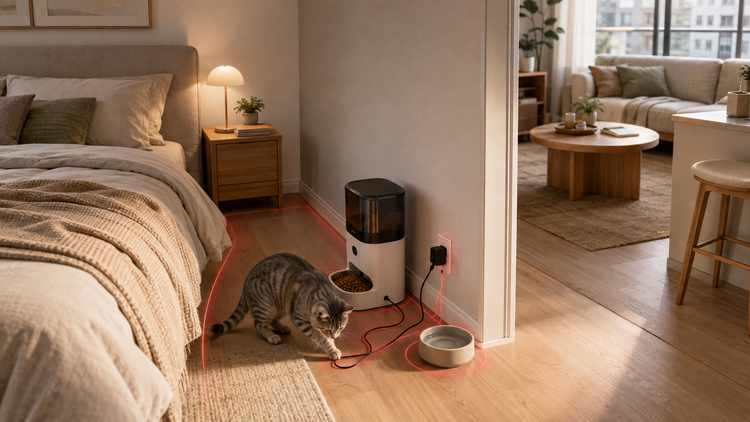
The device row matters more than it looks. A feeder or fountain is a machine you chose and placed, running on a schedule you set, and its noise is airborne in the same way a bark is, just steadier and quieter. Positioning it against an interior wall rather than a shared one, and away from a bedroom-adjacent wall, does more for a neighbor's sleep than most people expect from something so small.
Why this distinction changes what's worth buying
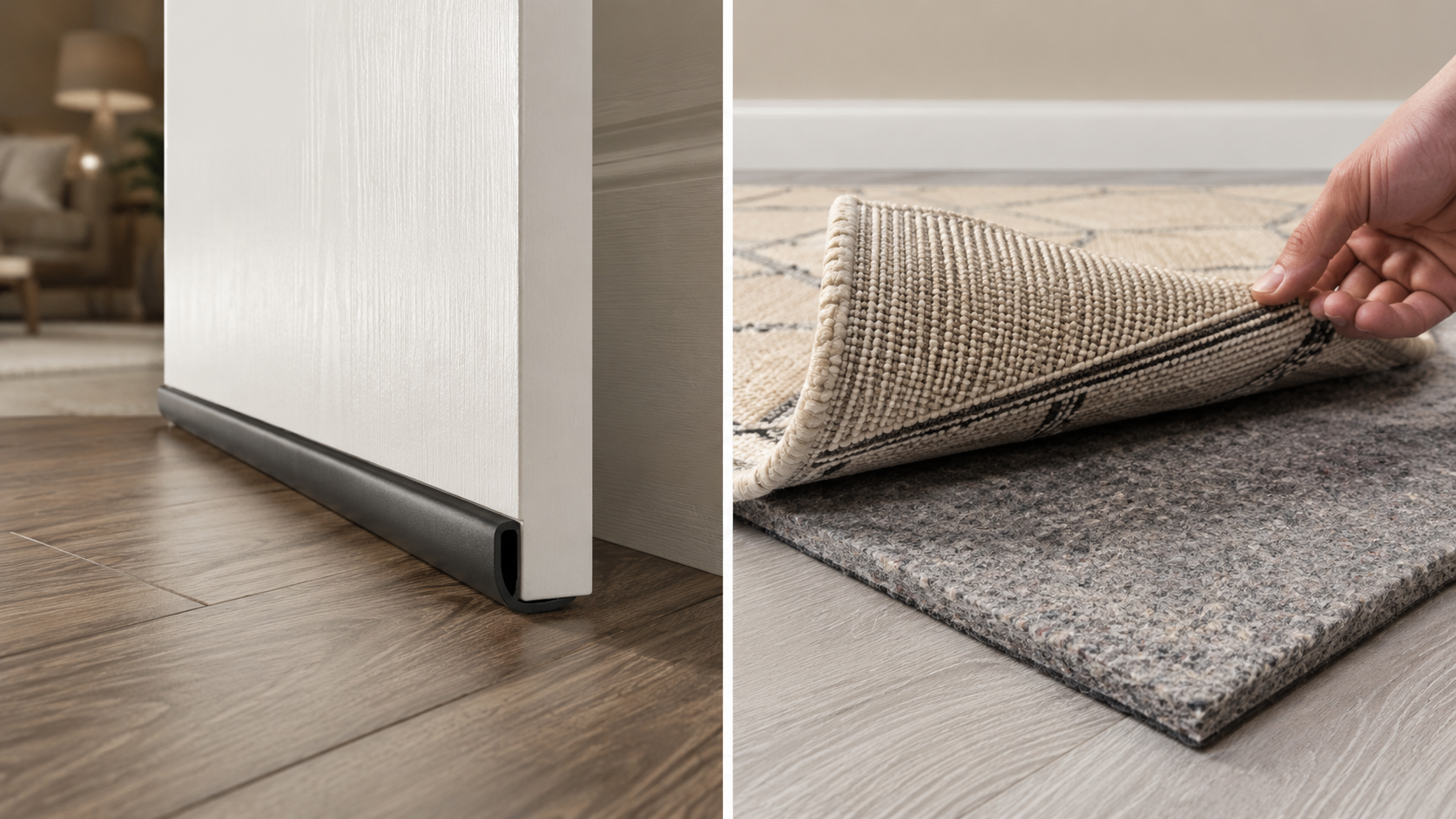
Most soundproofing advice treats "reducing noise" as one problem, and that's where a lot of apartment dwellers waste money. A door sweep and weatherstripping close the gap airborne sound escapes through, which helps with barking and device hum, but it does essentially nothing for a cat's impact noise on the floor, because that vibration never travels through the door at all. A rug with a dense underlay does the opposite: it absorbs and dampens impact vibration at the floor, but a bark still passes straight through a thin wall next to it unaffected.
Buying both because "noise reduction" sounds like one category is how people end up with a stack of purchases that only partially worked, when a five-minute sort into airborne versus impact would have pointed at the right two items from the start.
A quick way to tell which one you're dealing with
If a neighbor mentions the problem, ask (or notice) which direction the complaint came from. A complaint from the side generally points to airborne sound: a bark, a whine, a motor hum passing through a wall or door. A complaint from below almost always points to impact sound: running, jumping, or anything striking the floor. That single detail is usually enough to know whether the next purchase should be aimed at the door and window, or at the floor.
Where this leads next
Once it's clear which category a given noise falls into, the practical next question is what actually reduces it and whether a device marketed at "apartment noise" is worth the money. The evidence on one of the most heavily marketed categories, ultrasonic bark deterrents, is genuinely mixed and worth reading before buying one: see do ultrasonic bark control devices actually work in an apartment.
The same airborne-versus-impact logic applies to a device's own operating noise, not just a pet's. Before buying a water fountain for a small apartment, the question of where its hum will actually travel, and to whom, is covered in quiet water fountains for a small apartment.
For the broader picture of what this cluster covers and why the wall, the neighbor, and the lease are treated as one connected problem, start at pet noise in an apartment: what neighbors actually hear.
FAQ
Why does my downstairs neighbor complain but the one next door never does? Because the noise reaching each of them is probably a different type. A downstairs complaint usually means impact noise, vibration traveling through the floor structure from running, jumping, or nails on hardwood. A side neighbor's silence often just means the airborne sounds, like barking, aren't as loud through that particular wall, or the layout puts their bedroom away from the shared wall.
Does carpet actually stop impact noise, or does it just feel quieter? Carpet with a proper underlay genuinely reduces impact noise transmission, because the padding absorbs vibration before it reaches the subfloor. A rug placed directly on hardwood with no underlay helps far less, since the hard floor underneath is still what's transmitting the vibration to the unit below.
Is a barking dog's noise airborne or does it also cause impact noise? Barking itself is airborne. But a dog that runs to the door or window every time it barks is also generating impact noise from the running and the landing, which is why a barking complaint from a downstairs neighbor is often really about the movement around the bark, not the sound of the bark itself.
Can a device like a feeder or fountain really be loud enough to matter? Yes, in the specific context of a shared wall. A motor or pump that seems quiet standing next to it can still be enough to disturb a light sleeper on the other side of a thin apartment wall, especially if it runs on a schedule that includes early morning or late night. Placement relative to that wall matters as much as the device's own noise rating.
Do I need to fix both airborne and impact noise, or just one? That depends entirely on which one the complaint is actually about. Fixing the wrong category, like adding a door sweep for a downstairs neighbor's impact complaint, spends money without addressing the actual path the sound is taking. Identifying the category first is what makes the fix worth buying.


Comments ()