
Are Phone Decibel Apps Accurate Enough for a Noise Dispute?
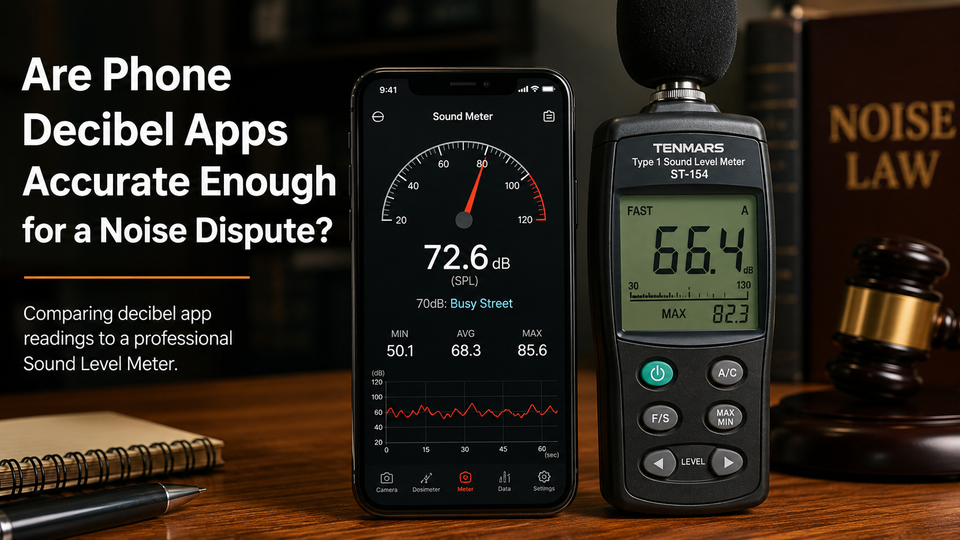
A phone decibel app is a useful indicator and it is not evidence. NIOSH, the US National Institute for Occupational Safety and Health, evaluated 192 sound-measurement apps across iOS and Android and found only 4 met its accuracy criterion of within about 2 dB(A) of a reference type 1 sound level meter. Phone microphones are also tuned for the human voice range, which is not where a bark does its most troublesome work. The more useful thing your phone can produce for a landlord conversation is not a decibel number at all. It is a timestamped record of how long and how often.
What NIOSH actually found
NIOSH's app work is the source almost every consumer page on this topic is quoting, usually without saying so, so it is worth taking directly.
Across 192 apps evaluated on both platforms, only 4 met the accuracy criterion of roughly ±2 dB(A) against a reference type 1 meter. In a follow-up comparison of three iOS apps against a conventional sound level meter, NIOSH's own Sound Level Meter app tracked accurately across low, moderate and high noise levels in both simulated and real-world settings, while two widely used commercial apps produced consistent readings that consistently underestimated the actual level.
Two things follow. Most apps in a store listing are not accurate. And the ones that are wrong tend to be wrong in the same direction, reading low, which is worth knowing if you are the one hoping the number comes out small.
Why a phone under-reads a bark specifically
The limitation is in the hardware, not the software, and it is a design decision rather than a defect.
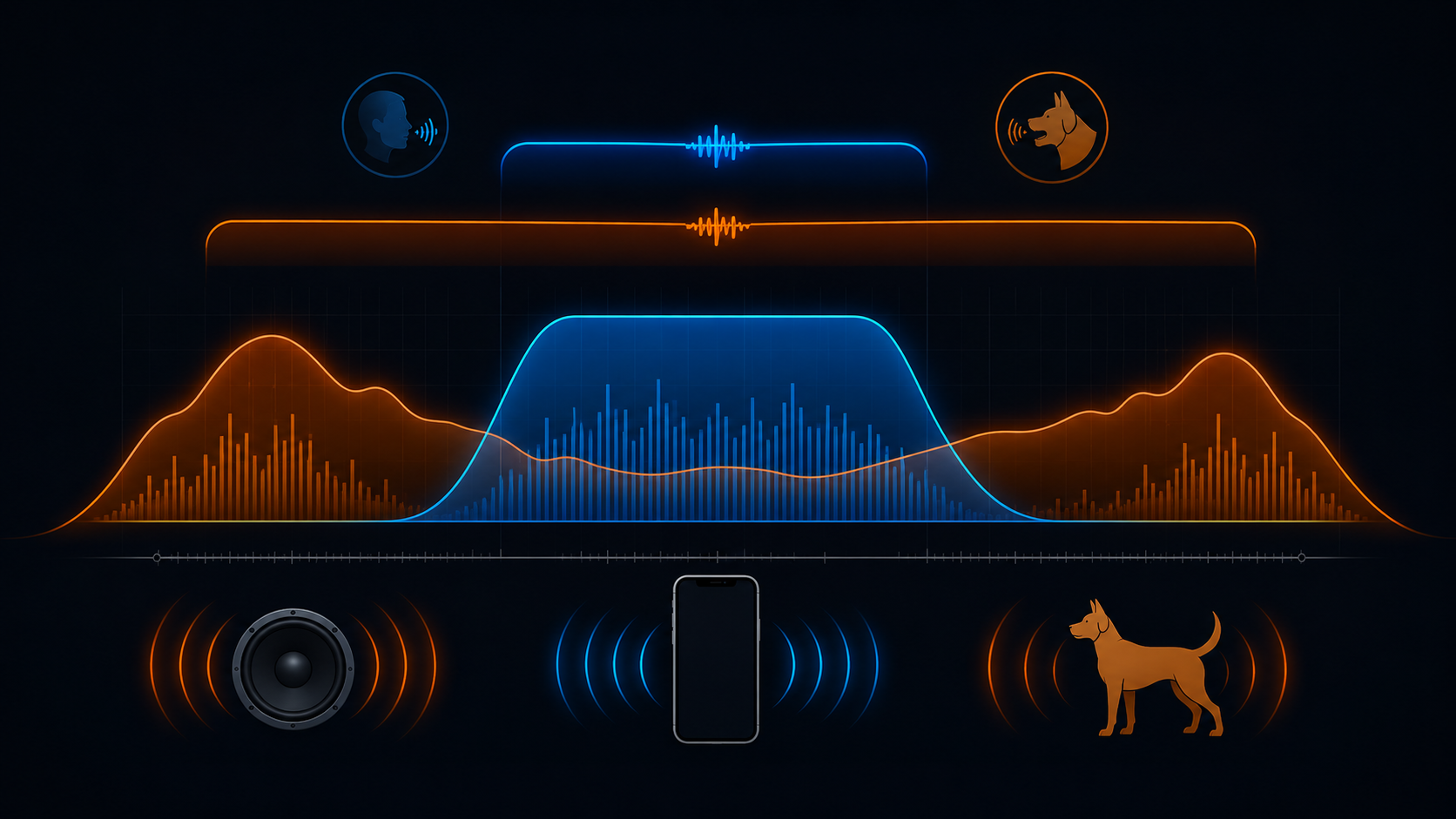
A smartphone microphone is engineered to capture speech. Its sensitivity is optimized across roughly the 300 Hz to 3,400 Hz voice band and it rolls off or distorts outside that range. A dog's bark carries substantial energy below and above that band, and low-frequency content is also the part that passes most readily through building structure to a neighbor. So the instrument is at its weakest exactly where the measurement matters most.
On Android there is a second problem. The ecosystem spans thousands of devices with different microphones and audio processing, which makes a single universal calibration curve impractical. Two phones in the same room can legitimately disagree.
Calibration, and what it can and cannot fix
Calibration against a known reference source improves a specific phone's readings meaningfully, and reported accuracy for a calibrated setup on a well-characterized device is considerably better than for an uncalibrated one.
What calibration cannot do is change the microphone's frequency response. Correcting an overall offset does not restore the low-frequency content the microphone never captured properly. So a calibrated phone is a better indicator and still not a measuring instrument for this particular sound.
For context on why the frequency content matters so much for what a neighbor experiences, see airborne vs impact noise for apartment pets.
The record that actually travels: duration, timestamps, frequency
Here is the reframe that makes this whole topic useful. Stop trying to win on the decibel number.
A property manager is not adjudicating sound levels, and a municipal code covering animal noise is usually written in terms of how long and when, not how loud. Some cities define a barking dog by continuous noise over a stated number of minutes rather than by any sound level at all, which is discussed in quiet hours and noise ordinances: what applies to a barking dog.
That means the record worth keeping is:
| What to record | Why it carries |
|---|---|
| Date and clock time of each episode | Establishes whether it falls inside quiet hours |
| Duration of each episode | Matches how animal-noise provisions are usually written |
| How many episodes per day | Distinguishes an occasional bark from a pattern |
| What was happening at the time | Identifies triggers, which points at the fix |
| What you changed, and when | Shows action taken, which is what a manager wants to see |
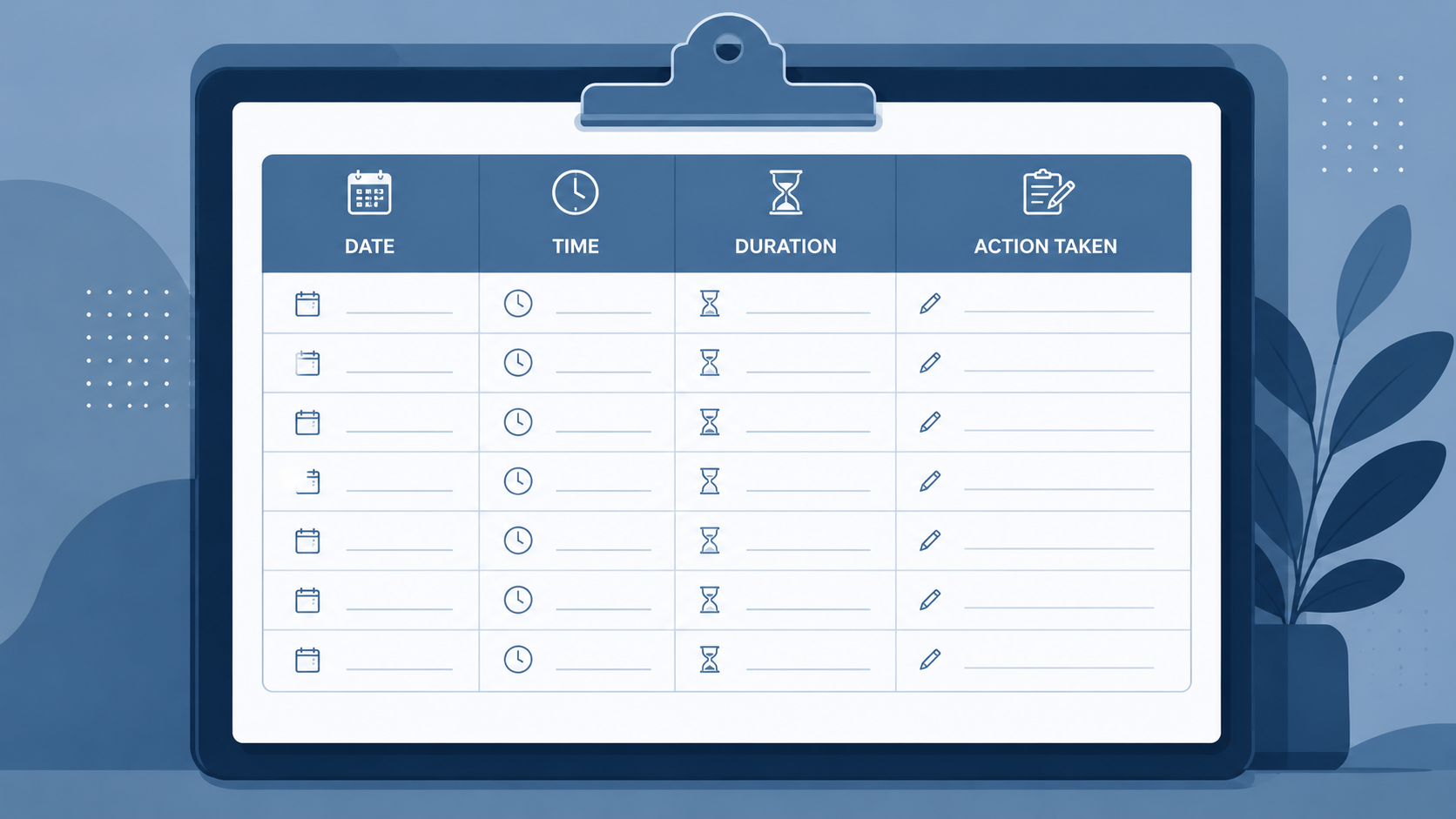
A phone logs every one of those honestly, with no calibration required. A screenshot of a decibel app does none of it.
Taking it to a landlord without overclaiming
If you present a decibel reading as a measurement, you invite a fight you cannot win, because the first person to look up app accuracy will find the NIOSH result and your number becomes the weakest part of your case.
Present it instead as what it is: an indicator you used to compare situations. "The reading roughly doubles when the corridor door slams" is a defensible statement about relative change. "The barking peaks at a specific decibel level" is not.
Then lead with the log and the actions. A record showing episodes shortening after the door was sealed and the floor treated is a stronger document than any single number, and it moves the conversation from dispute to progress. The fixes worth having on that list are in renter-safe soundproofing that comes off at move-out, and the overall picture of what the neighbor is experiencing is in pet noise in an apartment: what neighbors actually hear.
One caution if you are also using sound masking: a masking device changes what a measurement picks up without changing what leaves the unit, so do not log readings taken with one running as though they showed a reduction in the underlying noise. That distinction is covered in white noise machines: masking the trigger vs masking the bark.
FAQ
How accurate are phone decibel apps? Most are not accurate enough to rely on. NIOSH evaluated 192 apps and only 4 met its criterion of roughly ±2 dB(A) against a reference type 1 meter, and two popular commercial apps in its comparison read consistently low.
Which app should I use if I want the most reliable reading? NIOSH publishes its own Sound Level Meter app for iOS, developed as a public-health tool, and it performed accurately in NIOSH's own comparison across a range of levels. Treat it as an indicator rather than as an instrument, and expect Android results to vary more because of hardware differences between devices.
Can I use a decibel reading as proof for my landlord or in a complaint? It is unlikely to carry weight as proof, and it can undermine an otherwise reasonable case if someone checks how accurate these apps are. A timestamped log of duration and frequency is more useful and matches how animal-noise rules are usually written.
Does calibrating my phone fix the problem? It improves accuracy for that specific device and helps with an overall offset, but it does not change the microphone's frequency response. Sound outside the voice band that the microphone never captured well is not recovered by calibration.
What should I record instead of decibels? Date, clock time, duration, how many episodes per day, what triggered each one, and what you changed in response. That set answers the questions a property manager and a municipal code actually ask.
Comments ()