
Quiet Hours and a Barking Dog: What Actually Applies
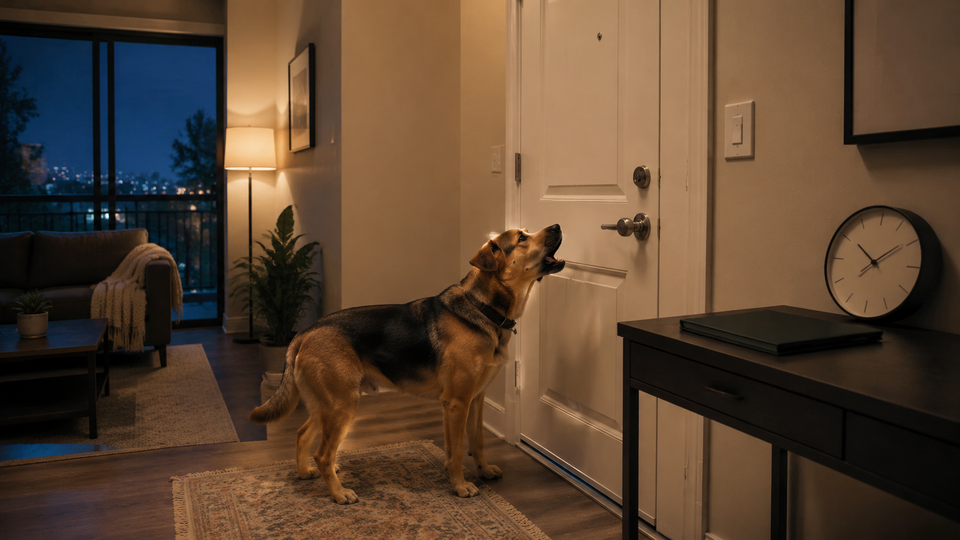
Three separate rulebooks govern a barking dog in an apartment, and most people only know about one of them. The municipal noise ordinance is public law, usually enforced by police or animal control, and for animal noise it is typically written in terms of duration rather than decibels. The lease and the building's house rules are a private contract, enforced by the landlord, and they often have no clock at all. Other tenants hold a right to quiet enjoyment, which is what a complaint is usually invoking. You can be fully compliant with the ordinance and still in breach of the lease, and that is the case most pet owners are actually in.
This is general information about how these rules are usually structured, not legal advice. Ordinances and lease terms vary by city and by building, so check your own municipal code and your own lease.
What a municipal noise ordinance typically covers
Most US local governments have a noise ordinance setting limits on sustained noise, with lower thresholds late at night and early in the morning. Enforcement usually runs through police or animal control, and the usual first step is a warning rather than a penalty.
For animal noise specifically, many codes carve out their own provision rather than relying on the general sound-level rule. San Francisco's code, for example, is reported to define a barking dog as one that barks, bays, cries, howls or makes other noise continuously and incessantly for a period of 10 minutes to the disturbance of any other person. That is a duration test, not a loudness test.
Two implications for a pet owner. A short, loud burst of barking may not meet the ordinance definition at all. And a quiet but continuous whine or howl over a long period may meet it, even though it never sounded dramatic to anyone standing in your apartment.
Duration, not decibels
This is the single most useful thing to understand about the animal-noise category, and it changes what is worth documenting.
Because the standard is usually about how long and when rather than how loud, a decibel reading is beside the point. Reported quiet hours differ by city: Philadelphia's ordinance is reported at 9 p.m. to 8 a.m., San Francisco's at 10 p.m. to 7 a.m. Those are examples of how the windows are set, not a national rule, and yours has to be looked up locally.
What follows practically is that a log of clock times and durations is worth more than any measurement, which is why the measuring question resolves the way it does in phone decibel apps and what they're actually worth.
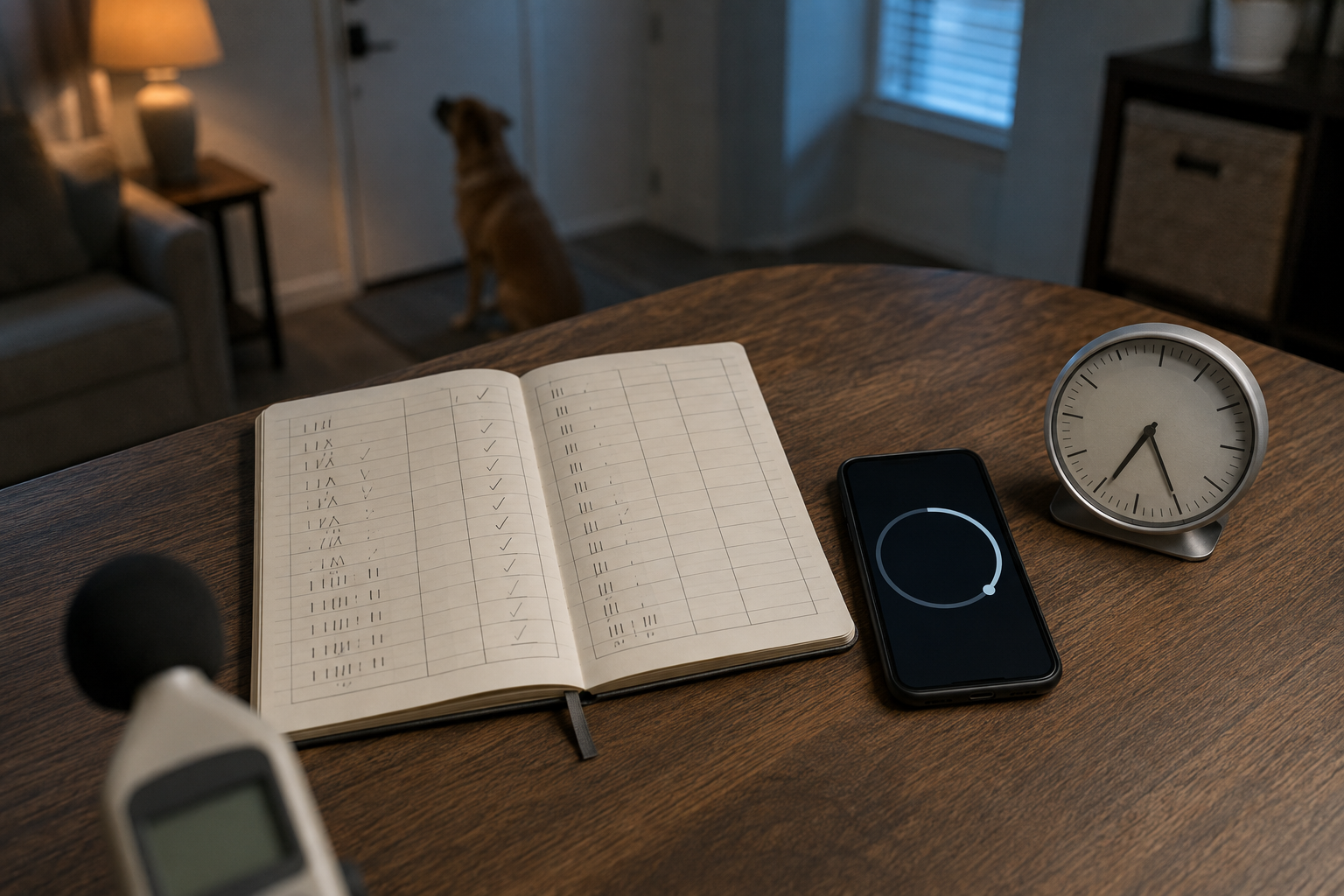
Quiet hours, and the daytime gap they create
Quiet hours produce a widespread and costly assumption: that barking during the day cannot be actioned.
Two things undercut it. First, many ordinances apply a general disturbance standard around the clock and simply apply a stricter one overnight. Second, and more importantly for a renter, the lease usually has no clock in it at all. A nuisance or disturbance clause that says a tenant must not unreasonably disturb other residents applies at 11 a.m. exactly as it applies at 11 p.m.
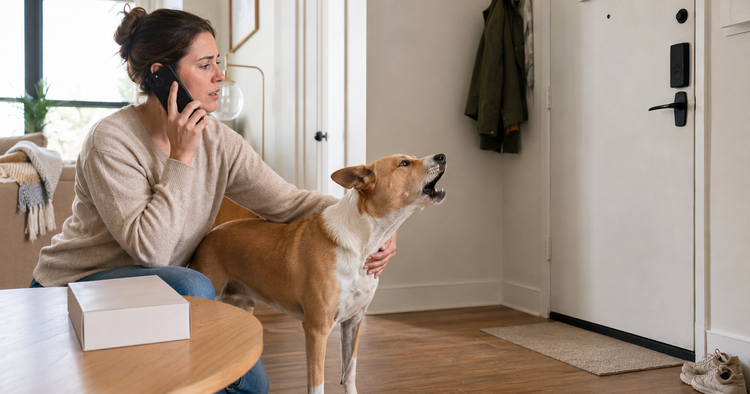
That matters because the most common apartment pet complaint of all is a dog barking through a working day while the owner is out, which sits squarely in the hours people assume are safe.
What the lease adds on top
The lease is where most pet-noise consequences actually come from, because the landlord does not need an ordinance violation to act on a clause you signed.
Typical provisions worth reading in your own document:
- A nuisance or disturbance clause, usually with no time restriction
- A pet clause, which may set conditions on keeping the animal and may reference noise directly
- House rules incorporated by reference, which can be amended by the building without the lease being reissued
- A cure period, which is the window you get to fix a stated breach before further steps
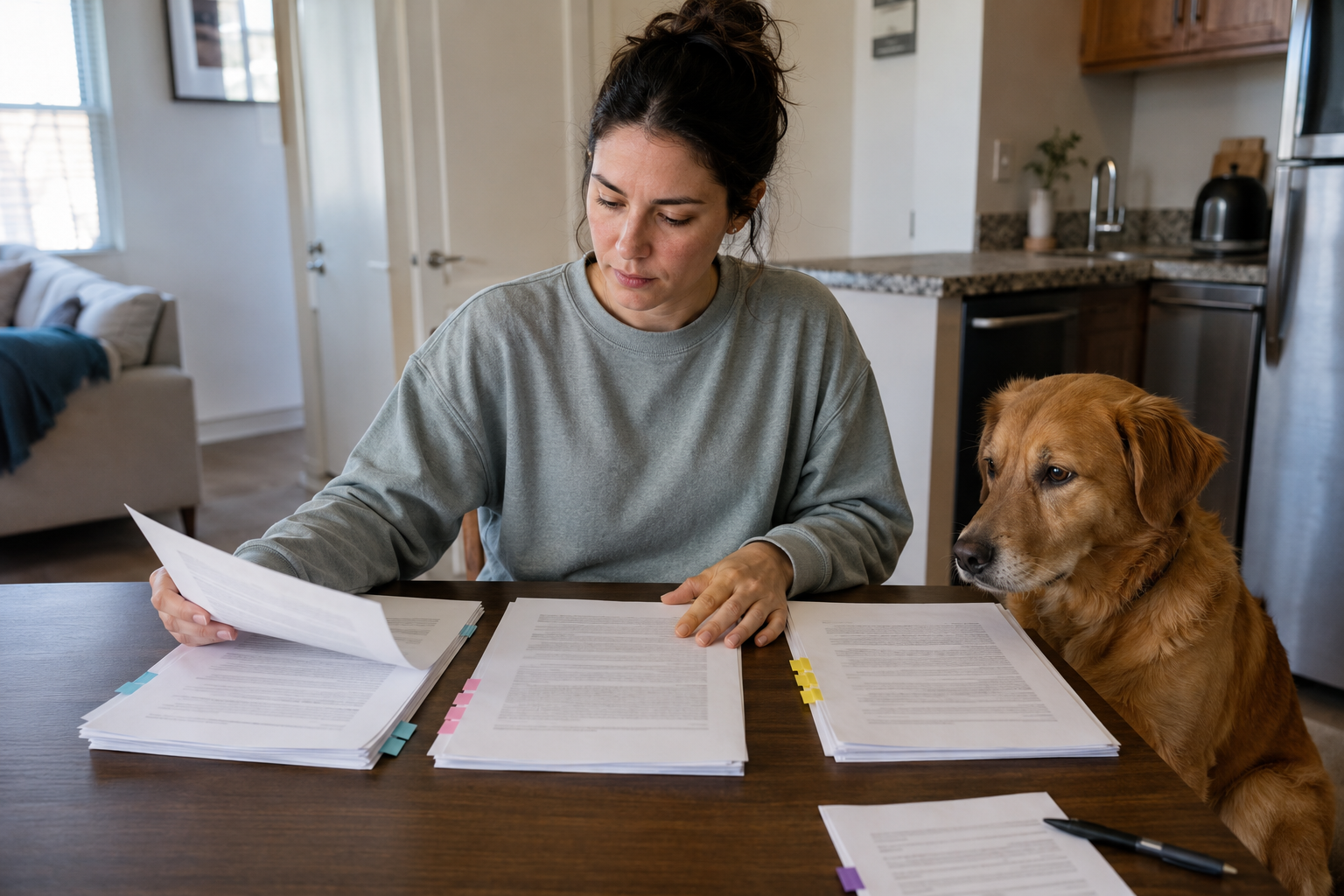
The practical reading: a written complaint from a building manager is usually operating under the lease, not the ordinance, and the response it is looking for is documented action rather than a legal argument.
When a noise complaint becomes a welfare question
There is a version of this that stops being about rules. Municipal codes in some places allow animal control to treat an animal that is confined for long periods and in evident distress as a welfare matter rather than a noise matter.
That is worth knowing for the right reason. A dog that barks continuously for hours whenever it is left alone is telling you something about its experience of being alone, and the complaint is a signal rather than only a compliance problem. Barking tied to absence rather than to a passing trigger is the pattern worth raising with a veterinarian, and who to approach is set out in when the answer isn't a device: getting a trainer or a vet involved.
What to do first if you have received a complaint
In rough order, and none of it requires legal help:
- Read the actual clause you are alleged to have breached, in the lease or the house rules. Ask for it in writing if the complaint did not name it.
- Start a log: date, time, duration, trigger, and what you changed. This is the document that carries.
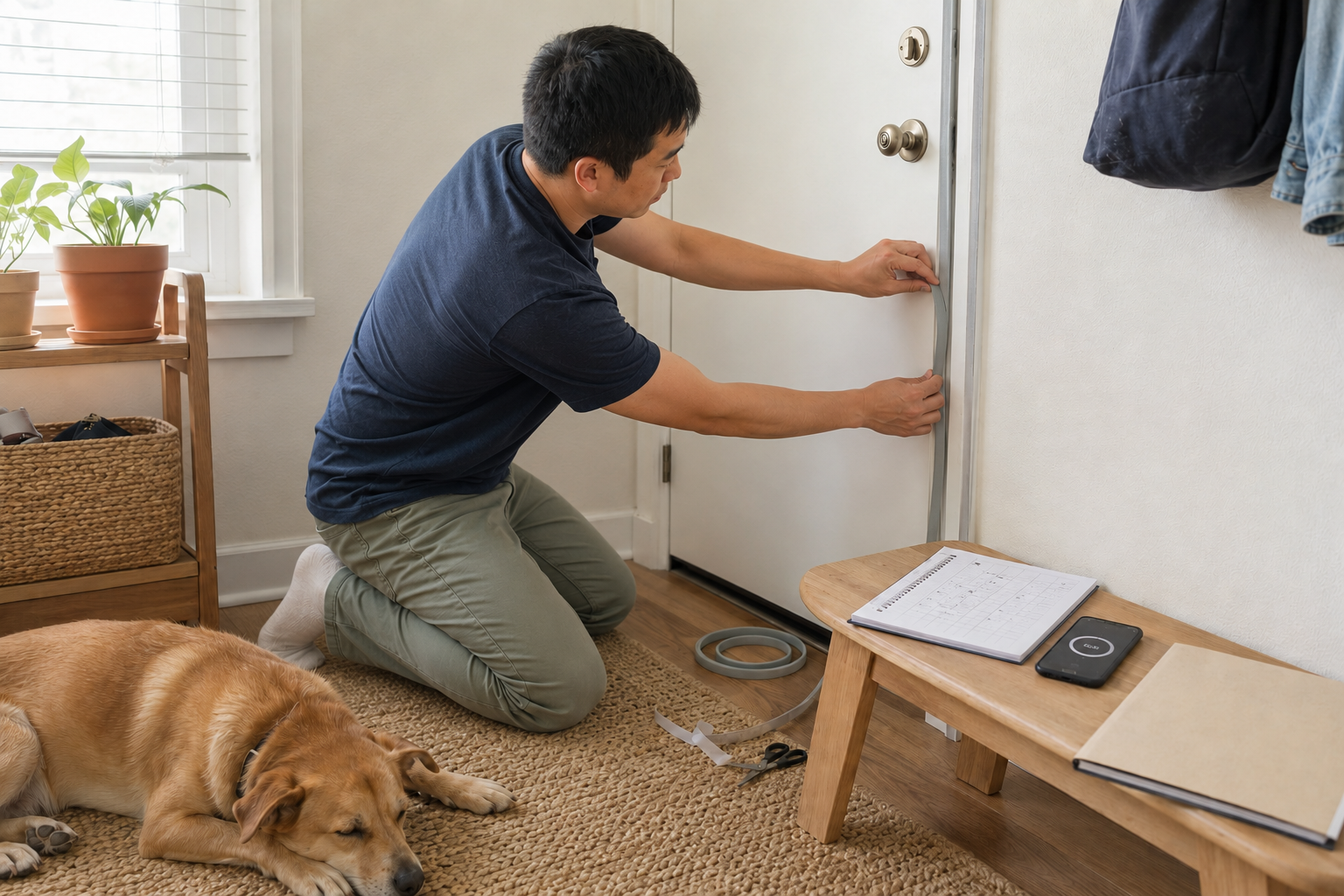
- Do one physical fix and say that you did it. Sealing the front door gap and treating the floor are cheap, reversible and demonstrable. Where to start is in renter-safe soundproofing that comes off at move-out.
- Look up your own municipality's animal noise provision rather than relying on any general article, including this one.
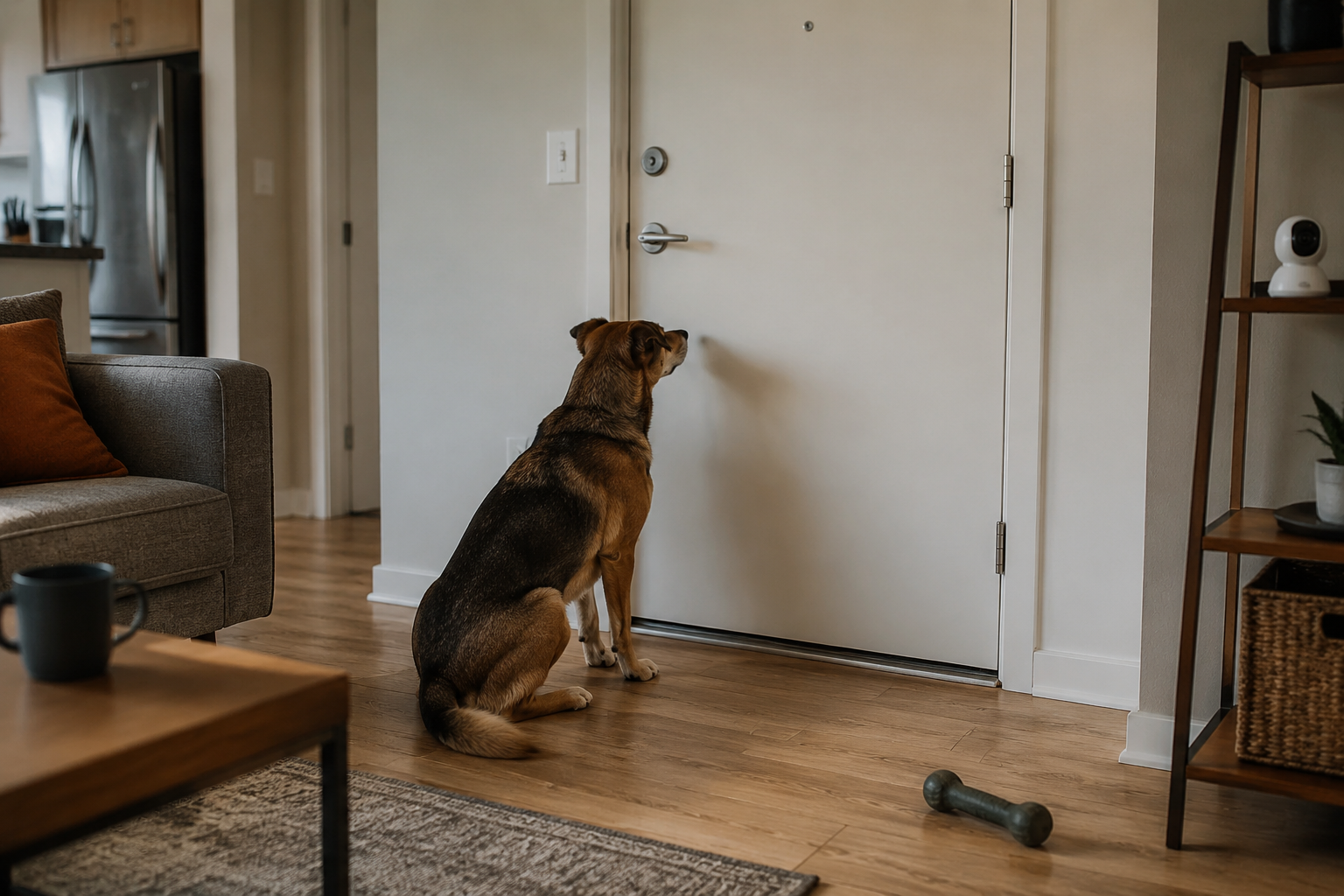
- If the barking happens only when you are out, treat that as its own question rather than as a noise-management problem.
For the broader picture of what your neighbor is experiencing and which fix matches which complaint, start at pet noise in an apartment: what neighbors actually hear.
FAQ
Are there legal quiet hours for a barking dog? Most US municipalities set quiet hours in a noise ordinance, and the specific window varies by city. Philadelphia's is reported at 9 p.m. to 8 a.m. and San Francisco's at 10 p.m. to 7 a.m., which shows the range rather than setting a rule. Look up your own municipal code, because it governs, not a general article.
Can my landlord act on daytime barking if it is outside quiet hours? Generally yes, because the lease is a separate rulebook from the ordinance and its nuisance clauses usually have no time restriction. Compliance with quiet hours does not by itself mean compliance with the lease.
Is barking measured in decibels? Usually not for animal noise. Many codes use a duration test instead, such as continuous noise over a stated number of minutes, which means how long the barking lasts matters more than how loud it registers.
What happens after a neighbor complains to the city? Reported practice is that enforcement typically contacts the resident first, with a warning before any citation or fine. The specifics depend on the municipality and on whether the complaint routes through police, animal control or a code office.
Can I be evicted over a barking dog? A lease breach that is not cured can escalate, which is why the cure period and the documented response matter. Outcomes depend on the lease, the jurisdiction and the facts, so anyone facing a formal notice should get advice from a local tenant advice service or attorney rather than relying on general information.
Comments ()