
White Noise and Dog Barking: Which Problem It Solves
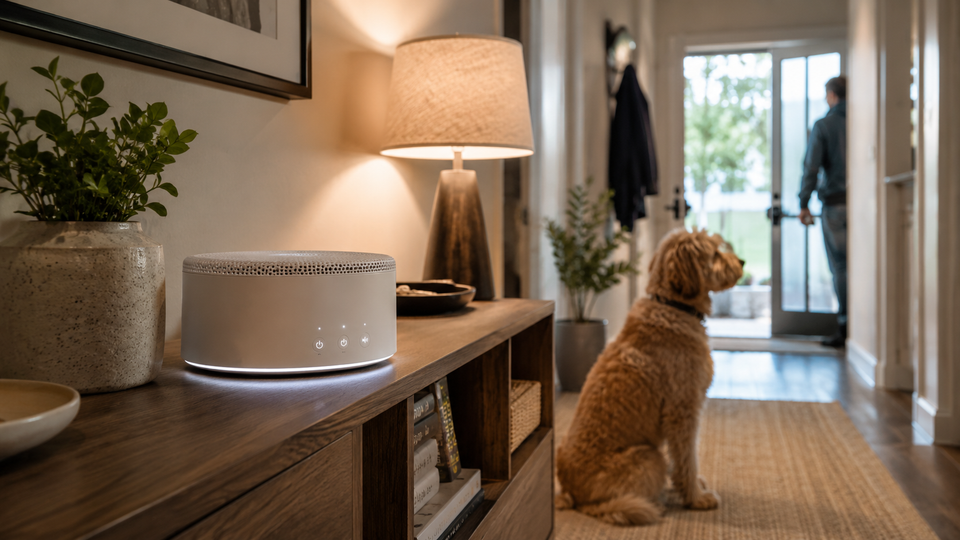
A white noise machine does three different things, and buyers usually want one of them while the product page is selling another. It can mask the corridor sounds that set a dog off, which is the only one of the three that can actually reduce barking. It can cover the sound of barking so you sleep, which does nothing whatsoever for your neighbor. And it is marketed as calming an anxious dog, which is a behavior and welfare claim rather than an acoustic one, and belongs with a veterinarian rather than with a device.
Deciding which of the three you are buying takes about a minute and saves most of the disappointment.
Job one: masking the trigger
This is the version that works, when it works. A dog that reacts to footsteps in the corridor, an elevator, a neighbor's door, or a delivery is responding to sounds arriving from outside the unit. Raising the steady background level inside the apartment makes those arriving sounds less distinct, so fewer of them cross the threshold where the dog notices and reacts.
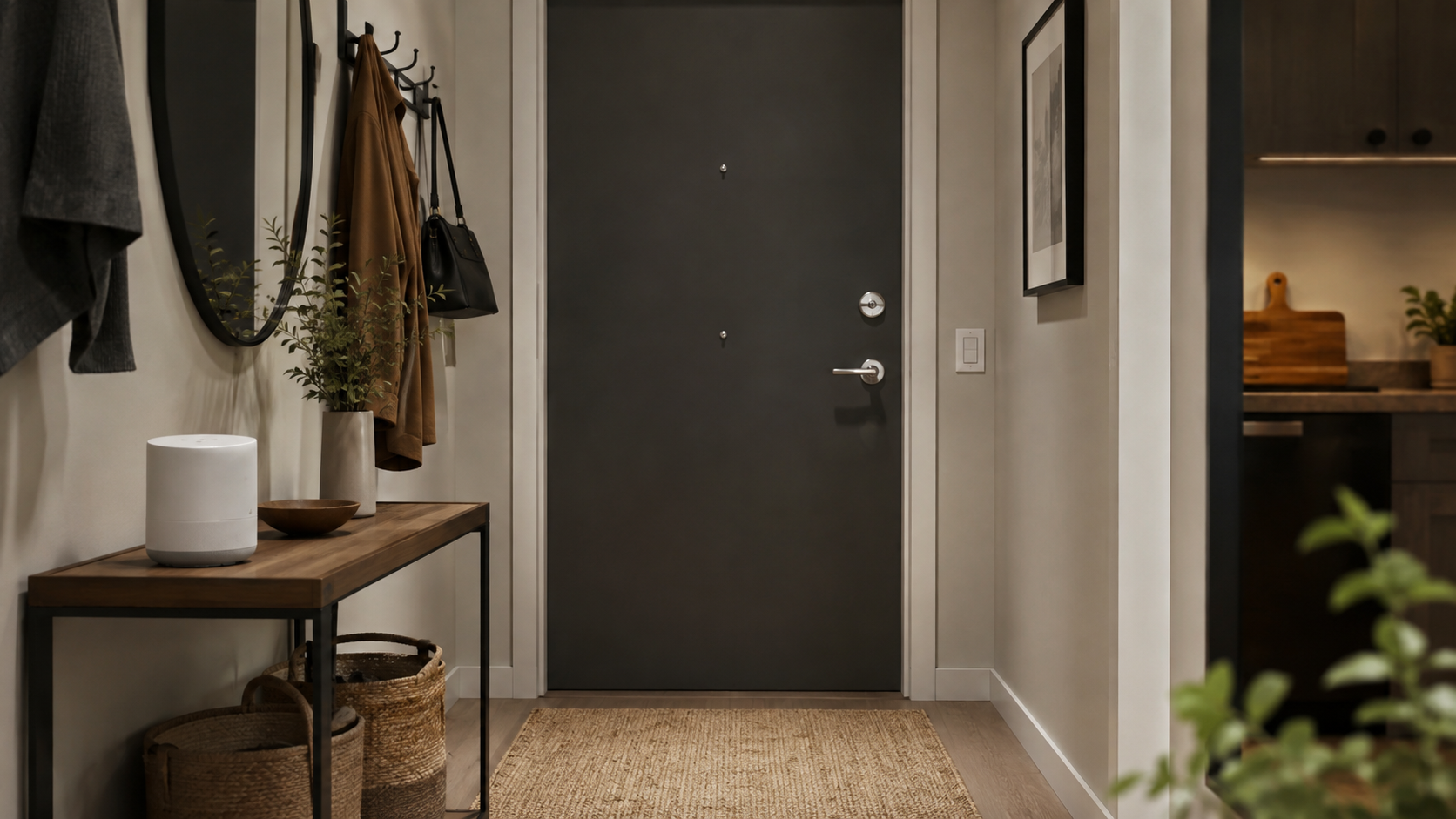
Two conditions decide whether this helps. The barking has to be sound-triggered in the first place, and the machine has to sit between the dog and where the sound comes in, which in most apartments means near the front door rather than in the bedroom. Broadband options, sometimes labeled pink noise or fan mode, cover a wider range of frequencies than a narrow tone, which matters because the triggers are not all in the same range.
If the dog is reacting to what it can see out of a window, sound masking does nothing at all, and the fix is visual. That is covered in frosted window film and the visual triggers you can remove.
Job two: masking the bark, for you
This is the one people buy without realizing it. A machine running in your bedroom raises the noise floor in your bedroom, so an intermittent bark is harder to pick out and you sleep through it.
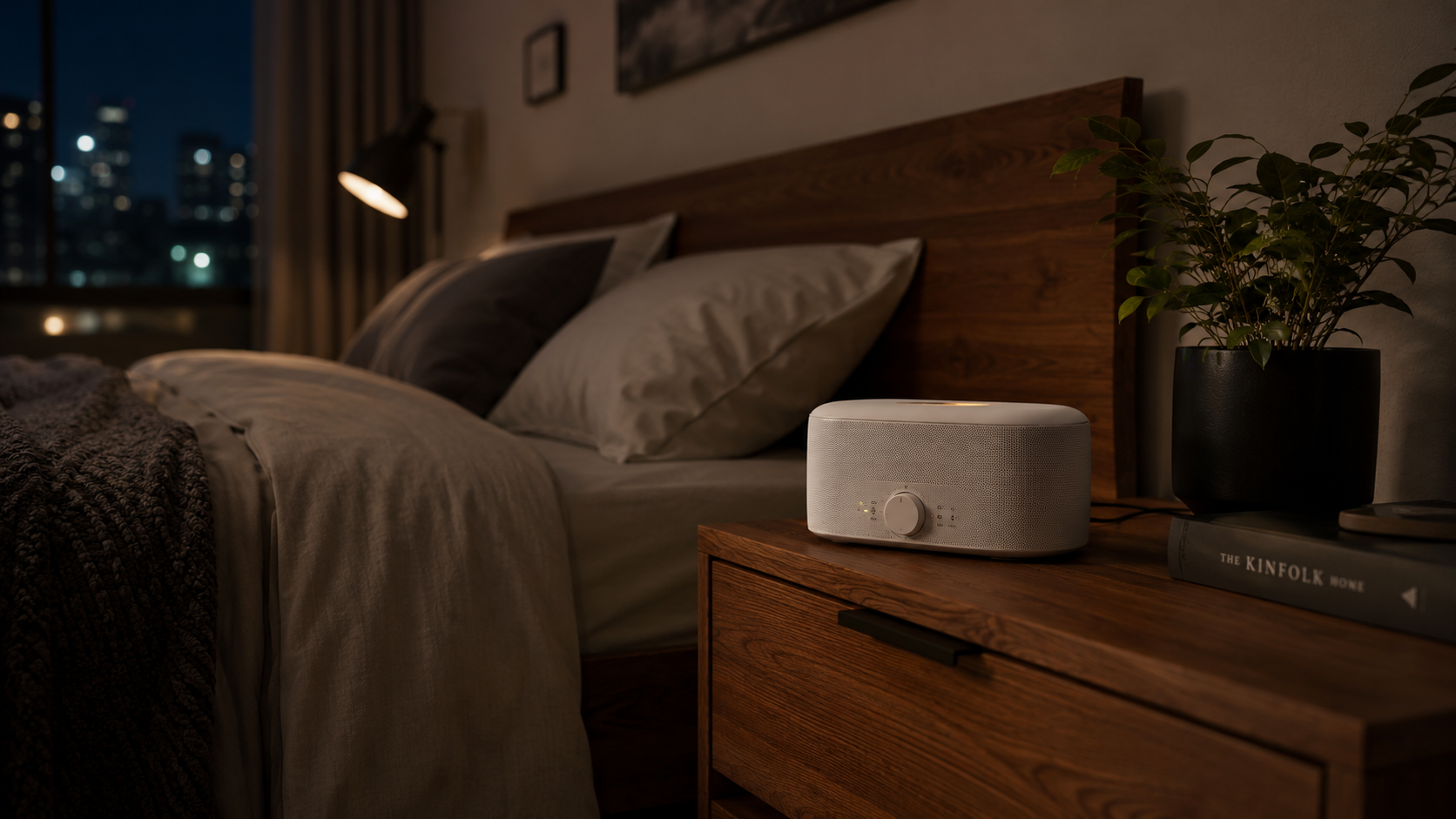
That is a real benefit and worth having. It is also entirely one-sided. Sound leaving your unit through the wall, the door and the window is unchanged. Your neighbor's noise floor did not move. If anything, the machine adds a small amount of its own sound to the shared environment.
So if the reason you are shopping is a complaint from next door, this job is not the one that answers it. Reducing what actually leaves the unit is a hardware problem, worked through in renter-safe soundproofing that comes off at move-out, and the largest leak in most apartments is the front door, covered in door sweeps, weatherstripping and the gap under your front door.
Job three: the "calms your dog" claim
Sound machine manufacturers market directly to pet owners on the basis that steady sound settles an anxious animal. Some of that reflects a genuine observation that a predictable background is less startling than a series of sharp, unpredictable sounds, which is the same reason masking reduces trigger-driven barking.
Where it stops being an acoustics question is the word anxious. Distress in a dog left alone is a clinical matter with a body of veterinary evidence behind it, and it is assessed by a veterinarian or a veterinary behaviorist who can examine the animal, rule out physical causes, and build a plan. No sound machine does any of that, and buying one on the strength of a marketing line risks postponing an assessment the animal actually needs.
Nothing on this page is a diagnosis or a substitute for veterinary advice. If your dog's barking happens mainly or only when it is alone, that pattern is worth raising with a veterinarian before any further purchase. Who to call and what each professional actually does is set out in when the answer isn't a device: getting a trainer or a vet involved.

Placement, and why the front door is usually the spot
The machine needs to be between the dog and the source of the triggering sound. In a typical apartment that is the entry hall, because the corridor is where footsteps, voices, elevators and deliveries arrive. A machine in the bedroom at the far end of the unit does very little for triggers, though it does plenty for your own sleep.
If the dog stations itself at a window instead, the trigger is probably visual rather than audible, and the machine is aimed at the wrong channel.
What a masking device must never be used to cover up
A masking device changes what you and the dog hear. It does not change what is happening.
Two limits are worth stating explicitly. It is not a monitoring device. It tells you nothing about whether the dog barked, for how long, or whether anything went wrong while you were out. If the question you actually have is whether the dog barks all day, that is a recording or alert question, not a masking one.
And it must not be used to make a problem quieter without looking at it. If a neighbor's complaint is about hours of continuous barking while you are at work, turning up the background sound in an empty apartment addresses the symptom in the one place where nobody is listening. That pattern of barking is the specific one that warrants a veterinary conversation rather than a device.
For the wider picture of what your neighbors actually hear and where masking sits among the options, start at pet noise in an apartment: what neighbors actually hear.
FAQ
Will a white noise machine stop my neighbor hearing my dog? Not directly. It raises the background sound level inside your apartment, not inside theirs, and it does not reduce how much sound leaves through your walls or door. It can help indirectly, but only if the masking reduces how often the dog barks in the first place.
Is white noise or pink noise better for a barking dog? Broader-spectrum options, often labeled pink noise or fan mode, cover a wider range of frequencies than a narrow tone, so they mask a wider variety of triggers. The difference matters more than the brand of machine does.
Where should the machine go? Between the dog and where the triggering sound arrives, which in most apartments is the entry hall near the front door. A machine at the far end of the apartment mainly benefits whoever is sleeping next to it.
My dog barks all day while I am at work. Will this fix it? It may reduce reactions to corridor sounds, and it will not address barking that continues through an absence regardless of what is happening outside. That pattern is worth discussing with a veterinarian, because barking that is tied to being alone rather than to a trigger is a different kind of problem from a noise problem.
Can the machine itself annoy my neighbors? It is possible, since it adds a continuous low-level sound to the unit, and a device against a shared bedroom wall can carry. Place it away from shared walls, and treat its own hum the same way you would treat any other device running on a schedule in a small apartment.
Comments ()