
Bark Collars in an Apartment: The Welfare Question First
The veterinary behavior field has answered this one clearly. The American Veterinary Society of Animal Behavior's position statement holds that reward-based methods should be used for all aspects of dog training and behavior modification, and that aversive equipment, with electronic collars named explicitly, should not be used. The American Veterinary Medical Association has reported the veterinary behaviorist consensus the same way: no role for aversive practices. Reported evidence also indicates aversive methods can provoke aggression in dogs that were not previously aggressive, and that they do not outperform reward-based methods.
If you are here because a neighbor complained and you feel out of options, that feeling is legitimate. The device is still the wrong target, and the reason is specific to apartments.
Why the desperation is real and the target is wrong
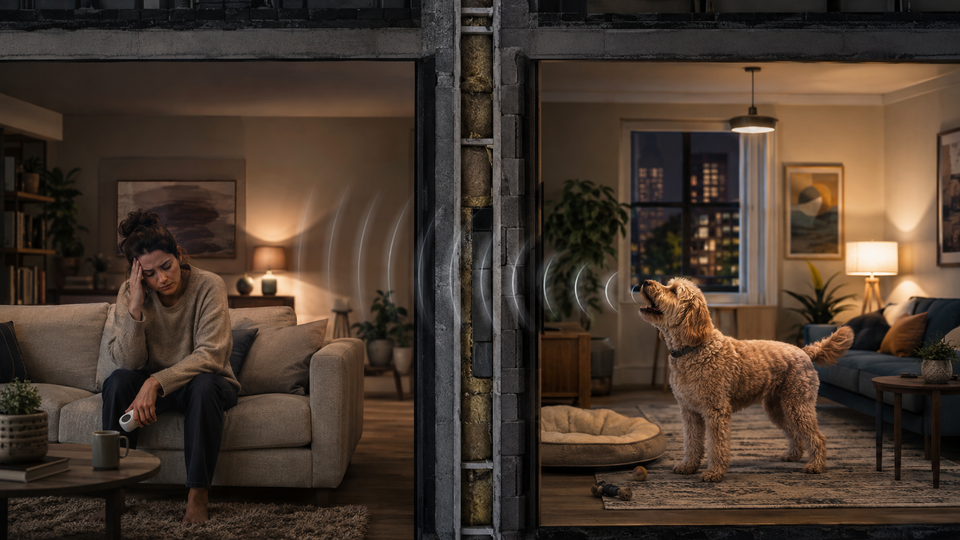
The thing driving most bark collar purchases in an apartment is not a training goal. It is a letter from a building manager, a strained relationship with the person on the other side of a wall, and a fear of losing either the dog or the lease. That is a genuine emergency and it deserves to be taken seriously.
But notice what the emergency actually is. It is a noise transmission and neighbor relations problem. The dog's barking is the source, and the complaint is about how much of it arrives next door. There is an entire category of response that acts on the transmission rather than on the animal, costs less than a collar, and carries no welfare question at all: seal the door gap, treat the floor, block the visual trigger, mask the trigger sound. Those are covered across this cluster, starting at renter-safe soundproofing that comes off at move-out.
A collar puts the entire cost of a building's construction and a neighbor's tolerance onto the animal.
The professional consensus, cited
Worth being precise about who says what, because this is a field where marketing claims outnumber evidence.
AVSAB, the American Veterinary Society of Animal Behavior, publishes a position statement on humane dog training holding that evidence supports reward-based methods for all canine training, and that aversive equipment including electronic collars, prong collars and choke chains harms welfare and should not be used.
AVMA, the American Veterinary Medical Association, has covered the position of board-certified veterinary behaviorists that aversive training practices have no role, in its JAVMA news coverage.
Board-certified veterinary behaviorists, who hold the DACVB credential through the American College of Veterinary Behaviorists, are the specialists this question belongs to. They are veterinarians with additional residency training in behavior, which means they can also rule out medical causes.
Reported findings behind those positions include that aversive equipment can cause stress and fear responses, can damage the relationship between owner and animal, and can provoke aggression in dogs that had not previously shown it.
Nothing here is a diagnosis or veterinary advice for your animal. It is a summary of published professional positions, and the point of it is to route you to someone who can assess the dog in front of them.
What "humane alternative" collars still are
The market segments itself into a tier that sounds gentler: citronella spray, vibration, tone-only. The marketing does real work here, and it is worth naming what these products still are.
They are aversive devices. Their mechanism is delivering something the dog wants to avoid, contingent on barking. A citronella spray to the face is unpleasant by design, which is the entire point of it. The position statements above do not carve out a safe tier of aversive equipment, and the welfare concern is about the mechanism rather than about how the stimulus is delivered.
There is also a specific problem with the gentler tiers: because they seem harmless, they get left on an unsupervised animal for a full working day with far less thought than a shock collar would get.
The failure mode nobody mentions: false triggers through a shared wall
This is the apartment-specific argument, and it is the one most likely to matter to a reader who is not moved by the welfare case.
A sound-activated collar detects noise. In a detached house that is usually the dog. In an apartment the acoustic environment includes a neighbor's television through a shared wall, another dog on the same floor, a corridor conversation, a delivery, and building mechanical noise.
So the animal wearing it can be corrected for sound it did not make, while alone, in a room it cannot leave, with nobody present to notice the device is misfiring. There is no feedback loop and no off switch that the dog can reach. Collars that use a bark-vibration sensor rather than sound alone reduce the false trigger rate; they do not remove the underlying problem, which is an automated aversive operating on an unobserved animal for hours.
Every automated device in a small apartment needs a stated failure plan, and the honest failure plan for this category is that when it fails, an animal absorbs the failure and you find out later, if at all.
The hardware answer to the neighbor problem
Stated plainly, because this is what the rest of this site is for:
| The pressure | The response that does not involve the dog |
|---|---|
| Neighbor hears barking through the wall or door | Seal the front door gap and add mass where you can |
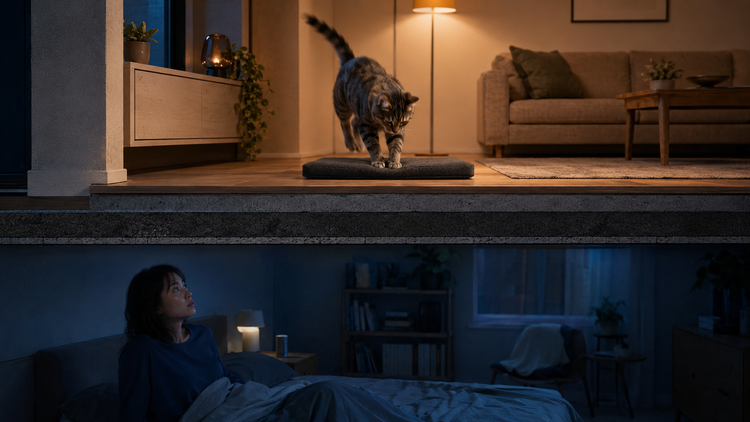
| Complaint from the unit below | Dense pad and rug over the running and landing zones |
| Barking triggered by what the dog sees | Block the sightline at the dog's eye level |
| Barking triggered by corridor sound | Raise the noise floor near the entry, not the bedroom |
| A written warning with a deadline | A documented log and one demonstrable fix, fast |
None of those change the dog. All of them change what your neighbor experiences, which is what the complaint is actually about. Which one to do first depends on the direction the complaint comes from, worked out in pet noise in an apartment: what neighbors actually hear, and the adjacent deterrent category is assessed in do ultrasonic bark control devices actually work in an apartment.
Who to call, and what they actually do
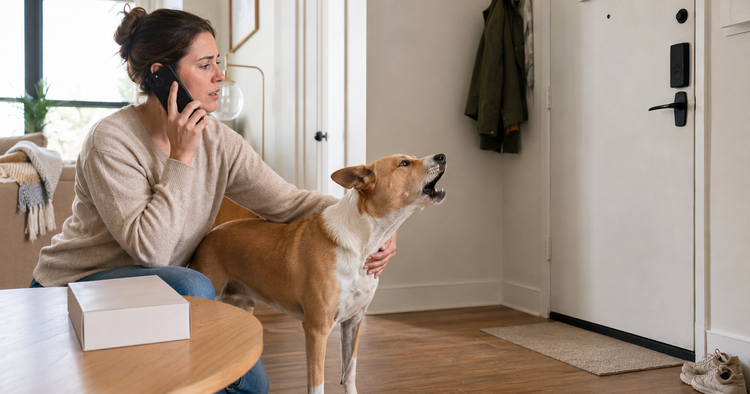
If the barking happens mainly when the dog is alone, or if it started suddenly in a previously quiet animal, that is a veterinary question before it is a training question, because behavior changes can have physical causes. Who does what, and how to read the credentials in a field where "behaviorist" is not a protected title, is set out in when the answer isn't a device: getting a trainer or a vet involved.
FAQ
Are bark collars cruel? The published position of veterinary behavior bodies is that aversive equipment including electronic collars should not be used, on welfare grounds and because reward-based methods are effective without those risks. That is a professional consensus rather than a legal ruling, and it is the clearest answer available.
Are citronella or vibration collars a humane alternative? They are still aversive devices, since they work by delivering something the dog wants to avoid. The position statements do not identify a safe tier of aversive equipment, and gentler-seeming devices tend to be left on unsupervised animals for longer.
Will a bark collar save my lease? It addresses the animal rather than the transmission, and the complaint is about transmission. Sealing the door, treating the floor and blocking triggers reduce what the neighbor hears, cost less, and are demonstrable to a building manager, which is usually what a warning letter is asking for.
Can a bark collar go off because of my neighbor's noise? Sound-activated collars can be triggered by noise the dog did not make, which in a shared-wall building includes televisions, other dogs and corridor activity. Bark-vibration sensors reduce that, and no version removes the fact that the device operates on an animal nobody is watching.
What should I do if my dog only barks when I am out? Treat that as its own question rather than as a noise problem, and raise it with a veterinarian. Barking tied to absence rather than to a passing trigger is the pattern that most warrants a professional assessment, and a device that suppresses the sound does not address what is producing it.
Comments ()